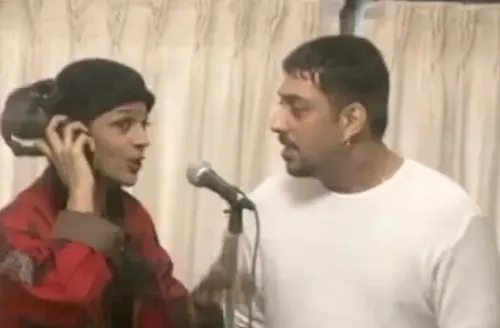
Suneeta Rao's 1991 hit 'Pakke Irade' strikes chord with Gen Z protesters

Synopsis
Suneeta Rao has turned a 1991 pop track into a protest anthem. By sharing 'Pakke Irade' from her landmark album 'Dhuan' alongside Gen Z protest images on Instagram, the singer drew a striking line between the youth movements of her era and today's — arguing the lyrics about unbreakable resolve are more relevant now than ever.
Key Takeaways
Suneeta Rao publicly backed the Gen Z protests via an Instagram post on 14 October 2026 .
She cited her 1991 track 'Pakke Irade' from the album 'Dhuan' as a mirror of current youth sentiments.
Rao condemned what she called the alleged suppression of dissent and the brutalisation of children, saying 'Enough is enough.' 'Dhuan', featuring music by Lesle Lewis , sold over 75,000 copies and made Rao the 'Paree of the Masses' .
Her post tagged @kayaraoshetty and carried the hashtag #genzprotest , amplifying its reach across social media.
Singer Suneeta Rao has publicly declared solidarity with the ongoing Gen Z protests in India, invoking her 1991 track 'Pakke Irade' from the album 'Dhuan' as a timeless rallying cry that, she says, mirrors the sentiments of today's youth. The veteran pop artist shared her support on Instagram on 14 October 2026, calling out what she described as the alleged suppression of dissent and the brutalisation of children.
What Suneeta Rao Said
In a strongly worded post accompanied by images from the protests, Rao quoted the song's defining lyric: 'Pathar ke hain vaade pakke irade toote na!' — a phrase she argued remains as relevant today as it did over three decades ago. She wrote: 'PAKKE IRADE! This song released on my album DHUAN in 1991 echoes the sentiments of the youth today. With everything that's happening in the country — dissent being disallowed instead of being heard and protected — voices being stifled — children being brutalised — listen to the lyrics of this song released so long ago which are so relevant even today.'
She added: 'Enough is enough. Shame on the powers that be and more power to our spirited and determined youth. I am with you!' The post tagged @kayaraoshetty and carried the hashtag #genzprotest.
The Song and Album Behind the Message
Released in 1991 under the Gramophone Company India label, 'Dhuan' was a landmark Hindi pop album featuring music by Lesle Lewis. It sold over 75,000 copies, an impressive figure for the era. The album's lead track 'Paree Hoon Main' — whose music video became a cultural moment — earned Rao the popular sobriquet the 'Paree of the Masses'. 'Pakke Irade', on the same album, is now finding renewed attention amid the protests.
Notably, Rao had begun her career with 'Suneeta Senorita' in 1989 and went on to collaborate with A. R. Rahman on 'Adi Paru Mangatha' for the 1994 Tamil film May Madham, cementing her place across Hindi and Tamil pop.
A Career That Keeps Connecting
Beyond 'Dhuan', Rao's subsequent releases — including the folk-inflected tracks 'Dehka Dehka' and 'Kesariya' — returned her to the top of the charts. She also contributed 'Chhoti Chhoti Baatein' and featured in the group track 'Wajah Muskurane Ki' as part of the Magnasound compilation 'A Reason To Smile', released to mark 50 years of Indian Independence.
Wider Context: Artists and the Gen Z Protests
Rao's intervention is part of a broader pattern of Indian artists and cultural figures aligning with the ongoing youth-led demonstrations. Critics argue that the protests reflect deep-seated frustrations among younger Indians over governance, civil liberties, and institutional accountability. The use of a three-decade-old song as a protest anthem also highlights how vintage pop can acquire new political resonance in moments of social upheaval.
With the Gen Z protest movement showing little sign of abating, more voices from India's cultural establishment are likely to weigh in — and how the government responds to such public solidarity will be closely watched.
Point of View
Suggesting the protests have moved beyond niche activism into the cultural mainstream. Whether this kind of celebrity endorsement translates into tangible pressure on institutions — or remains symbolic — is the question that will define the next phase of the movement.
NationPress
14 Oct 2026
Frequently Asked Questions
Why did Suneeta Rao share 'Pakke Irade' in relation to the Gen Z protests?
Suneeta Rao shared the song to express solidarity with the ongoing Gen Z protests, arguing that its lyrics about unbreakable resolve directly echo the sentiments of today's youth. She said the 1991 track from her album 'Dhuan' remains relevant given what she described as the alleged suppression of dissent and brutalisation of children.
What is the song 'Pakke Irade' and which album is it from?
'Pakke Irade' is a track from Suneeta Rao's Hindi pop album 'Dhuan', released in 1991 under the Gramophone Company India label with music by Lesle Lewis. The album sold over 75,000 copies and is best known for the track 'Paree Hoon Main', which made Rao a household name.
What exactly did Suneeta Rao post on Instagram?
Rao shared a series of images from the Gen Z protests alongside a caption invoking the lyric 'Pathar ke hain vaade pakke irade toote na!' She stated that dissent is being suppressed instead of protected, called it 'enough is enough', and expressed full support for the youth movement.
Who is Suneeta Rao and what is she known for?
Suneeta Rao is a Mumbai-based singer who launched her career in 1989 with 'Suneeta Senorita' and rose to national fame with 'Paree Hoon Main' from the 1991 album 'Dhuan'. She is also known for collaborating with A. R. Rahman on the 1994 Tamil film May Madham and for chart hits including 'Dehka Dehka' and 'Kesariya'.
What is the Gen Z protest movement in India about?
The ongoing Gen Z protests in India involve youth-led demonstrations expressing frustration over issues including governance, civil liberties, and institutional accountability. The movement has drawn growing solidarity from artists and public figures, with critics arguing it reflects deep-seated discontent among younger Indians.