CM Sai's Saksham Yojana Empowers Chhattisgarh Women
Synopsis
The Chhattisgarh CMO used Navratri 2026 to spotlight the Saksham Yojana, a Mahila Kosh scheme that CM Vishnu Deo Sai's government says is helping women like Sonkumari achieve financial independence through skill and credit support.
Key Takeaways
The Chief Minister's Office of Chhattisgarh posted on October 14, 2026 — during Navratri — to highlight the Saksham Yojana .
The scheme is implemented by Chhattisgarh Mahila Kosh , the state's dedicated women's welfare agency.
It provides financial support and skill development to women for self-employment and economic independence.
The post credits CM Vishnu Deo Sai's governance framework, using the hashtag #CGNavratri2026 to tie welfare delivery to the festival season.
Chhattisgarh has run Mahila Kosh programmes since the early 2000s, with renewed branding under the BJP government that took office in December 2023 .
State budget allocations for Mahila Kosh and official impact assessments of Saksham Yojana are the key metrics to watch in coming months.
This Navratri, the Chhattisgarh government is not just celebrating the festival — it is pointing to a state-run scheme it says is rewriting the financial futures of women like Sonkumari. The Chief Minister's Office of Chhattisgarh on Wednesday, October 14, 2026, highlighted the Saksham Yojana, implemented through the Chhattisgarh Mahila Kosh, as a vehicle driving women toward economic self-reliance under the administration of Chief Minister Vishnu Deo Sai.
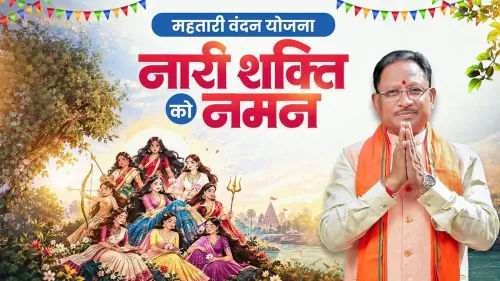
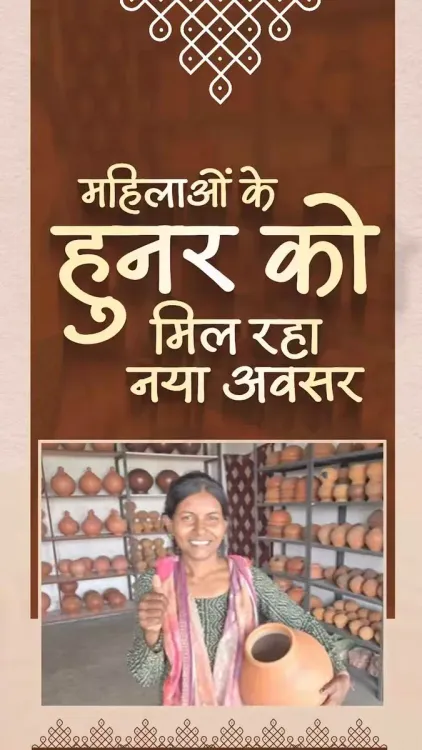
The post, shared in Hindi with the hashtags #CGNavratri2026 and #SakshamYojana, declared: 'Salutation to Shakti, celebration of women's power — under Vishnu Bhaiya's good governance, the Saksham Yojana of Chhattisgarh Mahila Kosh is giving strength to women like Sonkumari, enabling them to walk the path of economic independence and build a better future for their families.'
What the Saksham Yojana does — and who runs it
The Chhattisgarh Mahila Kosh is the state-level agency tasked with running women-focused economic and welfare programmes across the state. The Saksham Yojana is its flagship self-employment initiative, combining financial support with skill development to help women — particularly in rural communities — set up and sustain livelihoods.
Chhattisgarh has operated women-centric livelihood schemes through Mahila Kosh since the early 2000s. When the BJP government under Vishnu Deo Sai took office in December 2023 after winning the state assembly elections, it continued and re-branded this focus, placing visible emphasis on the Chief Minister's personal connect with welfare delivery.
Navratri timing and the politics of welfare optics
The choice of Navratri to spotlight a women's scheme is deliberate and well-established in Indian state politics. Several Indian states deploy their women's development corporations and micro-credit programmes as Navratri messaging, framing the festival's veneration of the feminine as a cultural bridge to policy ambition.
In Chhattisgarh, the hashtag pairing of #महतारी_का_सम्मान ('respect for mother') and #SakshamYojana signals that the Sai administration is consciously stitching welfare delivery to cultural identity — a strategy aimed at consolidating both its tribal and rural women constituencies ahead of future electoral cycles.
The road from Mahila Kosh to the household
For beneficiaries like Sonkumari — whose story anchors the post — the scheme's promise is concrete: access to funds and skills that translate into a stable income and a measurable improvement in family welfare. Whether state budget allocations for Mahila Kosh will scale to match that ambition is the question analysts will track in the coming months, particularly when the state presents its next budget.
A state that gets women's economic participation right builds more than livelihoods — it builds a governance argument. Chhattisgarh's CMO is evidently betting that Saksham Yojana is that argument in the making.
Point of View
And the Sai administration is following that playbook with deliberate branding around 'Vishnu Bhaiya.' By anchoring a policy message to a named beneficiary like Sonkumari, the CMO is attempting to humanise a bureaucratic programme and make it emotionally resonant at the grassroots. The broader pattern across BJP-governed states shows an increasing tendency to personalise chief ministerial welfare narratives, building a direct leader-to-beneficiary bond that bypasses institutional distance. Whether Saksham Yojana's actual scale and outreach match the festive messaging will become clearer when Chhattisgarh tables its next state budget and any independent impact data emerges.
NationPress
14 Oct 2026
Frequently Asked Questions
What is the Saksham Yojana in Chhattisgarh?
The Saksham Yojana is a self-employment scheme run by the Chhattisgarh Mahila Kosh that provides financial assistance and skill development support to women in the state, helping them achieve economic independence.
What is Chhattisgarh Mahila Kosh?
Chhattisgarh Mahila Kosh is the state government agency responsible for implementing women-focused economic and welfare programmes in Chhattisgarh, including micro-credit and livelihood schemes like the Saksham Yojana.
Who is the Chief Minister of Chhattisgarh in 2026?
Vishnu Deo Sai is the Chief Minister of Chhattisgarh, having taken office in December 2023 after the BJP won the state assembly elections.
Why did Chhattisgarh CMO post about Saksham Yojana during Navratri?
The CMO used the occasion of Navratri 2026 to highlight women's welfare schemes, connecting the festival's cultural celebration of feminine power with the state government's policy focus on women's economic empowerment.
How does Saksham Yojana help women like Sonkumari?
According to the Chhattisgarh CMO, the scheme provides financial and skill support that enables women like Sonkumari to pursue self-employment, walk the path of economic self-reliance, and build a better future for their families.