Zeenat Aman: How her mother made 'Gawaahi' comeback possible
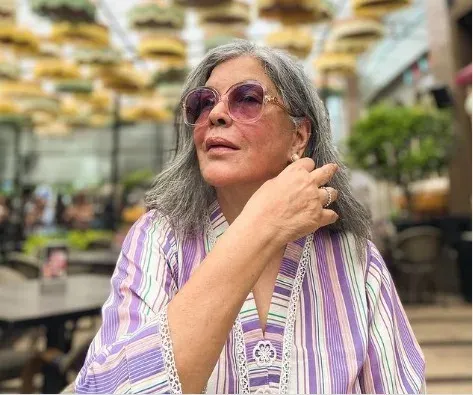
Synopsis
Zeenat Aman's return to cinema in 1988 was not just a career move — it was an escape. With her marriage fraying and her identity shrinking to 'daughter, mother and wife', it was her Amma who stepped in to watch little Azaan, unlocking a bold courtroom role that Zeenat now calls 'unconventional' and worth rediscovering.
Key Takeaways
Zeenat Aman made her comeback with the 1988 film 'Gawaahi' , two years after the birth of her first son Azaan .
She was living with her mother in south Mumbai at the time, going through difficulties in her marriage.
Her mother's decision to care for Azaan directly enabled Zeenat to accept the role of murder-accused Janhvi Kaul . 'Gawaahi' was adapted from Ayn Rand's play 'The Night of January 16th', produced by Vivek Vaswani and directed by debut director Anant Balani .
The film's cast included Shekhar Kapur and Ashutosh Gowarikar , and was shot entirely in Mumbai .
Veteran actress Zeenat Aman has opened up about her return to the screen in the 1988 courtroom drama 'Gawaahi', revealing that her mother's unwavering support made the comeback possible at one of the most turbulent periods of her personal life.
The Personal Storm Behind the Comeback
Zeenat, who had stepped back from her prolific career after the birth of her first son Azaan, was navigating a difficult phase in her marriage when an unexpected script arrived. She was living with her mother in the latter's flat in south Mumbai — Azaan in tow — when producers approached her with the project.
In a note shared on social media, Zeenat wrote: 'Gawaahi was shot in 1988, two years after the birth of my first son Azaan and just before the conception of my second born Zahaan. At this point in my life, the rosy picture of domestic bliss that I had conjured up while at the peak of my career was beginning to fade. Marriage and motherhood had both arrived, but the former was starting to show cracks.'
How 'Gawaahi' Came to Her Door
The film was a low-budget courtroom drama adapted from Ayn Rand's play 'The Night of January 16th', pitched to Zeenat by producer Vivek Vaswani and debut director Anant Balani. She described the pitch as 'terrific', and the role — that of murder-accused Janhvi Kaul — as a bold departure from conventional heroines of the era.
'Having once wanted to escape my professional life, I now wanted to escape my personal life and remember my identity as something outside of daughter, mother and wife,' she wrote. It was her mother — whom she affectionately called 'Amma' — who stepped in to care for little Azaan, freeing Zeenat to accept the role.
The Cast and the Film's Bold Premise
Shot entirely in Mumbai, 'Gawaahi' featured a notable ensemble. Shekhar Kapur, described by Zeenat as 'highly decorated', and Ashutosh Gowarikar, whom she called 'talented', were among the cast. The film's central character, Janhvi Kaul, is the 'other woman' and secretary to a business tycoon named Ranjeet Chaudhary, whose mysterious death drives the plot.
Zeenat recently revisited the film and was struck anew by its unconventional storytelling. 'I rewatched the film last night, and was reminded that it's quite a bold and unconventional whodunnit,' she noted.
A Reflection on Identity and Resilience
Zeenat's candid recollection offers a rare glimpse into the personal sacrifices and domestic realities that shaped — and sometimes stalled — the careers of leading actresses of her generation. Her willingness to discuss marital difficulties and the role of family support reflects a broader conversation in Indian cinema about the pressures women in the industry faced behind the spotlight.
With 'Gawaahi' now being rediscovered by a new generation of film enthusiasts, Zeenat's reflections add fresh context to a film that, by her own account, was as much an act of personal survival as a professional one.
Point of View
Not just a personal one: without that support, a bold, Ayn Rand-adapted courtroom drama might never have had its leading lady. That 'Gawaahi' is only now being revisited says something about how the industry archived the work of women who dared to step back and return on their own terms.
NationPress
7 Oct 2026
Frequently Asked Questions
What is 'Gawaahi' and why is Zeenat Aman talking about it now?
'Gawaahi' is a 1988 low-budget courtroom drama adapted from Ayn Rand's play 'The Night of January 16th'. Zeenat Aman recently rewatched the film and shared reflections on social media about the personal circumstances that led her to take the role.
How did Zeenat Aman's mother help her make 'Gawaahi'?
Zeenat was living with her mother in south Mumbai after her marriage began to deteriorate. Her mother stepped in to care for her infant son Azaan, which freed Zeenat to accept the role of murder-accused Janhvi Kaul in the film.
Who else was in the cast of 'Gawaahi'?
The film featured Shekhar Kapur and Ashutosh Gowarikar alongside Zeenat Aman. It was produced by Vivek Vaswani and directed by Anant Balani in his directorial debut.
What is 'Gawaahi' about?
The film is a courtroom whodunnit in which Zeenat Aman plays Janhvi Kaul, the 'other woman' and secretary to a business tycoon named Ranjeet Chaudhary, whose mysterious death is the central plot pivot. Zeenat has described it as 'bold and unconventional'.
When was 'Gawaahi' made and where was it shot?
'Gawaahi' was shot in 1988 entirely in Mumbai. It came two years after the birth of Zeenat Aman's first son Azaan and just before the birth of her second son Zahaan.