J&K medical interns strike over stipend: ₹12,300 to ₹30,000 demand
Synopsis
J&K's medical interns have walked off the job demanding their stipend be raised from ₹12,300 to ₹30,000 — a figure stagnant for six years. With the Health Minister calling the demand justified but no government order in sight, emergency wards across five institutions are running without intern support, exposing a systemic gap in how India values its frontline medical trainees.
Key Takeaways
Medical interns across Jammu & Kashmir launched an indefinite strike on 31 August , suspending clinical services.
Interns are demanding a stipend hike from ₹12,300 to ₹30,000 per month — stagnant for nearly six years .
Strike covers GMC Srinagar , SKIMS Bemina , GMC Jammu , GMC Anantnag , and GMC Baramulla .
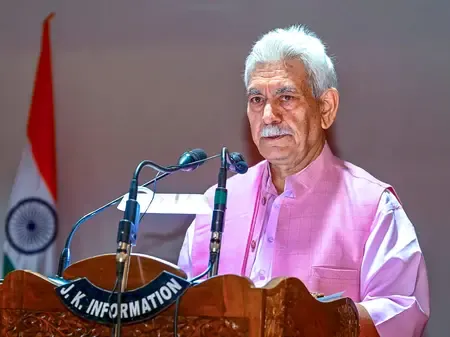
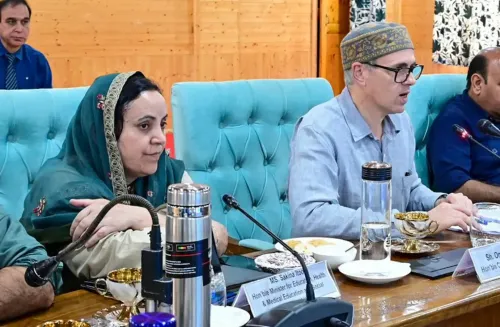
J&K Health Minister Sakina Itoo said the demand is justified, but no formal order has been issued.
JKSA national convener Nasir Kheuhami backed the strike, citing shifts of 24 to 36 hours and inadequate pay.
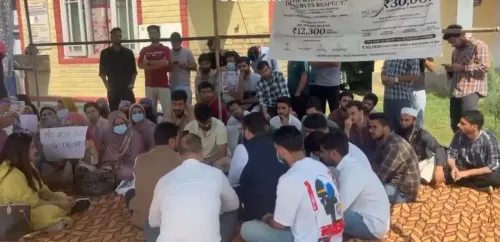
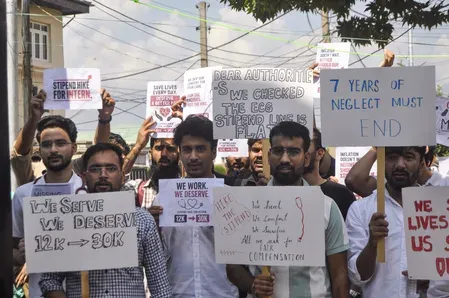
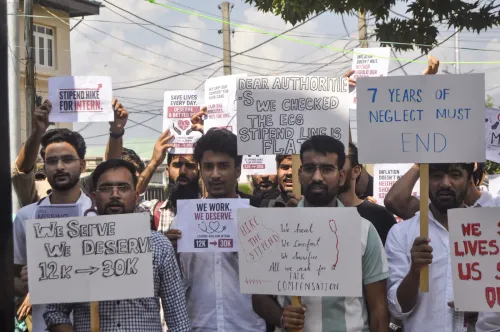
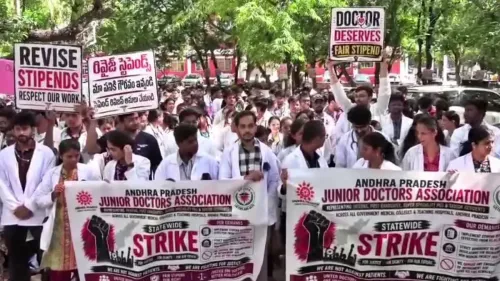
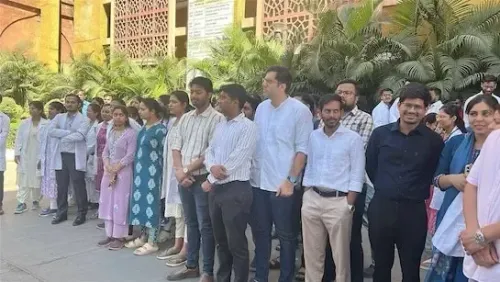
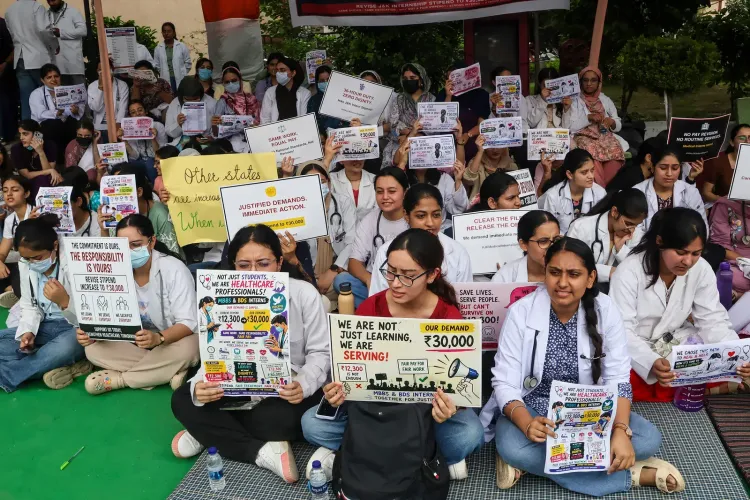
Medical interns pursuing MBBS and BDS courses across Jammu & Kashmir launched an indefinite strike on Monday, 31 August, demanding a near-tripling of their monthly stipend — from the current ₹12,300 to ₹30,000. The walkout has brought clinical services to a halt at multiple government medical institutions across the Union Territory.
Scale of the Disruption
Interns at Government Medical College (GMC) Srinagar and its associate hospitals have completely withdrawn from clinical duties. The strike has spread across the UT, with interns at SKIMS Bemina, GMC Jammu, GMC Anantnag, and GMC Baramulla also joining the protest. Emergency rooms, wards, and outpatient departments have been significantly affected, given that interns form the backbone of round-the-clock hospital operations.
Why Interns Say the Demand Is Justified
Protesting interns argue that J&K's stipend has remained stagnant for nearly six years, even as inflation has steadily eroded purchasing power and workloads have intensified. They contend that J&K offers one of the lowest intern stipends in the country compared to other states. Interns routinely work in wards, OPDs, emergency departments, ICUs, and operation theatres — often in shifts extending to 24 to 36 hours, according to the J&K Students Association (JKSA).
What the Government and Supporters Said
J&K Health Minister Sakina Itoo acknowledged the grievance, stating that the interns' demand for a stipend enhancement is justified. Nasir Kheuhami, national convener of the JKSA, extended formal support to the strike. 'The demand of the interns is genuine, reasonable and fully justified. Medical interns are an essential part of the healthcare delivery system,' Kheuhami said. He added that the current stipend is 'highly inadequate given the rising cost of living' and called for an immediate revision.
Broader Context
The J&K strike is part of a wider pattern seen across Indian states, where medical interns have periodically agitated over low stipends that have not kept pace with the cost of medical education or living expenses. Notably, the Health Minister's public endorsement of the demand — without an accompanying government order — underscores the political sensitivity of the issue. The absence of a formal resolution timeline means services at affected hospitals could remain disrupted in the days ahead.
Point of View
300 intern stipend, frozen for six years, is not just a local anomaly; it reflects a national failure to standardise minimum pay for a workforce that effectively subsidises public hospital operations. The real question is whether this strike produces a binding government order or just another round of sympathetic statements that leave the next cohort of interns in the same position.
NationPress
16 Oct 2026
Frequently Asked Questions
Why are J&K medical interns on strike?
Medical interns in Jammu & Kashmir are on indefinite strike from 31 August, demanding their monthly stipend be raised from ₹12,300 to ₹30,000. They argue the stipend has remained unchanged for nearly six years despite rising living costs and demanding work schedules.
Which hospitals are affected by the J&K intern strike?
Clinical services have been suspended at GMC Srinagar and its associate hospitals, SKIMS Bemina, GMC Jammu, GMC Anantnag, and GMC Baramulla. Emergency rooms, wards, and OPDs are among the departments affected.
What has the J&K government said about the strike?
J&K Health Minister Sakina Itoo has publicly stated that the interns' demand for a stipend hike is justified. However, no formal government order revising the stipend had been issued as of the time of reporting.
How does J&K's intern stipend compare to other states?
Protesting interns claim J&K offers one of the lowest monthly stipends for medical interns in the country. At ₹12,300, the figure has not been revised in nearly six years, while several other states have periodically increased intern remuneration.
Who is supporting the striking interns?
The J&K Students Association (JKSA) has formally backed the strike. National convener Nasir Kheuhami described the demand as 'genuine, reasonable and fully justified,' highlighting that interns work shifts of 24 to 36 hours across wards, ICUs, and emergency departments.