Afghanistan earthquake injures 15 in Nangarhar province
Synopsis
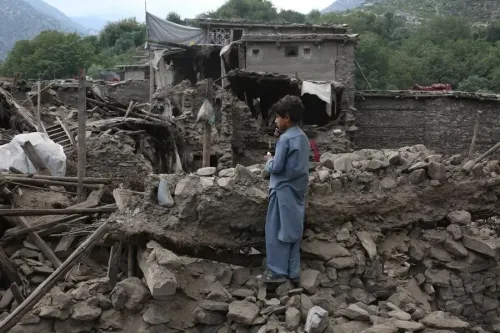
Afghanistan's Nangarhar province was jolted by an earthquake on Tuesday morning, injuring at least 15 people including women and children. The tremor is the latest in a string of quakes to hit the country in 2025 — following a deadly magnitude 5.9 in April that killed eight — underscoring Afghanistan's acute vulnerability to seismic disasters amid an ongoing humanitarian crisis.
Key Takeaways
An earthquake struck Nangarhar province, Afghanistan on Tuesday, 25 August , injuring at least 15 people , including women and children.
The injured were taken to Nangarhar Regional Hospital for treatment; authorities are still assessing damage.
On 19 August , a magnitude 5.3 quake had struck near Afghanistan's Jurm district at a depth of 195.9 km .
A magnitude 6.2 earthquake on 27 June was felt across Delhi , Jammu and Kashmir , and North India.
In April , a magnitude 5.9 quake killed at least eight people and injured a child in Kabul province .
Afghanistan's mountainous terrain and humanitarian crisis severely limit its disaster-response capacity.
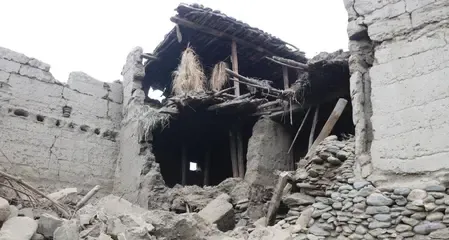
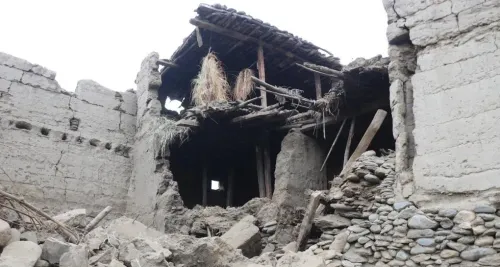
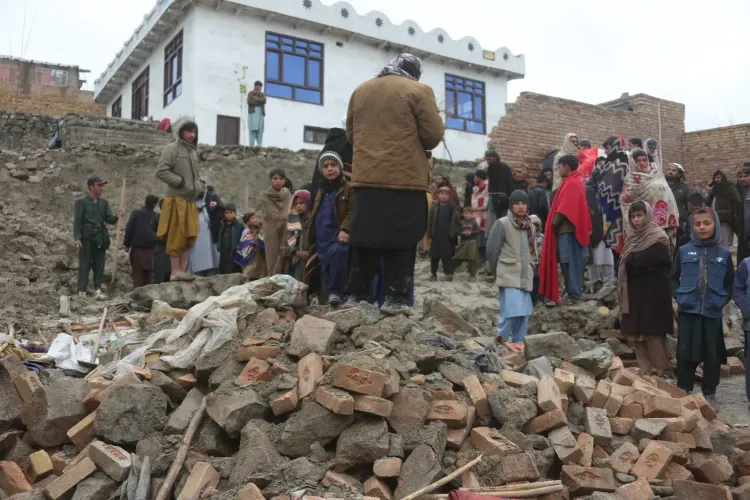
An earthquake struck Afghanistan's eastern Nangarhar province on Tuesday morning, 25 August, injuring at least 15 people, including women and children, according to local media reports. The injured were transported to Nangarhar Regional Hospital for treatment, as authorities began assessing casualties and structural damage.
Key Developments
Local media reported that the injured, among them women and children, were rushed to Nangarhar Regional Hospital in the aftermath of the quake. Authorities are still gathering information on the full extent of casualties and damage caused by the tremor, according to reports.
A Pattern of Seismic Activity
Tuesday's earthquake is the latest in a series of tremors to rattle Afghanistan in recent months. On 19 August, a magnitude 5.3 earthquake struck the country, centred approximately 35 kilometres southwest of Afghanistan's Jurm district at a depth of roughly 195.9 kilometres, according to the US Geological Survey.
On 27 June, a stronger magnitude 6.2 earthquake hit Afghanistan, with tremors felt as far as Delhi, Jammu and Kashmir, and several other North Indian states. The National Centre for Seismology (NCS), the Indian government's nodal agency for earthquake monitoring, confirmed the epicentre was in Afghanistan, with the quake striking at 7:04 pm IST at coordinates 36.442°N, 70.672°E and a depth of 215 km. The NCS shared the details in a post on social media platform X.
Earlier in April, at least eight people were killed when a magnitude 5.9 earthquake struck northern Afghanistan. A house in Kabul province collapsed, killing eight residents and injuring a child. Strong tremors were felt in the capital, Kabul, with the epicentre recorded at a depth of 186.4 km, at 36.55°N, 70.85°E, according to Mohammad Yousuf Hammad, a spokesman for the Afghanistan National Disaster Management Authority.
Why Afghanistan Remains Vulnerable
Afghanistan's mountainous terrain and weak infrastructure make it one of the world's most earthquake-prone and least disaster-resilient nations. The country's prolonged humanitarian crisis has severely hampered its capacity to respond effectively to natural disasters, leaving communities with limited emergency support.
What Happens Next
Authorities are continuing to assess the damage from Tuesday's earthquake in Nangarhar. Given the region's track record of seismic activity and limited disaster-response capacity, the full impact of the tremor may take time to determine. Aid organisations operating in Afghanistan are expected to monitor the situation closely.
Point of View
Forming a pattern that deserves more sustained attention than episodic coverage allows. What makes each tremor more dangerous than its magnitude suggests is the compounding effect of collapsed institutions: no functional early-warning system, overstretched hospitals, and an international aid architecture that has contracted sharply since 2021. The humanitarian community's bandwidth is already stretched thin. Each new earthquake does not just cause immediate casualties — it erodes the fragile coping capacity that remains.
NationPress
9 Oct 2026
Frequently Asked Questions
How many people were injured in the Afghanistan Nangarhar earthquake on 25 August?
At least 15 people were injured, including women and children, when an earthquake struck Afghanistan's eastern Nangarhar province on Tuesday morning, 25 August. All injured were taken to Nangarhar Regional Hospital for treatment.
What is the magnitude of the Nangarhar earthquake on 25 August 2025?
The magnitude of Tuesday's Nangarhar earthquake has not been confirmed in initial reports, as authorities are still assessing the situation and gathering further information on casualties and damage.
How frequently does Afghanistan experience earthquakes?
Afghanistan experiences earthquakes frequently due to its mountainous terrain and location on active seismic fault lines. In 2025 alone, significant earthquakes struck in April (magnitude 5.9, killing eight), June (magnitude 6.2, felt across North India), and August (magnitude 5.3 near Jurm), before Tuesday's Nangarhar tremor.
Why is Afghanistan particularly vulnerable to earthquake damage?
Afghanistan's vulnerability stems from a combination of mountainous terrain, weak building infrastructure, and an ongoing humanitarian crisis that has severely limited the country's disaster-response capacity. Emergency services and hospitals are under-resourced, making even moderate earthquakes potentially deadly.
Did the June 2025 Afghanistan earthquake affect India?
Yes. The magnitude 6.2 earthquake that struck Afghanistan on 27 June 2025 sent strong tremors across Delhi, Jammu and Kashmir, and several other North Indian states. The National Centre for Seismology confirmed the epicentre was in Afghanistan at a depth of 215 km.