175 ISIS fighters killed in US-Nigeria joint airstrikes in northeast Nigeria
Synopsis
In one of the most significant blows to the Islamic State of West Africa Province in years, US-Nigeria joint airstrikes have killed at least 175 ISIS fighters across northeast Nigeria — and that followed the elimination of IS's global number two, Abu-Bilal al-Minuki, in the Lake Chad Basin. The scale and coordination of the operation signals a sharp new phase in US military engagement in West Africa.
Key Takeaways
175 Islamic State fighters were killed in joint US-Nigeria airstrikes across northeast Nigeria , confirmed on 19 May 2025 .
Strikes destroyed checkpoints, weapons depots, logistics centres , and IS financial network headquarters, according to army spokesman Samaila Uba .
IS global deputy Abu-Bilal al-Minuki (also known as Abu-Mainok) was killed in a prior joint strike on his compound in the Lake Chad Basin .
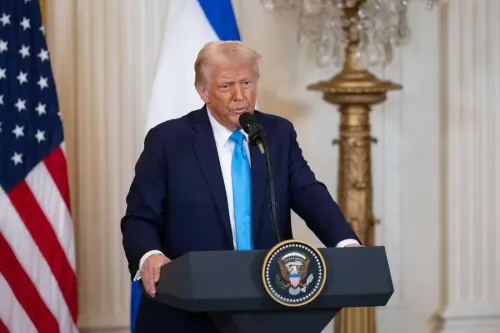
US President Donald Trump and Nigerian President Bola Tinubu both confirmed the senior leader's elimination.
AFRICOM Commander Dagvin Anderson credited Nigerian forces with identifying targets and providing critical intelligence support.
The jihadist insurgency in northeast Nigeria has killed more than 40,000 people and displaced over two million since 2009 , according to the United Nations .
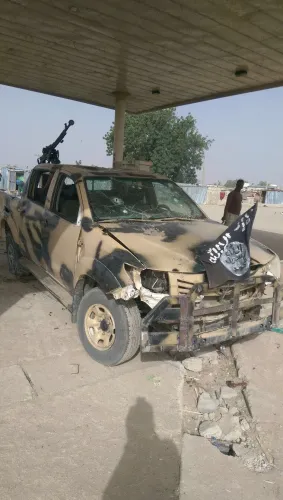
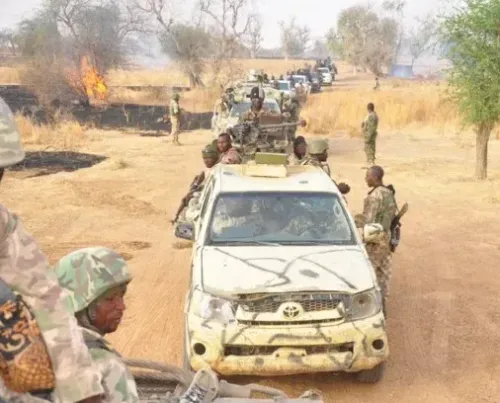
At least 175 Islamic State fighters have been killed in a series of joint airstrikes conducted by Nigeria and the United States across northeast Nigeria, the Nigerian army confirmed on Tuesday, 19 May. The operation marks one of the deadliest recorded blows to the Islamic State of West Africa Province (ISWAP) in recent years.
What the Strikes Targeted
Nigeria's army spokesman Samaila Uba confirmed in an official statement that 'more than 175 ISIS militants were eliminated on the battlefield.' The joint strikes, he said, 'destroyed checkpoints, weapons depots, logistics centres, military equipment, and the headquarters of financial networks used to support terrorist operations.' The coordinated campaign signals a significant escalation in the operational tempo of the US-Nigeria security partnership.
Senior IS Leader Also Eliminated
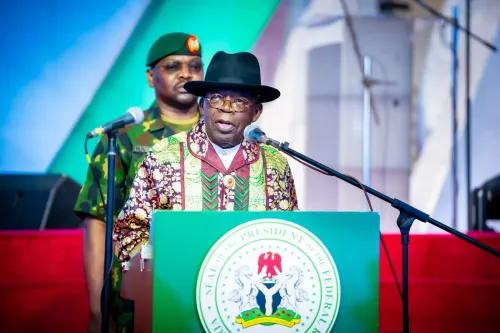
The airstrikes follow a high-profile targeted operation last week in which Nigerian President Bola Tinubu announced the elimination of Abu-Bilal al-Minuki — also known as Abu-Mainok — the second-in-command of the Islamic State globally. Al-Minuki and several of his lieutenants were killed during a strike on his compound in the Lake Chad Basin. Tinubu described the joint operation as 'a significant example of effective collaboration in the fight against terrorism,' adding that it dealt a heavy blow to IS leadership ranks.
US President Donald Trump also confirmed the senior leader's death, stating on his Truth Social platform: 'Tonight, at my direction, brave American forces and the Armed Forces of Nigeria flawlessly executed a meticulously planned and very complex mission to eliminate the most active terrorist in the world from the battlefield.'
US Military's Role and Intelligence Sharing
AFRICOM Commander Dagvin Anderson, testifying at a congressional hearing in Washington, credited Nigerian forces with a central role in the mission's success. 'The Nigerians have played a crucial role over the past few months: they identified the target, helped us gather intelligence, and provided the support necessary to complete this mission,' Anderson said. Military cooperation between Abuja and Washington has been intensifying for several months, according to officials on both sides.
The Scale of Nigeria's Jihadist Crisis
The strikes come against the backdrop of a jihadist insurgency that has ravaged northeast Nigeria since 2009. According to the United Nations, the conflict — led initially by Boko Haram and later by ISWAP — has killed more than 40,000 people and displaced over two million in the region. The Lake Chad Basin, straddling Nigeria, Niger, Chad, and Cameroon, remains one of the most active jihadist theatres in sub-Saharan Africa.
What Comes Next
Analysts will be watching whether the elimination of al-Minuki and the degrading of ISWAP's logistics network translates into a sustained reduction in militant activity, or whether the group demonstrates the resilience it has shown after past leadership losses. The deepening of US-Nigeria military ties also raises questions about the long-term framework for American security engagement in West Africa, particularly as the US has reduced its footprint in the Sahel following coups in Niger and Mali.
Point of View
One global IS deputy — are striking, but the harder question is whether degrading ISWAP's logistics and leadership will hold. The group has reconstituted after previous command losses, exploiting governance vacuums in the Lake Chad Basin that airstrikes cannot fix. More telling than the body count is the intelligence-sharing framework Anderson described in Washington: if that bilateral architecture deepens, it represents a meaningful shift in US Africa strategy at a time when American influence in the Sahel is contracting. Nigeria is effectively becoming Washington's anchor partner in West African counter-terrorism — a role with strategic weight that goes well beyond this single operation.
NationPress
19 Sept 2026
Frequently Asked Questions
How many ISIS fighters were killed in the US-Nigeria joint airstrikes?
At least 175 Islamic State fighters were killed across northeast Nigeria in a series of joint airstrikes conducted by Nigerian and US forces, according to a statement by Nigerian army spokesman Samaila Uba on 19 May 2025.
Who was Abu-Bilal al-Minuki and why does his death matter?
Abu-Bilal al-Minuki, also known as Abu-Mainok, was the second-in-command of the Islamic State globally. He was killed in a joint US-Nigeria strike on his compound in the Lake Chad Basin, a significant blow to IS's global command structure, confirmed by both President Trump and President Tinubu.
What did the joint airstrikes target in northeast Nigeria?
According to army spokesman Samaila Uba, the strikes destroyed IS checkpoints, weapons depots, logistics centres, military equipment, and the headquarters of financial networks used to fund terrorist operations across northeast Nigeria.
How long has the jihadist insurgency been active in northeast Nigeria?
The insurgency began in 2009, led initially by Boko Haram and later by the Islamic State of West Africa Province (ISWAP). According to the United Nations, it has killed more than 40,000 people and displaced over two million in the region.
What is AFRICOM's role in the Nigeria counter-terrorism operations?
AFRICOM, the US military's Africa Command, has been deepening cooperation with Nigerian forces for several months. AFRICOM Commander Dagvin Anderson told a congressional hearing that Nigerian forces identified targets, gathered intelligence, and provided operational support critical to the mission's success.