Nigerian troops rescue 47 ISWAP hostages in Borno State operation
Synopsis
At least 47 hostages — mostly women and children — have been freed from ISWAP captivity in Borno State, as Nigeria's military escalates its Lake Chad offensive. The rescue follows the reported killing of an IS leader in a joint US-Nigeria operation in May, signalling a new phase in a 16-year insurgency that has already claimed over 40,000 lives.
Key Takeaways
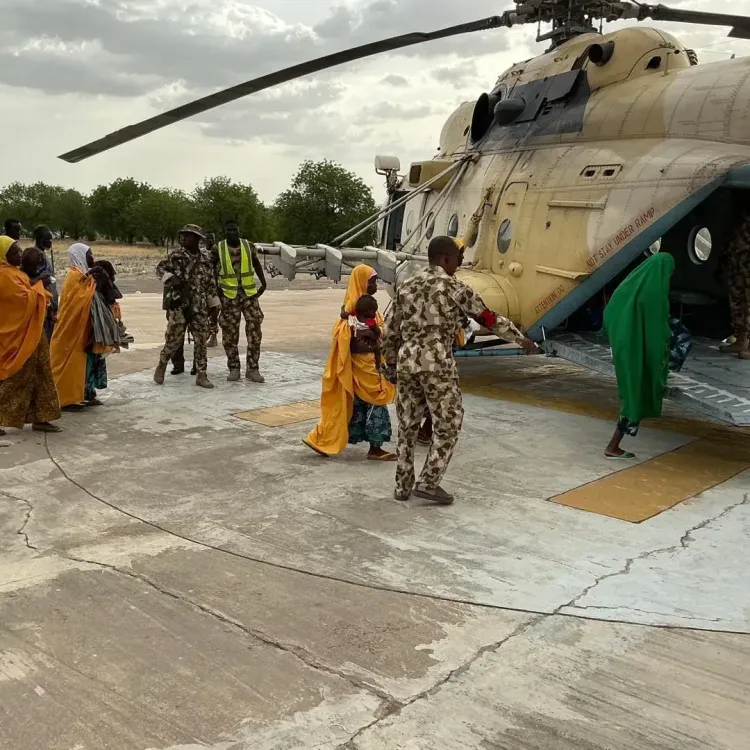
Nigerian troops rescued at least 47 hostages , mostly women and children, from ISWAP in Kangarwa, Kukawa LGA, Borno State .
Coordinated ground and air assaults forced militants to abandon positions, enabling the captives' escape.
In May , more than 175 ISIS militants were eliminated in joint strikes that also destroyed weapons depots and financial networks.
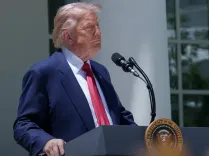
US President Donald Trump announced on 15 May that the IS leader was killed in a joint US-Nigeria operation.
The northeast Nigeria insurgency has killed more than 40,000 people and displaced over 2 million since 2009 , per the United Nations .
AFRICOM Commander Dagvin Anderson credited Nigerian forces as pivotal in recent intelligence-gathering and mission execution.
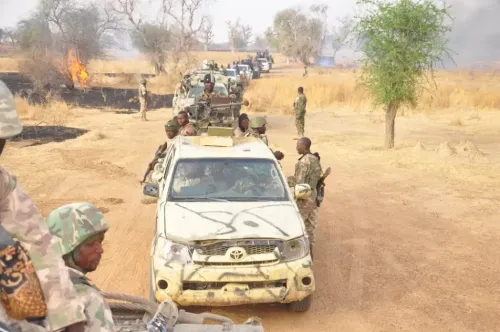
Nigerian military forces have rescued at least 47 hostages — predominantly women and children — held captive by the Islamic State West Africa Province (ISWAP) following sustained operations in Borno State, in the country's restive northeast. The military confirmed the rescue on Tuesday, 23 June, though the exact date of the operation was not specified in its statement.
How the Rescue Unfolded
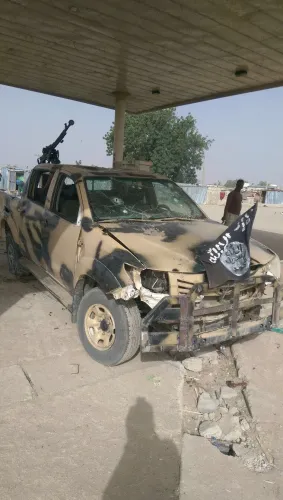
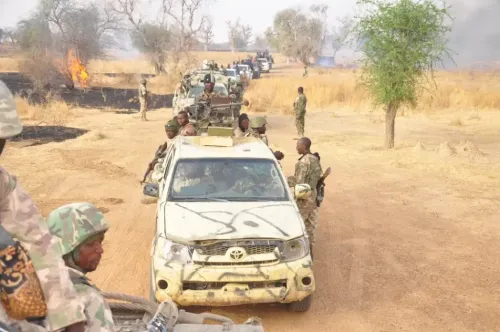
The operation was centred on Kangarwa, a town in Kukawa Local Government Area of Borno State, believed to harbour an ISWAP enclave. Coordinated ground and air assaults forced militants to abandon their positions, allowing the captives — who had been held for a prolonged period — to escape. The military described the strikes as part of an intensified campaign against ISWAP strongholds in the broader Lake Chad region.
All 47 rescued individuals have been moved to a secure location to receive medical attention. Arrangements are reportedly underway to provide humanitarian assistance and facilitate family reunification, according to the military statement.
Wider Campaign Against ISWAP
The rescue comes amid a broader offensive that has yielded significant results in recent months. In May, more than 175 ISIS militants were eliminated on the battlefield during joint strikes. Nigeria's army spokesman Samaila Uba said in a statement on 19 May that the strikes 'destroyed checkpoints, weapons depots, logistics centres, military equipment, and the headquarters of financial networks used to support terrorist operations.'
Notably, on 15 May, US President Donald Trump announced on Truth Social that the IS leader had been killed in a joint operation by US and Nigerian forces. 'Tonight, at my direction, brave American forces and the Armed Forces of Nigeria flawlessly executed a meticulously planned and very complex mission to eliminate the most active terrorist in the world from the battlefield,' Trump stated.
US-Nigeria Military Cooperation
The rescue and recent battlefield gains reflect deepening military ties between Abuja and Washington. AFRICOM Commander Dagvin Anderson, testifying at a congressional hearing in Washington, credited Nigerian forces as central to recent successes: 'The Nigerians have played a crucial role over the past few months: they identified the target, helped us gather intelligence, and provided the support necessary to complete this mission,' he said.
This growing bilateral cooperation marks a significant shift in counter-insurgency strategy in West Africa, with US assets increasingly integrated into Nigerian-led operations in the Lake Chad basin.
Scale of the Crisis
The jihadist insurgency in Nigeria's northeast — initially driven by Boko Haram and subsequently by ISWAP — has, since 2009, killed more than 40,000 people and displaced over 2 million, according to the United Nations. Borno State has remained the epicentre of violence, with communities in the Lake Chad basin bearing a disproportionate humanitarian burden.
The latest rescue, while a meaningful tactical success, underscores how deeply entrenched the insurgency remains — and how far the region still is from durable stability.
Point of View
But it should not obscure a harder truth: after 16 years and 40,000 deaths, ISWAP retains the capacity to hold civilian populations in established enclaves like Kangarwa. The deepening US-Nigeria military partnership — including the reported killing of an IS leader in May — represents a qualitative escalation in counter-insurgency approach, yet similar surges in the Sahel have historically produced fragile gains. The real question is whether battlefield attrition translates into governance and humanitarian recovery in Borno, or whether cleared areas simply refill with the next iteration of the insurgency.
NationPress
22 Sept 2026
Frequently Asked Questions
How many hostages were rescued from ISWAP in Nigeria?
Nigerian troops rescued at least 47 hostages — predominantly women and children — from ISWAP during an operation in Kangarwa, Kukawa Local Government Area, Borno State. All rescued individuals have been moved to a secure location for medical care and family reunification.
Where did the ISWAP hostage rescue operation take place?
The operation took place in Kangarwa, a town in Kukawa Local Government Area of Borno State in northeastern Nigeria, an area believed to host an ISWAP enclave near the Lake Chad region.
What is ISWAP and how long has the insurgency lasted?
ISWAP, the Islamic State West Africa Province, evolved from Boko Haram and has waged a jihadist insurgency in Nigeria's northeast since 2009. According to the United Nations, the conflict has killed more than 40,000 people and displaced over 2 million.
What role did the United States play in recent Nigeria counter-terrorism operations?
The US and Nigeria have been conducting joint military operations, including strikes that reportedly killed an IS leader on 15 May, as announced by President Donald Trump. AFRICOM Commander Dagvin Anderson told a congressional hearing that Nigerian forces provided critical intelligence and support for the mission.
What happens to the rescued hostages now?
All 47 rescued individuals have been taken to a secure location to receive medical attention. The Nigerian military says arrangements are underway to provide humanitarian assistance and facilitate reunification with their families.