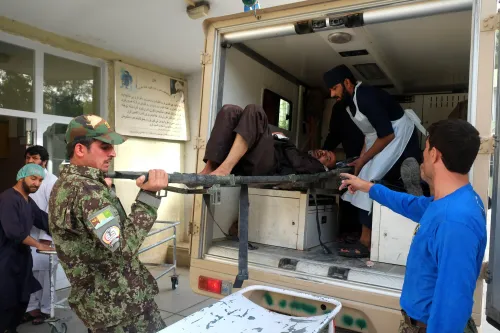
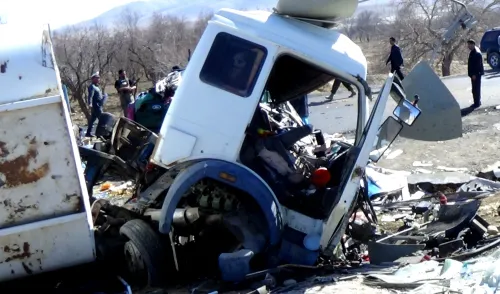
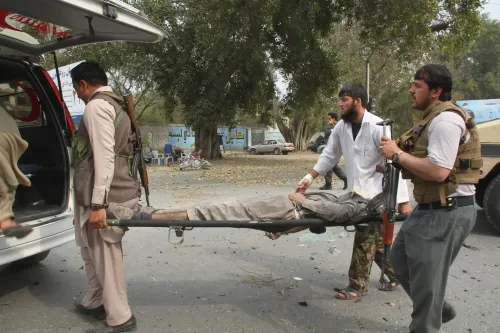
2 Killed, 5 Hurt in Helmand Province Road Crash, Afghanistan
Synopsis
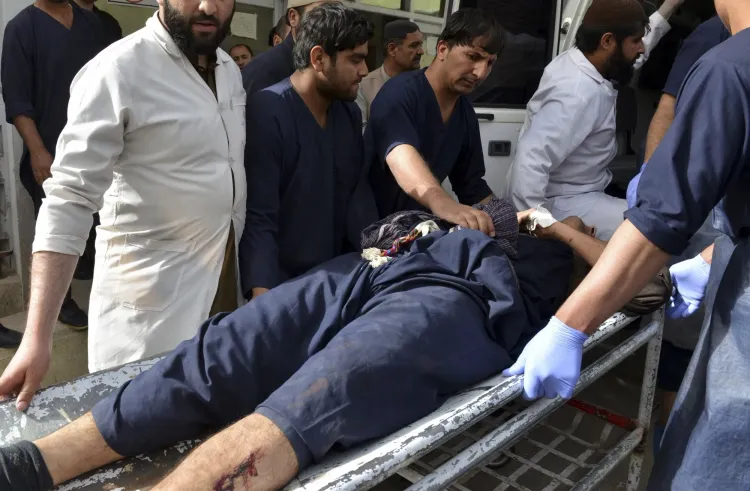
At least two people were killed and five injured in a road crash near Khanashin district in Afghanistan's Helmand province on April 26. It is the fourth major road accident in Afghanistan in under four weeks, exposing a deepening road safety crisis driven by crumbling infrastructure and zero traffic enforcement.
Key Takeaways
Two people were killed and five others injured in a road accident near Khanashin district, Helmand province , southern Afghanistan on Sunday, April 26, 2025 .
Both fatalities were confirmed dead at the scene ; all five injured were transported to a nearby health facility for treatment.
This is the fourth major road accident reported in Afghanistan in under four weeks, following crashes in Logar (April 10) , Nangarhar (April 8) , and Ghazni (April 3) .
The April 3 Ghazni crash killed 2 and injured 13 ; the April 8 Nangarhar crash injured 35 people ; and the April 10 Logar crash killed 1 and injured 15 .
Reckless driving, overloading, dilapidated roads , and lack of traffic enforcement are cited as the leading causes of Afghanistan's chronic road accident crisis.
Afghanistan's road safety situation has worsened since the Taliban takeover in August 2021 , as international infrastructure funding has largely ceased and governance capacity has declined.
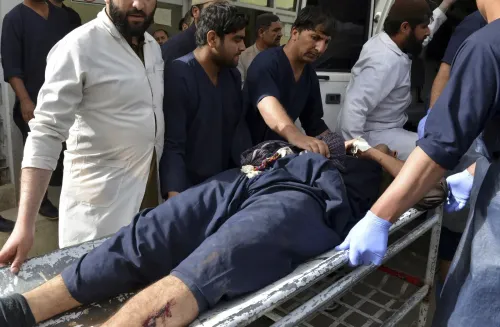
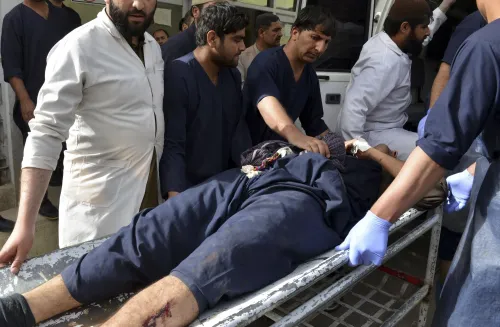
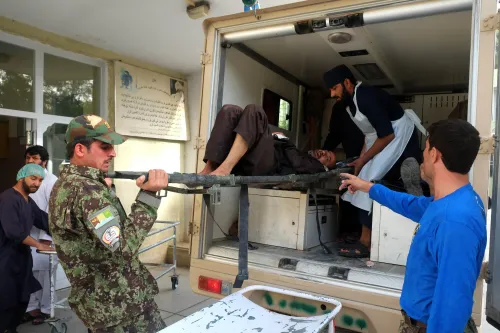
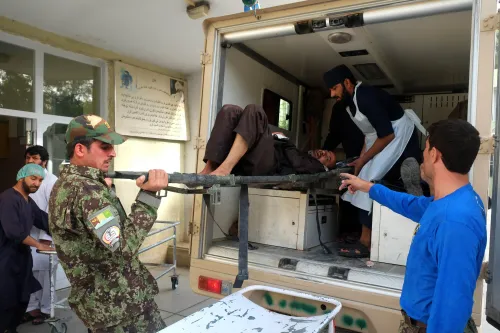
Kabul, April 26: A fatal road accident in Helmand province, southern Afghanistan, claimed the lives of at least two people and left five others injured on Sunday, April 26, 2025. The crash took place on the outskirts of Khanashin district, killing both victims on the spot, according to Afghan broadcaster TOLOnews, citing local sources. All five injured persons were swiftly transported to a nearby medical facility for treatment.
What Happened Near Khanashin District
The collision occurred on a road on the periphery of Khanashin district in Helmand province. Authorities confirmed that two passengers died instantly at the scene, while five survivors sustained injuries of varying severity. Local emergency responders shifted the wounded to a nearby health facility, though no further details on the cause or the type of vehicle involved were immediately disclosed.
The report was initially carried by TOLOnews and subsequently picked up by Xinhua News Agency. Afghan officials have not yet issued an independent statement on the incident.
Pattern of Fatal Road Accidents Across Afghanistan
This tragedy is far from an isolated event. Road accidents have emerged as one of the leading causes of preventable death in Afghanistan, a country already battered by decades of conflict and economic collapse. Experts and officials consistently point to a combination of dilapidated road infrastructure, reckless driving, overspeeding, overloading of vehicles, and the near-total absence of traffic safety enforcement as the primary drivers of these tragedies.
On April 10, 2025, a vehicle rammed into a residential house in Logar province's capital Pul-e-Alam, killing one person and injuring 15 others. Provincial police spokesman Mawlawi Ahmadullah Anas attributed the crash to reckless driving, and confirmed that the injured were treated at nearby health facilities in stable condition.
Just days earlier, on April 8, 2025, a separate road accident in Nangarhar province killed one person and injured a staggering 35 others — underscoring the mass-casualty potential of highway crashes in the region.
On April 3, 2025, a passenger bus veered off the road in Qarabagh district of Ghazni province, killing two commuters and injuring 13 others. Provincial police spokesman Khalid Sarhadi confirmed the incident and said authorities were also searching for a missing boy at the time. An investigation was launched, with reckless driving once again cited as the primary cause.
Why Afghanistan's Roads Remain Deadly
Afghanistan's road safety crisis is deeply structural. The country's highway network — much of it built or repaired during the US-led reconstruction era — has deteriorated sharply since the Taliban takeover in August 2021. International funding for infrastructure maintenance has largely dried up, and the Taliban administration lacks both the technical capacity and financial resources to carry out large-scale road rehabilitation.
Compounding the problem is the near-total absence of a functional traffic police force capable of enforcing speed limits, vehicle load restrictions, or driver licensing standards. Many drivers operate without valid licenses, and vehicles are routinely overloaded beyond safe capacity — particularly on inter-provincial routes like those connecting Helmand, Kandahar, and Kabul.
According to publicly available data from humanitarian organizations operating in Afghanistan, road traffic injuries account for a significant share of trauma cases treated at Afghan hospitals — placing an enormous burden on an already overwhelmed healthcare system.
Broader Implications for Afghanistan's Crisis
The recurring frequency of these accidents — four major road crashes in less than four weeks across Helmand, Logar, Nangarhar, and Ghazni provinces — points to a systemic failure that extends beyond individual driver behaviour. It reflects a governance vacuum in which basic public safety infrastructure has collapsed.
This comes amid Afghanistan's broader humanitarian emergency, where the United Nations has repeatedly warned that millions of Afghans face food insecurity, limited access to healthcare, and deteriorating living conditions. Road safety, while often overlooked in international coverage, directly affects the mobility and survival of ordinary Afghans who depend on road transport for access to markets, hospitals, and employment.
As Afghanistan enters the warmer months — historically a period of increased road traffic due to agricultural activity and seasonal migration — the risk of further fatal crashes is expected to rise. Without urgent investment in road infrastructure and traffic enforcement, the death toll from preventable accidents will continue to mount.
Point of View
Preoccupied with ideological enforcement, has shown little urgency in addressing the road safety catastrophe that kills and maims ordinary Afghans daily. The international community, which once funded Afghan road construction, has largely withdrawn — leaving behind highways that are now death traps. Until road safety is treated as a governance priority rather than a footnote, Afghanistan's roads will remain among the deadliest in the world.
NationPress
19 Sept 2026
Frequently Asked Questions
What happened in the Helmand province road accident on April 26, 2025?
A road accident near Khanashin district in Helmand province, southern Afghanistan, killed two people on the spot and injured five others on April 26, 2025. All injured were shifted to a nearby health facility for treatment, according to TOLOnews.
Why are road accidents so common in Afghanistan?
Road accidents in Afghanistan are primarily caused by dilapidated road infrastructure, reckless driving, overspeeding, vehicle overloading, and the absence of effective traffic safety enforcement. The collapse of governance since 2021 has worsened road maintenance and law enforcement capacity.
How many road accidents have occurred in Afghanistan in April 2025?
At least four major road accidents were recorded in Afghanistan in April 2025 alone — in Helmand, Logar, Nangarhar, and Ghazni provinces — collectively killing several people and injuring dozens. This reflects a systemic road safety crisis across the country.
What is the road safety situation in Afghanistan under the Taliban?
Afghanistan's road safety situation has deteriorated significantly since the Taliban takeover in August 2021, as international infrastructure funding dried up and traffic enforcement collapsed. Roads remain poorly maintained, and driver licensing and vehicle safety standards are rarely enforced.
Who reported the Helmand road accident on April 26?
The Helmand road accident was initially reported by Afghan broadcaster TOLOnews and subsequently cited by China's Xinhua News Agency. Afghan authorities had not issued an independent statement at the time of reporting.