26 killed in two attacks in Sudan's South Kordofan State
Synopsis
Two SPLM-N attacks in Sudan's South Kordofan killed at least 26 people — including women and children — in less than 24 hours, shattering a ceasefire struck just days earlier. With the broader Sudan conflict now in its fourth year and millions displaced, these strikes signal how precarious any pause in fighting remains.
Key Takeaways
At least 26 people were killed in two separate SPLM-N attacks in South Kordofan State on Thursday and Friday .
More than 21 people , including women and children, were killed in attacks on Debi and Luwairi villages near Kauda .
Five people , including a child, died in artillery shelling of residential areas in Dilling .
The Sudan Doctors Network accused SPLM-N of violating a ceasefire reached in late August .
SPLM-N has not responded to the allegations; the group controls parts of South Kordofan and Blue Nile State .
Sudan's conflict, which began in April 2023 , has killed thousands and displaced millions in its fourth year.
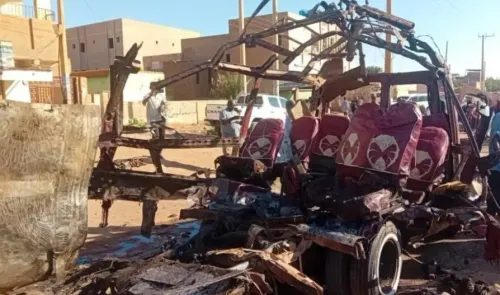
At least 26 people were killed and dozens more injured in two separate attacks in Sudan's South Kordofan State, according to multiple sources including the Sudan Doctors Network. The attacks, which struck civilian areas on Thursday and Friday, have drawn sharp condemnation amid an already devastating conflict now in its fourth year.
Attack on Debi and Luwairi
The Sudan Doctors Network, a volunteer medical organisation, said in a statement on Friday that more than 21 people — including women and children — were killed and others injured on Thursday afternoon when forces of the Sudan People's Liberation Movement-North (SPLM-N) attacked the villages of Debi and Luwairi, located south and west of Kauda. The SPLM-N is an ally of the paramilitary Rapid Support Forces (RSF).
A medical source at a rural hospital in Debi confirmed that more than 20 bodies and 11 injured had been brought to the facility. Civilians were reportedly fleeing the area amid fears of deteriorating humanitarian conditions.
Artillery Strike on Dilling
In a separate incident early Friday, SPLM-N artillery struck residential neighbourhoods in the city of Dilling, killing five people — including a child — and injuring more than seven others, according to the Sudan Doctors Network. An eyewitness corroborated the account, describing shells hitting civilian areas.
Ceasefire Violation Alleged
The Sudan Doctors Network condemned the attack on Debi and Luwairi as a direct violation of a ceasefire agreement reached in late August, accusing SPLM-N of deliberately targeting civilians. SPLM-N has not issued any comment on the allegations.
Notably, SPLM-N — established in 2011 — controls parts of South Kordofan and Blue Nile State, and has been a significant armed actor in the region's protracted instability.
Broader Conflict Context
Sudan's Kordofan states have been a frontline in the broader war between the Sudanese Armed Forces (SAF) on one side and the RSF and SPLM-N on the other. The conflict, which erupted in April 2023, has now entered its fourth year, killing thousands and displacing millions both within Sudan and across its borders.
The latest attacks risk further unravelling fragile humanitarian arrangements and could deepen the civilian toll in one of the world's most under-reported crises. International observers will be watching whether the ceasefire breach prompts any formal diplomatic response.
Point of View
With civilians bearing the cost. The SPLM-N's silence on the allegations is itself telling — armed actors in this conflict have rarely faced meaningful accountability. What is missing from most international coverage is how the RSF-SPLM-N alliance has systematically targeted the Nuba Mountains region, where Debi, Luwairi, and Kauda are located — a theatre with its own long history of atrocity that predates the current war. Without sustained diplomatic pressure specifically on this front, ceasefire announcements risk becoming a ritual that buys time rather than saves lives.
NationPress
20 Oct 2026
Frequently Asked Questions
What happened in Sudan's South Kordofan on 4-5 September?
Forces of the Sudan People's Liberation Movement-North (SPLM-N) carried out two attacks in South Kordofan State, killing at least 26 people in under 24 hours. The first struck villages of Debi and Luwairi on Thursday afternoon, killing over 21 people; the second was an artillery strike on the city of Dilling early Friday, killing five including a child.
Who is the SPLM-N and what role does it play in Sudan's conflict?
The SPLM-N, established in 2011, is an armed movement that controls parts of South Kordofan and Blue Nile State. It is an ally of the paramilitary Rapid Support Forces (RSF) and has been fighting the Sudanese Armed Forces (SAF) as part of the broader conflict that began in April 2023.
Was a ceasefire in place at the time of the attacks?
Yes. The Sudan Doctors Network stated that a ceasefire agreement had been reached in late August, and accused the SPLM-N of violating it by targeting civilian areas in Debi, Luwairi, and Dilling. The SPLM-N has not commented on the allegations.
How severe is the broader Sudan conflict?
Sudan's conflict, which began in April 2023, is now in its fourth year and has killed thousands of people while displacing millions inside the country and across its borders. It is considered one of the world's most acute humanitarian crises.
What is the humanitarian situation in the affected areas?
According to a medical source at a rural hospital in Debi, more than 20 bodies and 11 injured were received at the facility following the Thursday attack. Civilians were reportedly fleeing the area amid fears of worsening conditions, and eyewitnesses in Dilling described shells hitting residential neighbourhoods.