Afghanistan unexploded ordnance kills or injures 50 people monthly: UN
Synopsis
Afghanistan's unexploded ordnance crisis is quietly killing and maiming 50 people a month — and nearly 80 per cent of them are children. With international funding for mine clearance shrinking and 3.3 million people living near contaminated zones, the UN is warning that a decades-old war is still actively claiming civilian lives every single day.
Key Takeaways
Unexploded ordnance in Afghanistan kills or injures an average of 50 people every month , according to UN data.
Children represent nearly 80 per cent of all victims.
An estimated 3.3 million people live near landmine- and ordnance-contaminated areas, with restricted access to farmland, schools, and roads.
Declining international funding has reduced the capacity of mine-clearance and explosive ordnance disposal programmes, according to OCHA .
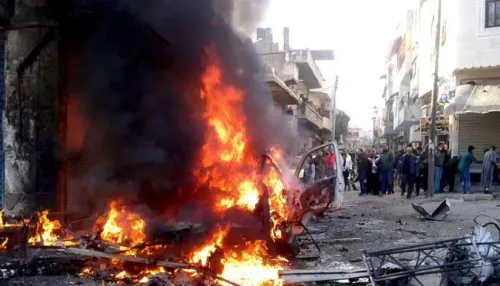
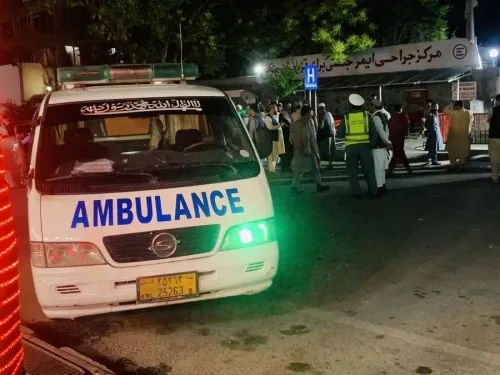
On 13 June , two unexploded device explosions in Helmand province's Sangin district killed one child and injured six others.
Afghanistan is considered one of the most heavily contaminated countries in the world, with ordnance accumulated over 40-plus years of armed conflict.
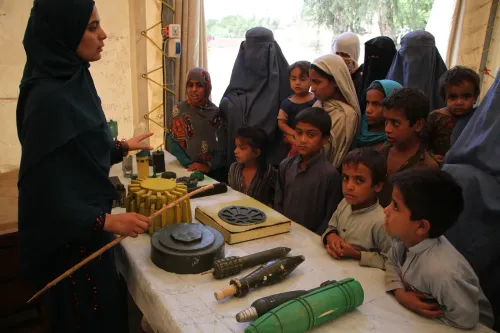
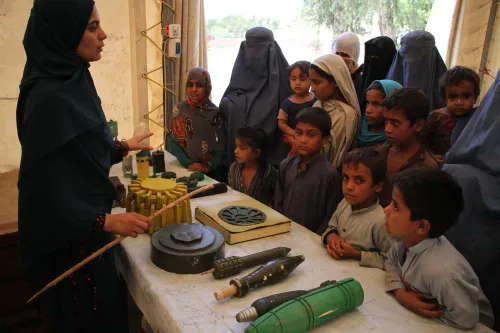
Unexploded ordnance left behind from over four decades of armed conflict in Afghanistan is killing or injuring an average of 50 people every month, according to data from the United Nations. Children account for nearly 80 per cent of all victims, making the crisis one of the most acute child-safety emergencies in the region.
Scale of Contamination
Approximately 3.3 million people in Afghanistan live in proximity to areas contaminated by landmines and unexploded ordnance. The threat is not merely physical — it restricts daily life by limiting access to farmland, schools, roads, and other essential services. Afghanistan is regarded as one of the most heavily mine-contaminated countries on earth, a legacy of successive conflicts spanning former Soviet occupation, civil war, international military operations, and continued fighting.
Funding Cuts Crippling Clearance Operations
The United Nations Office for the Coordination of Humanitarian Affairs (OCHA) has warned that declining international funding is severely hampering mine-clearance and explosive ordnance disposal (EOD) programmes at precisely the moment they are most needed. OCHA described demining and EOD operations as among the most effective life-saving humanitarian activities currently under way in Afghanistan. Humanitarian agencies have stressed that sustained financial support is critical to preventing further civilian casualties, even as donor commitments have contracted.
Children Killed in Helmand Incidents
The human cost was starkly illustrated on 13 June, when two separate unexploded device detonations occurred in Helmand province. In the first incident, in Sangin district, three children discovered a toy-like object and began playing with it; the device exploded, killing one child on the spot and injuring two others. A second explosion in the same district on the same day injured four more children, according to a statement by provincial information and culture director Mullah Abdul Bari Rashid. No further details were provided by the official.
Why the Crisis Persists
Decades of overlapping conflicts have left Afghanistan's soil laced with a variety of explosive remnants — from Soviet-era anti-personnel mines to cluster munitions and improvised devices. The contamination is not static: ongoing instability continues to add fresh ordnance to an already saturated landscape. Critically, the communities most exposed — rural, poor, and dependent on agriculture — are also the least equipped to identify or avoid the threat. The near-total dependence on international funding for clearance operations means that geopolitical fatigue among donor nations translates directly into Afghan civilian deaths.
What Needs to Happen Next
OCHA and affiliated humanitarian agencies have called on the international community to restore and expand financial commitments to Afghanistan's mine-action sector. Without renewed funding, clearance capacity will continue to shrink even as contamination persists, leaving millions of Afghans — disproportionately children — exposed to a preventable and ongoing danger.
Point of View
And with it, the funding that kept demining teams operational. The cruelest detail in the UN data is the 80 per cent child-victim share: these are not combatants encountering battlefield hazards, they are children picking up objects that look like toys. Donor fatigue is a policy choice, and in Afghanistan's case, it is a choice with a measurable body count. The question mainstream coverage rarely asks is how much mine clearance a fraction of the funds spent on the original military operations would buy — and why that calculation has not moved donor governments to act.
NationPress
30 Sept 2026
Frequently Asked Questions
How many people are killed or injured by unexploded ordnance in Afghanistan each month?
According to UN data, approximately 50 people are killed or injured every month in Afghanistan due to unexploded ordnance left behind from decades of armed conflict. Children account for nearly 80 per cent of those casualties.
Why are so many children among the victims of landmines in Afghanistan?
Children are disproportionately affected because unexploded devices are often disguised or resemble everyday objects, making them attractive to curious children. The 13 June incident in Helmand province, where children began playing with a toy-like object that then exploded, is a documented example of this pattern.
How many people in Afghanistan live near contaminated areas?
An estimated 3.3 million people in Afghanistan live near areas contaminated by landmines and unexploded ordnance, according to UN data. This exposure limits their access to farmland, schools, roads, and other essential services.
Why are mine-clearance operations in Afghanistan being scaled back?
OCHA has attributed the reduction in mine-clearance and explosive ordnance disposal capacity to declining international funding. As donor commitments have contracted, demining programmes — which the UN describes as among the most effective life-saving humanitarian activities in the country — have been forced to reduce operations.
What is the history behind Afghanistan's unexploded ordnance problem?
Afghanistan's contamination is the cumulative result of over 40 years of armed conflict, including the former Soviet occupation, civil war, international military operations, and continued fighting. This succession of conflicts has left the country's soil laced with a wide variety of explosive remnants, making it one of the most heavily contaminated nations in the world.