Afghanistan to demine 1.88 sq km in Nangarhar, Kunar, Nuristan
Synopsis
Afghanistan's demining push in Nangarhar, Kunar, and Nuristan targets 1.88 million square metres of contaminated land and will benefit 215,000 people — but the backdrop is grim: children are still being killed monthly by toy-like devices left over from decades of war, as recent tragedies in Helmand and Ghazni grimly illustrate.
Key Takeaways
The Afghanistan National Disaster Management Authority signed a joint demining agreement late Monday, 30 June .
Approximately 1.88 million square metres of contaminated land will be cleared across Nangarhar , Kunar , and Nuristan provinces.
Mine risk education programmes will reach 36,680 residents in affected communities.
An estimated 215,000 people are expected to benefit once the project is fully implemented.
On 13 June , one child was killed and six others were injured in two separate unexploded-device blasts in Helmand's Sangin district .
Afghanistan is among the most landmine-contaminated countries in the world, with dozens killed or maimed monthly — mostly children.
The Afghanistan National Disaster Management Authority signed a joint cooperation agreement with a leading mine clearance organisation late Monday, targeting the clearance of approximately 1.88 million square metres of landmine-contaminated land across eastern provinces. The deal marks a significant step in addressing one of the world's most persistent explosive-remnant-of-war crises.
Scope of the Demining Operation
Under the agreement, the mine clearance organisation will work across multiple districts in the eastern provinces of Nangarhar, Kunar, and Nuristan, according to a statement issued by the authority. The operation will also involve the establishment of rapid emergency response teams in all three provinces.
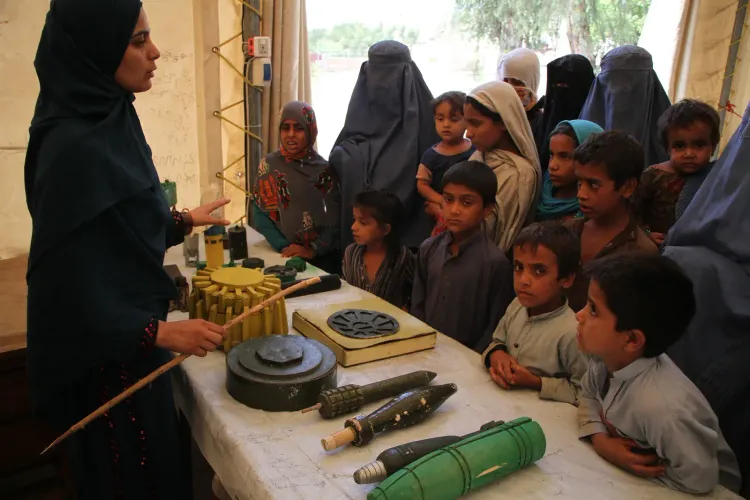
Additionally, mine risk education programmes will be delivered to 36,680 residents in affected communities — an effort to reduce civilian casualties even before full clearance is achieved. Once fully implemented, the project is expected to benefit approximately 215,000 people.
Why This Matters: Afghanistan's Landmine Crisis
Afghanistan is widely regarded as one of the most landmine-contaminated countries in the world. Dozens of people — predominantly children — are killed or maimed every month by explosive devices left over from decades of conflict. The scale of contamination spans rural farmland, roadsides, and areas near former battlegrounds, making everyday movement a life-threatening risk for local communities.
Recent Incidents Underscore the Urgency
The agreement comes against a backdrop of repeated tragedies. On 13 June, a child was killed and six others were injured after two unexploded devices detonated in Sangin district, Helmand province, in southern Afghanistan. According to Mullah Abdul Bari Rashid, provincial director for information and culture, the first incident occurred when three children found a toy-like object and began playing with it — the device exploded, killing one child on the spot and injuring two others. A second explosion in the same district hours later left four more children injured.
Weeks earlier, on 2 June, a teenager was seriously injured in Gilan district, Ghazni province, in eastern Afghanistan, after a similar device — disguised in appearance — detonated while he was handling it, according to a statement from the provincial police office.
What Comes Next
The full implementation timeline for the demining agreement has not been publicly disclosed. However, the combination of physical clearance, emergency response infrastructure, and community education suggests a multi-phase approach. With 215,000 lives in the balance across three of Afghanistan's most conflict-affected eastern provinces, the pace of execution will be closely watched by humanitarian observers.
Point of View
But the scale of the challenge dwarfs the intervention. Clearing 1.88 million square metres across three provinces is meaningful — yet Afghanistan's total contaminated area runs into hundreds of square kilometres, accumulated across four decades of conflict. What is often underreported is that the devices killing children today are not new weapons; they are the detritus of wars the world has largely moved on from. Mine risk education for 36,680 residents matters, but without sustained international funding and a credible implementation timeline, agreements like this risk becoming periodic press releases in a crisis that demands permanent infrastructure.
NationPress
29 Sept 2026
Frequently Asked Questions
What is the Afghanistan demining agreement signed on 30 June?
The Afghanistan National Disaster Management Authority signed a joint cooperation agreement with a leading mine clearance organisation to clear approximately 1.88 million square metres of landmine-contaminated land across the eastern provinces of Nangarhar, Kunar, and Nuristan. The deal also includes rapid emergency response teams and mine risk education for 36,680 residents.
How many people will benefit from the demining project?
Approximately 215,000 people are expected to benefit once the project is fully implemented across the three targeted eastern provinces.
Why is Afghanistan's landmine problem so severe?
Afghanistan is one of the most landmine-contaminated countries in the world, a consequence of decades of successive conflicts. Dozens of people — predominantly children — are killed or maimed every month by unexploded ordnance and landmines left over from past wars.
What recent incidents highlight the urgency of demining in Afghanistan?
On 13 June, one child was killed and six others were injured in two separate unexploded-device blasts in Sangin district, Helmand province. On 2 June, a teenager was seriously injured in Gilan district, Ghazni province, after handling a device that resembled a toy.
Which provinces are covered under the new demining agreement?
The agreement covers multiple districts in the eastern provinces of Nangarhar, Kunar, and Nuristan, where rapid emergency response teams will also be established alongside the physical clearance operations.