Afghan refugees in Peshawar live in fear amid Pakistan police raids
Synopsis
Afghan refugees in Peshawar are sleeping in graveyards to escape police raids while 525 families have already been forcibly repatriated through the Torkham border. With Pakistan expanding its crackdown from camps to urban settlements, thousands of undocumented Afghans face a narrowing choice between deportation into a conflict zone and daily persecution in Pakistan.
Key Takeaways
Afghan refugees in Peshawar report sleeping in graveyards and abandoned buildings at night to avoid escalating police raids .
525 Afghan families were repatriated to Afghanistan after three camps in Bannu district, Khyber Pakhtunkhwa were fully vacated.
Repatriation was conducted through the Torkham border crossing under orders from the Khyber Pakhtunkhwa government .
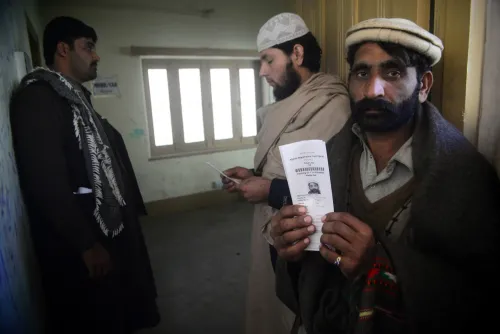
Refugees without legal documents are effectively barred from healthcare, schools, and employment, according to the Afghan Diaspora Network .
Pakistan authorities are now targeting Afghans in private and rented residences in Bannu and surrounding areas for early repatriation.
Refugees have appealed to the United Nations and international organisations for safe, dignified solutions.
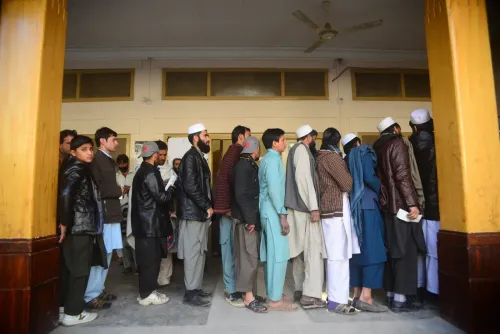
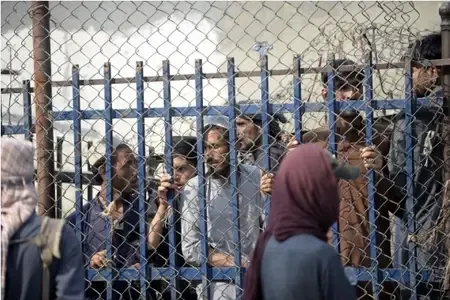
Afghan refugees in Peshawar, Pakistan, say their daily existence has collapsed into a grinding cycle of daytime labour and nighttime dread, driven by escalating police raids, economic marginalisation, and the absence of legal documentation, according to a report by the Afghan Diaspora Network published on 15 July 2025. The accounts paint a picture of a community trapped between persecution in Pakistan and violence back home in Afghanistan.
Hiding in Graveyards to Escape Arrest
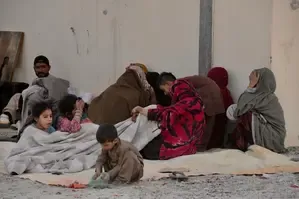
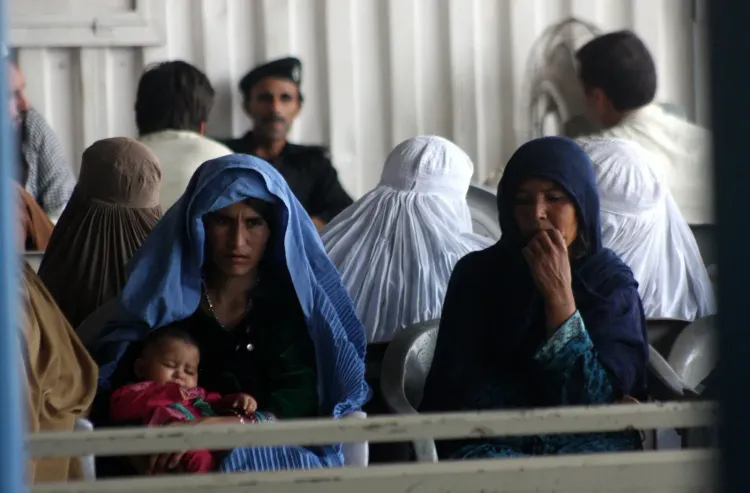
Multiple Afghan refugees in Peshawar described sleeping in graveyards, half-constructed buildings, and open fields at night to evade police operations that have intensified in recent months. “We leave early in the morning to look for work. But at night, out of fear of the police, we sleep in graveyards, half-built buildings, or open places. This life is very hard,” one refugee said.
The fear extends into working hours. “When we go to work, we are always afraid that we will be arrested on the way. Sometimes we even lose work because people don’t hire us — they fear the police will come after them for employing Afghans,” the Afghan Diaspora Network quoted another person as saying.
Economic Squeeze Leaves Families Without Shelter
A young Afghan construction worker told the network that despite working 10 to 12 hours daily, earnings fall short of covering rent, food, and basic expenses. “If we can’t pay rent, the landlord throws us out,” he said. A 60-year-old refugee who has lived in Pakistan for over 20 years said the threat of arrest or expulsion looms at any moment.
Women among the refugee community expressed particular anguish over their children. One Afghan woman said her children cry out of fear whenever they hear of police operations, unable to understand why the family keeps relocating or why a stable life remains out of reach.
Blocked from Healthcare, Schools, and Basic Services
Refugees without legal documents reported being effectively shut out of health centres, schools, and other essential services. Employers, wary of police scrutiny, have increasingly stopped hiring Afghan nationals, further shrinking already limited livelihood options, according to Dawood Jabarkhail’s report in the Afghan Diaspora Network.
Several refugees said Pakistan’s posture has grown more confrontational in recent weeks, a shift they link to Pakistani military airstrikes inside Afghanistan that reportedly killed civilians and triggered widespread outrage. Refugees said they now face social hostility, with remarks framing them as “responsible” for Afghanistan’s instability or as “extensions” of the ongoing conflict.
525 Families Repatriated as Three Camps Vacated
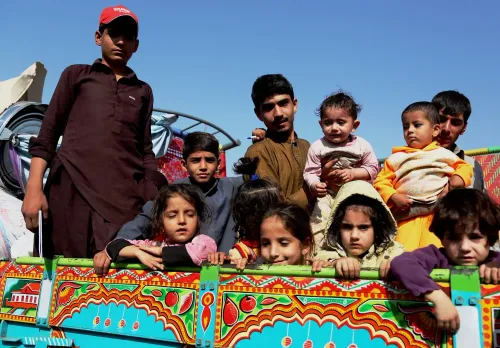
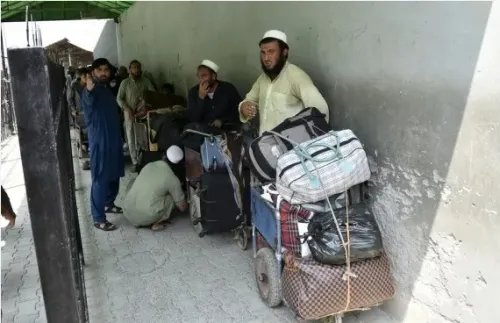
On the ground, authorities have already begun acting. A total of 525 Afghan families were repatriated from Pakistan to Afghanistan after three refugee camps in Bannu district of Khyber Pakhtunkhwa province were fully vacated. Additional Deputy Commissioner Umar Khittab Khan confirmed that the phased repatriation was being carried out under orders from the Khyber Pakhtunkhwa government.
The families were from camps at Bizan Khel, Ghoriwala, and Mamand Khel, and were sent across the Torkham border crossing. Authorities are now reportedly focusing on Afghan nationals living in rented or private residences in Bannu and surrounding areas, with records being shared with local police stations to facilitate early repatriation.
Calls for International Intervention
Afghan refugees in Peshawar have urged Pakistani authorities to treat them in accordance with law and basic human rights principles. They have also appealed to the United Nations, international aid organisations, and Afghan institutions to take their situation seriously and work toward safe, dignified solutions for families who have endured decades of instability and displacement, according to the Afghan Diaspora Network report.
With repatriation operations expanding beyond camps to urban settlements, the situation for undocumented Afghans across Khyber Pakhtunkhwa is likely to become more precarious in the weeks ahead.
Point of View
Yet mainstream coverage tends to treat the two as separate stories. The expansion of repatriation operations from designated camps to urban rented housing is a significant escalation — it signals that Pakistan is no longer managing a refugee population but actively dismantling one. The human cost, documented here through first-person accounts of families sleeping in graveyards, is a direct consequence of a policy framework that has no credible legal-status pathway for the roughly 1.3 million undocumented Afghans still in the country. International organisations have been slow to respond at scale, and without that pressure, Islamabad has little incentive to moderate its approach.
NationPress
15 Jul 2026
Frequently Asked Questions
Why are Afghan refugees in Peshawar sleeping in graveyards?
Afghan refugees in Peshawar are hiding in graveyards, half-built buildings, and open fields at night to avoid arrest during police operations that have intensified in recent months. Without legal documents, they have no safe shelter and fear detention if found in rented accommodation.
How many Afghan families have been repatriated from Pakistan?
A total of 525 Afghan families were repatriated to Afghanistan after three refugee camps in Bannu district of Khyber Pakhtunkhwa — at Bizan Khel, Ghoriwala, and Mamand Khel — were fully vacated. They were sent across the Torkham border crossing under orders from the Khyber Pakhtunkhwa government.
Why has Pakistan intensified its crackdown on Afghan refugees?
Afghan refugees say Pakistan’s approach has grown more confrontational following Pakistani military airstrikes inside Afghanistan that reportedly killed civilians and sparked widespread outrage. Refugees report being socially framed as responsible for Afghanistan’s instability, reflecting a broader deterioration in Pakistan-Afghanistan relations.
What services are Afghan refugees in Pakistan unable to access?
Refugees without legal documents report being effectively excluded from health centres, schools, and other essential services. Employers have also stopped hiring Afghans to avoid police scrutiny, further limiting their economic options, according to the Afghan Diaspora Network.
What are Afghan refugees calling for?
Afghan refugees in Peshawar have urged Pakistani authorities to treat them in accordance with law and basic human rights. They have also appealed to the United Nations, international aid organisations, and Afghan institutions to help find safe and dignified solutions for displaced families.