India-US Trade Push: Atlanta Emerges as $500B Corridor Hub

Synopsis
India's Consulate in Atlanta hosted a high-level trade roundtable on April 23, spotlighting the US Southeast as a $12B+ investment hub and critical corridor toward the $500B India-US bilateral trade target by 2030. Atlanta's logistics infrastructure — anchored by the world's busiest airport and the Port of Savannah — is now central to India's North America strategy.
Key Takeaways
A high-level India–US trade roundtable was held on April 23, 2025 in Atlanta, co-hosted by the Consulate General of India, USIBC, FICCI, and the Metro Atlanta Chamber .
Indian-American investment in the US Southeast has exceeded $12 billion , spanning technology, advanced manufacturing, and logistics sectors.
Hartsfield-Jackson Atlanta International Airport and the Port of Savannah were identified as critical logistics assets enabling Indian firms access to North American markets.
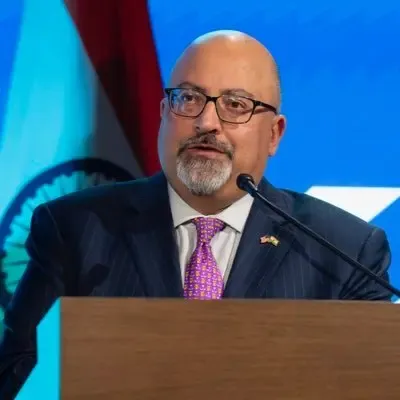
Ambassador (Retd.) Atul Keshap of USIBC and Consul General Ramesh Babu Lakshmanan led key discussions emphasising state-level and institutional partnerships.
The India–USA Trade Facilitation Portal was showcased as a digital tool connecting verified exporters and importers across both nations.
All discussions are aligned with scaling India–US bilateral trade to $500 billion by 2030 , guided by the Consulate's 3Ts strategy — trade, technology, and tourism.
Atlanta, April 25 (NationPress) — India is intensifying its trade and investment outreach across the US Southeast, identifying Atlanta, Georgia as a strategic gateway in the push to scale India–US bilateral trade to $500 billion by 2030. A high-level business roundtable held on April 23, co-hosted by the Consulate General of India in Atlanta, the US-India Business Council (USIBC), the Federation of Indian Chambers of Commerce and Industry (FICCI), and the Metro Atlanta Chamber, brought together senior voices from government, industry, academia, and finance to chart a roadmap for deeper economic integration.
Atlanta as the Southern Gateway to North America
The roundtable, themed Growing the Southern Gateway: Expanding Economic Ties Between Georgia and India, placed Atlanta's world-class logistics infrastructure at the centre of the bilateral conversation. Participants underscored that the Hartsfield-Jackson Atlanta International Airport and seamless connectivity to the Port of Savannah, one of the fastest-growing container ports in the US, give Indian companies an unmatched entry point into North American markets.
The Southeast's logistics ecosystem, participants argued, is no longer a regional advantage — it is a national strategic asset for India–US commerce. With supply chain resilience becoming a geopolitical priority post-COVID, Atlanta's position as a multimodal freight hub is drawing renewed attention from Indian exporters and manufacturers.
$12 Billion Indian-American Investment and Sectoral Depth
Indian-American investment in the Southeast has surpassed $12 billion, with Indian firms deeply embedded in technology, advanced manufacturing, and logistics sectors across Georgia and neighbouring states. Roundtable participants said this figure reflects not just the scale but the diversification and maturity of bilateral commercial ties.
Priority sectors identified during the discussion included logistics, advanced manufacturing, clean energy, digital innovation, and next-generation supply chains. There was particular emphasis on expanding opportunities for small and medium enterprises (SMEs), which often lack the institutional bandwidth to navigate cross-border market access without targeted facilitation mechanisms.
Key Officials and Institutional Voices
Consul General Ramesh Babu Lakshmanan opened the session, reiterating the Consulate's strategic focus on the 3Ts — trade, technology, and tourism — as pillars of its Southeastern US engagement strategy.
Ambassador (Retd.) Atul Keshap, President of USIBC, stressed that state-level engagement — not just federal diplomacy — is critical to building a durable bilateral economic corridor. Representatives from FICCI and the Metro Atlanta Chamber highlighted the role of institutional partnerships in improving policy dialogue, business matchmaking, and investment facilitation.
Trade Facilitation Portal and Millet Diplomacy
A dedicated presentation on the India–USA Trade Facilitation Portal outlined its function as a digital bridge connecting verified exporters and importers, enabling seamless business-to-business engagement across sectors. The portal represents India's effort to reduce friction in bilateral trade as both nations push toward the $500 billion trade target.
The event also featured millet-based dishes, underscoring India's ongoing global campaign to position millets as a sustainable, nutritious food system — aligned with its broader agricultural diplomacy agenda.
Why This Roundtable Matters Now
This engagement comes at a pivotal moment in India–US relations. With global supply chains being restructured away from overdependence on China, India has emerged as a preferred alternative manufacturing and sourcing destination. The Southeast US has seen a surge in Indian corporate investment over the past three years, with companies in IT services, pharmaceuticals, and automotive components expanding operations across Georgia, Tennessee, and North Carolina.
Trade analysts have flagged that while headline investment figures are impressive, SME participation remains disproportionately low — a gap that participants at this roundtable explicitly acknowledged. Strengthening business matchmaking infrastructure and reducing regulatory friction for smaller firms will be the real test of whether bilateral ambitions translate into ground-level impact.
The Consulate General of India in Atlanta confirmed it will continue working with government and industry partners to convert roundtable discussions into tangible collaborations, with Atlanta firmly positioned as a key node in the India–US economic corridor heading into the decade's second half.
Point of View
City-level execution. While the $500 billion bilateral trade target gets repeated at every summit, the real story is in the institutional plumbing being built: trade facilitation portals, chamber partnerships, SME matchmaking frameworks. What the mainstream narrative misses is the competitive urgency driving this: as the US restructures supply chains away from China, India is racing against Vietnam and Mexico to capture that manufacturing share. Atlanta is India's bet on the American South — and the $12 billion already invested suggests the bet is paying off.
NationPress
19 Sept 2026
Frequently Asked Questions
What was the India-US trade roundtable in Atlanta about?
The April 23, 2025 roundtable themed Growing the Southern Gateway focused on expanding economic ties between Georgia and India. It brought together officials from the Consulate General of India in Atlanta, USIBC, FICCI, and the Metro Atlanta Chamber to discuss trade, logistics, technology, and investment opportunities.
How much has India invested in the US Southeast?
Indian-American investment in the US Southeast has exceeded $12 billion, with Indian firms maintaining a significant presence in technology, advanced manufacturing, and logistics sectors across the region.
What is the India-US bilateral trade target by 2030?
India and the US have set a shared goal of scaling bilateral trade to $500 billion by 2030. The Atlanta roundtable and the Consulate's broader 3Ts strategy — trade, technology, and tourism — are aligned with achieving this target.
Why is Atlanta important for India-US trade?
Atlanta serves as a critical logistics hub due to Hartsfield-Jackson Atlanta International Airport and its connectivity to the Port of Savannah. These assets give Indian companies efficient access to North American markets.
What is the India-USA Trade Facilitation Portal?
The India–USA Trade Facilitation Portal is a digital platform designed to connect verified Indian and American exporters and importers, enabling seamless business-to-business engagement across multiple sectors to reduce friction in bilateral trade.