Australia electricity prices to fall up to 7.2% from July 1, says regulator

Synopsis
Australia's electricity regulator has locked in price cuts of up to 7.2% for most households from July 2026 — a direct consequence of renewables crossing the 50% grid threshold for the first time. The milestone is reshaping retail power economics, though South Australia bucks the trend with a small increase and several states remain outside the DMO framework entirely.
Key Takeaways
The Australian Energy Regulator (AER) confirmed electricity price cuts under the Default Market Offer (DMO) effective 1 July 2026 .
New South Wales households will see reductions of 3.4%–5% ; Queensland households will benefit from a 7.2% cut.
South Australia is an exception, with a 1.4% price increase.
Small businesses across all three DMO regions will also see reductions.
Australia's main grids surpassed 50% renewable generation in late 2025 , driving down wholesale costs.
A new 'solar sharer offer' will give smart meter customers three hours of free midday electricity on opt-in plans.
Australia's energy regulator has confirmed that electricity prices will drop for most households and small businesses on regulated default plans from 1 July 2026, citing easing wholesale costs and a surge in renewable energy output. The announcement marks a significant shift in the country's power pricing landscape after years of elevated bills.
Key Reductions by State
The Australian Energy Regulator (AER) released its final Default Market Offer (DMO) for 2026-27, outlining region-specific changes. Residential customers in New South Wales will see price cuts of between 3.4% and 5%, while households in Queensland stand to benefit from a steeper 7.2% reduction. However, South Australia is an exception — residents there will face a modest 1.4% increase.
Small businesses will see reductions across all three regions covered by the DMO. The regulator described the DMO as a regulated safety net and benchmark price for customers on standing electricity plans.
What Is Driving the Decline
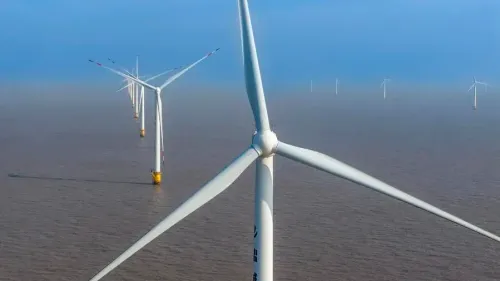
AER Chair Clare Savage attributed the price falls to lower wholesale energy costs, reduced spot price volatility, and increased output from renewable sources including wind farms and battery storage. Notably, Savage said wholesale costs had eased 'despite uncertainty created by conflict in the Middle East' — underscoring the resilience of Australia's domestic energy transition.
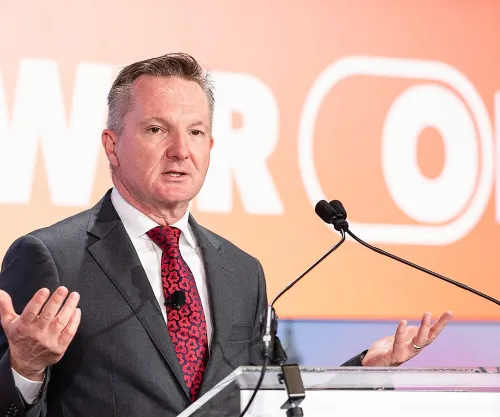
This comes amid a broader structural shift: Australia's main electricity grids surpassed 50% renewable generation in late 2025, a milestone that Minister for Climate Change and Energy Chris Bowen said is 'pushing wholesale energy prices down which is beginning to flow through to bills.'
Government's View on Renewables
Bowen credited expanded renewables and storage capacity with 'reducing reliance on unreliable coal and putting downward pressure on bills.' The government has framed the price relief as a direct dividend of its clean energy push, linking the DMO cuts to its broader decarbonisation agenda.
Critics and energy analysts, however, note that transmission costs and network charges — which are not always reflected in wholesale price movements — remain a structural pressure on retail bills in parts of the country.
Coverage Gaps and the New Solar Offer
The DMO does not apply uniformly across Australia. The Northern Territory, Western Australia, Tasmania, and regional parts of Queensland operate under separate pricing systems and are not covered by these reductions. The AER acknowledged the DMO remains a key benchmark for broader electricity pricing discussions nationally.
In a separate move, the regulator announced a new 'solar sharer offer', which will require retailers to provide opt-in plans offering three hours of free electricity during midday for customers with smart meters. The initiative is designed to better utilise Australia's abundant solar generation capacity during peak production hours.
What Happens Next
The new DMO pricing takes effect from 1 July 2026. Customers on standing plans in eligible regions will see the changes reflected automatically. Those on market contracts should compare offers, as the DMO serves as a benchmark rather than a universal rate. The solar sharer offer rollout timeline is subject to retailer implementation schedules.
Point of View
But the causal link between renewables and retail price relief is more complex than the government's framing suggests. Wholesale prices have eased, yes — but network and transmission costs, which make up a substantial share of the average bill, are not falling at the same pace. South Australia's 1.4% increase is a quiet reminder that the energy transition does not deliver uniform outcomes. The solar sharer offer is a smart demand-side nudge, but its real-world impact depends entirely on retailer uptake and consumer awareness — neither of which is guaranteed.
NationPress
25 Sept 2026
Frequently Asked Questions
When will Australia's electricity prices fall?
The new lower prices take effect from 1 July 2026 under the AER's final Default Market Offer for 2026-27. Customers on standing plans in eligible regions will see the changes applied automatically.
Which states will see electricity price cuts in Australia?
Households in New South Wales will see cuts of 3.4%–5% and those in Queensland will see a 7.2% reduction. South Australia will instead face a 1.4% increase. The Northern Territory, Western Australia, Tasmania, and regional Queensland operate under separate pricing systems.
Why are Australian electricity prices falling?
The AER attributed the cuts to lower wholesale energy costs, reduced spot price volatility, and higher output from renewable sources including wind and batteries. Australia's main grids also crossed the 50% renewable generation milestone in late 2025.
What is the Default Market Offer (DMO) in Australia?
The DMO is a regulated price cap and safety net set by the AER for households and small businesses on standing electricity plans. It also serves as a benchmark for broader retail electricity pricing across the country.
What is the new solar sharer offer announced by the AER?
The solar sharer offer requires retailers to provide opt-in plans giving customers with smart meters three hours of free electricity during midday, designed to maximise use of Australia's solar generation during peak production hours.