Australia wheat output to drop 26% in 2026-27 on fertiliser cost surge
Synopsis
Australia's wheat harvest is on course for its steepest year-on-year drop in years — not because of drought alone, but because the Middle East conflict has sent domestic urea prices surging more than 80 per cent, making it uneconomical for growers to plant. With export values set to fall by A$7.4 billion and total farm output shrinking to A$98.3 billion, the ripple effects will reach grain-importing nations across Asia and beyond.
Key Takeaways
Australian wheat production is forecast at 26.7 million tonnes in 2026-27 , a 26 per cent year-on-year decline and 8 per cent below the 10-year average.
Total wheat-planted area is set to fall 12 per cent to 10.9 million hectares — the smallest since 2019-20 .
Domestic urea prices have surged more than 80 per cent since the Middle East conflict began, pricing many growers out of planting.
Overall Australian winter crop production is forecast to drop 21 per cent to 54.5 million tonnes .
Total agricultural output value is projected to fall 5 per cent to A$98.3 billion ; export value to drop 9 per cent to A$74.8 billion .
Australia's national wheat production is forecast to fall by 26 per cent year-on-year to 26.7 million tonnes in 2026-27, according to an agricultural commodities report released by the Australian Bureau of Agricultural and Resource Economics and Sciences (ABARES) on Tuesday, 2 June. The decline is being driven by sharply rising fertiliser and fuel costs linked to the Middle East conflict, compounded by dry conditions and a below-average winter rainfall outlook.
Key Forecasts from ABARES
The ABARES report projects wheat output at 26.7 million tonnes — down 26 per cent from the previous year and 8 per cent below the 10-year average. A separate crop report from the same agency found that the total area planted to wheat is expected to shrink by 12 per cent to 10.9 million hectares, the smallest planted area since 2019-20.
Broader winter crop production is forecast to fall by 21 per cent year-on-year to 54.5 million tonnes, reflecting a sector-wide pullback across grain and oilseed categories.
Why Growers Are Leaving Land Unplanted
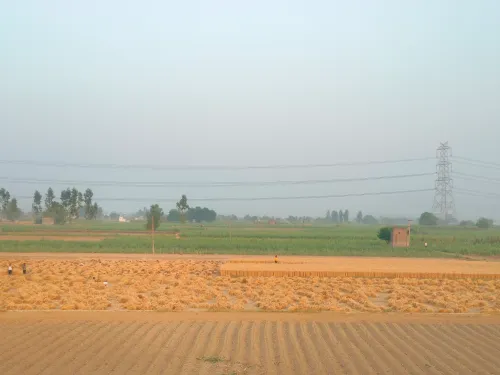
The ABARES report notes that many growers are expected to leave ploughed land fallow rather than plant, citing increases in fuel and fertiliser prices alongside unfavourable weather conditions. Domestic urea prices have risen by more than 80 per cent since the Middle East conflict began, while Australian grain and oilseed export prices have climbed around 20 per cent over the same period — a cost-price squeeze that makes planting economically unviable for many producers.
'The impact of Middle East conflict is significant for Australian agriculture because the sector is export-oriented and farming systems use imports of fuel, fertiliser, chemicals, and packaging as inputs,' the ABARES report stated.
Impact on Agricultural Output and Exports
The cumulative effect of the declining winter crop is expected to weigh heavily on Australia's broader farm economy. ABARES forecasts the total value of Australia's agricultural output will fall by 5 per cent to A$98.3 billion (approximately US$70.5 billion) in 2026-27. Agricultural export value is projected to drop by 9 per cent to A$74.8 billion (approximately US$53.6 billion).
Broader Context and What to Watch
Australia is among the world's top wheat exporters, and a contraction of this scale carries implications beyond its borders — particularly for import-dependent markets in Southeast Asia and the Middle East that rely on Australian grain. This comes amid already elevated global food commodity prices, with the FAO Food Price Index remaining above historical averages.
The combination of geopolitical disruption to input supply chains and adverse domestic weather creates a compounding risk that agricultural analysts warn could persist into the following season if the conflict remains unresolved. All eyes will be on the mid-season crop update from ABARES and any shift in the winter rainfall outlook for key growing regions.
Point of View
Better-capitalised farms. The 9 per cent fall in export value is also a reminder that Australia's role as a reliable grain supplier to Asia is not unconditional; sustained input-cost pressure could structurally reduce supply capacity just as Asian food import demand continues to grow.
NationPress
18 Oct 2026
Frequently Asked Questions
Why is Australia's wheat production falling in 2026-27?
Australia's wheat production is forecast to fall 26 per cent to 26.7 million tonnes in 2026-27 primarily because rising fuel and fertiliser costs — driven by the Middle East conflict — have made planting uneconomical for many growers. Dry conditions and a below-average winter rainfall outlook are compounding the problem.
How much have fertiliser prices risen in Australia?
Domestic urea prices in Australia have risen by more than 80 per cent since the Middle East conflict began, according to the ABARES report. Grain and oilseed export prices have also risen around 20 per cent over the same period, creating a significant cost-price squeeze for farmers.
What is ABARES and why does its report matter?
The Australian Bureau of Agricultural and Resource Economics and Sciences (ABARES) is the federal government's agricultural research and forecasting body. Its commodities and crop reports are the primary official benchmark for Australia's farm output projections and are closely watched by global grain traders and food-importing nations.
How will the wheat decline affect Australia's overall farm economy?
ABARES forecasts Australia's total agricultural output value will fall 5 per cent to A$98.3 billion in 2026-27, while agricultural export value is expected to drop 9 per cent to A$74.8 billion. The winter crop contraction is the single largest driver of this decline.
Which countries could be affected by Australia's reduced wheat exports?
Australia is a major wheat exporter to Southeast Asia and the Middle East — regions that depend on Australian grain supplies. A 26 per cent production drop could tighten supply and push up import prices in those markets, particularly given already elevated global food commodity prices.