EU suspends fertiliser tariffs for one year amid Strait of Hormuz crisis
Synopsis
With the Strait of Hormuz nearly shut and global fertiliser prices spiking, the EU has moved fast — suspending nitrogen fertiliser tariffs for a year to protect farmers and pairing it with a full Fertiliser Action Plan. The €60 million duty relief is a short-term patch; the bigger question is whether Europe can build the domestic production base to stop this crisis from recurring.
Key Takeaways
The EU Council announced a one-year suspension of customs duties on nitrogen-based fertilisers including urea and ammonia on 22 May 2025 .
The measure is expected to save EU farmers and industry approximately €60 million (~$69.6 million) in import duties.
The near-total closure of the Strait of Hormuz has disrupted about one-third of global fertiliser trade, driving up prices sharply.
Imports from Russia and Belarus are excluded from the tariff exemption; a quota cap applies to prevent market flooding.
In 2024 , the EU imported 2 million tonnes of ammonia, 5.9 million tonnes of urea, and 6.7 million tonnes of nitrogen fertiliser mixtures.
The European Commission's Fertiliser Action Plan , adopted this week, aims to boost domestic production and reduce import dependency long-term.
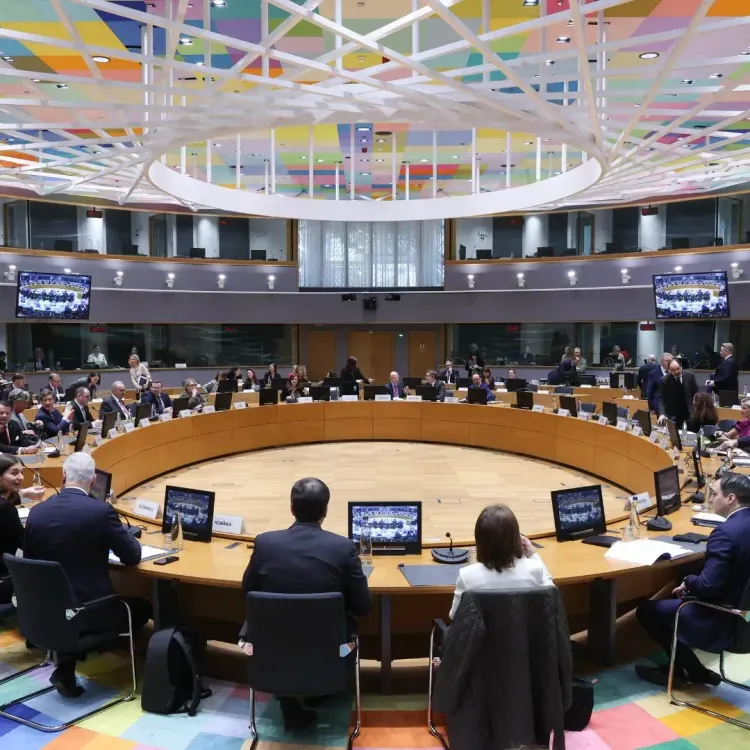
The Council of the European Union on Friday, 22 May announced a one-year suspension of customs duties on key nitrogen-based fertilisers — including urea and ammonia — to cushion EU farmers from the economic fallout of the Iran war and the near-total closure of the Strait of Hormuz. The measure is expected to save EU farmers and the fertiliser industry approximately 60 million euros (around $69.6 million) in import duties.
Why the Strait of Hormuz Closure Matters
The near-complete blockade of the Strait of Hormuz has disrupted roughly one-third of global fertiliser trade, sending prices sharply higher across international markets. In April, the Food and Agriculture Organisation (FAO) of the United Nations warned that a prolonged blockade could trigger an agrifood catastrophe, threatening food security well beyond Europe's borders. This is the most severe disruption to fertiliser supply chains since the post-pandemic commodity shock of 2021–22.
What the Tariff Suspension Covers
Currently, a significant volume of fertilisers enters the EU with tariff rates ranging from 5.5 to 6.5 per cent under most-favoured-nation (MFN) terms, even as large volumes already enter duty-free from preferential-access countries. The suspension targets that MFN-tariffed segment. Notably, the exemption does not apply to fertiliser imports from Russia or Belarus, consistent with the EU's broader sanctions posture toward both countries.
To protect domestic EU producers from a flood of cheap imports, the Council has capped the exemption under a quota — set at the volume of MFN imports recorded in 2024 plus 20 per cent of the volumes imported from Russia and Belarus in the same year. The measure takes effect the day after publication in the EU's Official Journal.
Scale of EU Fertiliser Imports
In 2024, the EU imported 2 million tonnes of ammonia and 5.9 million tonnes of urea, both primarily used in nitrogen-based fertiliser production. The bloc also brought in 6.7 million tonnes of nitrogen-based fertilisers and mixtures containing nitrogen during the same period. The scale underscores how deeply European agriculture depends on global fertiliser supply chains — and how exposed it is when those chains fracture.
The Fertiliser Action Plan
The tariff suspension accompanies a broader policy move: earlier this week, the European Commission adopted the Fertiliser Action Plan, an initiative designed to support farmers facing rising costs and scarcity, reinforce domestic production capacity, and reduce Europe's structural dependency on fertiliser imports.
European Commission President Ursula von der Leyen said: 'With this Action Plan, we are investing in a stronger European fertiliser industry, supporting European farmers and accelerating innovation in sustainable, home-grown solutions. The ongoing fossil fuel crisis shows that climate leadership and economic resilience are interlinked. This is why Europe is building a future based on sustainability, affordability and industrial strength.'
What Happens Next
The tariff suspension will enter into force immediately upon Official Journal publication, giving importers near-term relief. The longer-term test will be whether the Fertiliser Action Plan's domestic production targets can meaningfully reduce Europe's import dependency — a structural vulnerability the current crisis has thrown into sharp relief.
Point of View
But it papers over a structural problem the EU has deferred for years: near-total dependency on imported nitrogen fertilisers whose supply routes run through geopolitical flashpoints. The Russia-Belarus exclusion is politically consistent but arithmetically significant — those two countries accounted for a large share of EU fertiliser imports before the 2022 sanctions. Replacing that volume from alternative sources is precisely what drove the vulnerability the current Iran crisis is now exploiting. The Fertiliser Action Plan is the more consequential document, but 'action plans' in Brussels have a long history of outlasting the crises that prompted them without delivering structural change. Whether this one is different depends on whether the Commission ties domestic production incentives to verifiable capacity milestones — something it has not yet specified publicly.
NationPress
7 Oct 2026
Frequently Asked Questions
Why has the EU suspended fertiliser tariffs?
The EU suspended customs duties on nitrogen-based fertilisers for one year to protect farmers from price spikes caused by the near-total closure of the Strait of Hormuz, which has disrupted about one-third of global fertiliser trade. The measure is expected to save the sector approximately €60 million in import duties.
Which fertilisers are covered by the EU tariff suspension?
The suspension covers key nitrogen-based fertilisers, specifically urea and ammonia. It applies to most-favoured-nation imports subject to tariff rates of 5.5 to 6.5 per cent, and is subject to a quota based on 2024 import volumes.
Are Russian and Belarusian fertilisers included in the EU tariff exemption?
No. The tariff suspension explicitly excludes fertiliser products imported from Russia and Belarus, in line with the EU's broader sanctions framework against both countries.
What is the EU Fertiliser Action Plan?
The Fertiliser Action Plan, adopted by the European Commission earlier this week, is a policy initiative to support farmers facing rising fertiliser costs, strengthen domestic EU production capacity, and reduce Europe's structural dependency on fertiliser imports. It accompanies the one-year tariff suspension as a longer-term structural response.
How much fertiliser does the EU import, and from where?
In 2024, the EU imported 2 million tonnes of ammonia, 5.9 million tonnes of urea, and 6.7 million tonnes of nitrogen-based fertiliser mixtures. A significant share previously came from Russia and Belarus before sanctions redirected trade flows to alternative suppliers.