Four India-bound fertiliser ships clear Hormuz Strait amid global trade stress
Synopsis
Even as the Strait of Hormuz remained a pressure point for global shipping, four Indian fertiliser-laden cargo ships cleared the chokepoint last week — a quiet but critical logistics win. With India's fertiliser stocks at 196.08 LMT and over 90 LMT of urea and P&K secured for kharif, the government's 28-mission diplomatic outreach appears to be holding supply lines together against considerable odds.
Key Takeaways
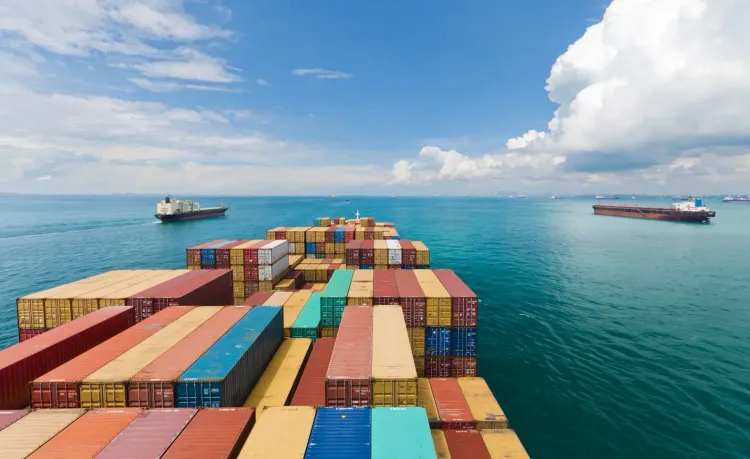
Four cargo ships carrying urea , DAP , and sulphur from the Persian Gulf cleared the Strait of Hormuz last week and are headed to Krishnapatnam , Kakinada , Paradeep , and Mundra .
India's total fertiliser stock stood at 196.08 LMT as of 22 June 2026 , up from 168.67 LMT a year earlier.
Fertiliser sales between 1 March and 21 June 2026 reached 153.4 LMT , a rise of 13.2 LMT over the same period last year.
Post-crisis domestic production hit 133.12 LMT ; import arrivals totalled 43.69 LMT at Indian ports.
India has contracted 17.70 LMT of urea in its latest global tender, securing over 90 LMT of urea and P&K fertilisers for the kharif season.
Procurement was coordinated through 28 Indian Missions abroad , with urea sourced from 11 countries and DAP/NPK from 8 countries .
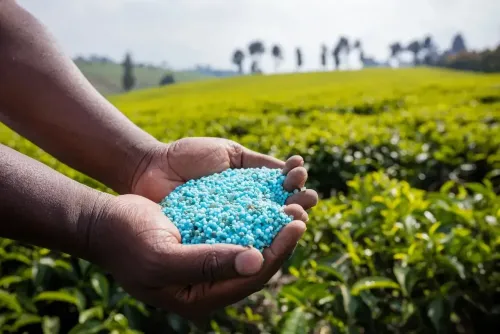
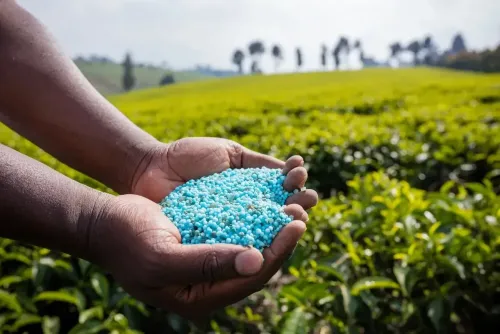
Four cargo vessels carrying shipments of urea, di-ammonium phosphate (DAP), and sulphur from the Persian Gulf are now en route to Indian ports after clearing the Strait of Hormuz last week, according to an official statement issued on Monday, 22 June. The ships are bound for Krishnapatnam, Kakinada, Paradeep, and Mundra, where their cargo will be offloaded to supplement the country's existing fertiliser stocks ahead of the kharif season.
India's Fertiliser Stock Position
India's cumulative fertiliser inventory as of 22 June stands at a robust 196.08 lakh metric tonnes (LMT), up from 168.67 LMT recorded during the same period last year — a year-on-year increase of over 27 LMT. The stockpile breaks down as follows: 81.44 LMT of urea, 20.92 LMT of DAP, 55.91 LMT of NPK, 12.68 LMT of MOP, and 25.13 LMT of SSP, according to the official statement.
Sales Growth After the Middle East Crisis
Total fertiliser sales recorded between 1 March 2026 and 21 June 2026 — the period following the onset of the Middle East crisis — reached 153.4 LMT, reflecting a growth of 13.2 LMT over the 140.2 LMT sold during the corresponding window last year. This uptick signals sustained agricultural momentum across the country despite global supply-chain disruptions.
Domestic Production and Import Strategy
To cushion Indian farmers from volatile global markets, the government scaled up indigenous manufacturing alongside targeted imports. Post-crisis domestic production reached 133.12 LMT, while total import arrivals at Indian ports hit 43.69 LMT during the same period, according to the statement. This dual-track approach — boosting local output while diversifying import sources — has kept supply chains intact even as global shipping lanes faced pressure.
India has also contracted 17.70 LMT of urea in its latest global tender, bringing the total urea and P&K fertiliser procurement secured from international markets to more than 90 LMT for the ongoing kharif season.
Diplomatic Coordination and Source Countries
The procurement drive was supported by active coordination with 28 Indian Missions abroad, which helped open import pipelines across multiple international corridors. Urea has been sourced from Oman, Malaysia, Vietnam, Georgia, Nigeria, Russia, Finland, Egypt, Algeria, Turkey, and the Netherlands. DAP and NPK supplies have been secured via the Red Sea shipping route from Russia, Morocco, Egypt, the USA, Jordan, South Korea, Tunisia, and Saudi Arabia.
With the kharif sowing window now open, the safe passage of these four vessels through the Strait of Hormuz offers a measure of supply assurance — though continued vigilance over Red Sea and Gulf shipping lanes will be critical in the weeks ahead.
Point of View
But the real story is structural: India's dependence on a handful of high-risk shipping corridors — the Hormuz and the Red Sea — for fertiliser imports remains a long-term vulnerability that diplomacy alone cannot resolve. The 196.08 LMT stock buffer is reassuring for this kharif cycle, but a sustained closure of either chokepoint would stress even that cushion quickly. The government's 28-mission procurement network is an impressive operational response; the harder question is whether India is investing enough in domestic fertiliser capacity to reduce that exposure over the next decade.
NationPress
21 Sept 2026
Frequently Asked Questions
Why did four fertiliser ships need to cross the Strait of Hormuz?
The four ships were transporting urea, DAP, and sulphur from the Persian Gulf to Indian ports. The Strait of Hormuz is the primary maritime exit from the Gulf, making it an unavoidable passage for cargo originating from that region. Their safe crossing, confirmed in an official statement on 22 June 2026, was significant given ongoing global trade challenges in the area.
What is India's current fertiliser stock level?
As of 22 June 2026, India's total fertiliser inventory stands at 196.08 lakh metric tonnes — up from 168.67 LMT at the same point last year. The stock includes 81.44 LMT of urea, 20.92 LMT of DAP, 55.91 LMT of NPK, 12.68 LMT of MOP, and 25.13 LMT of SSP.
Which countries is India sourcing fertilisers from for the kharif season?
Urea is being sourced from Oman, Malaysia, Vietnam, Georgia, Nigeria, Russia, Finland, Egypt, Algeria, Turkey, and the Netherlands. DAP and NPK are arriving via the Red Sea route from Russia, Morocco, Egypt, the USA, Jordan, South Korea, Tunisia, and Saudi Arabia.
How has the Middle East crisis affected India's fertiliser sales?
Despite the crisis, fertiliser sales between 1 March and 21 June 2026 rose to 153.4 LMT — a gain of 13.2 LMT over the same period last year. The government attributes this to a combination of scaled-up domestic production and diversified import sourcing coordinated through 28 Indian Missions abroad.
How much fertiliser has India secured for the kharif season?
India has contracted 17.70 LMT of urea in its latest global tender and has secured more than 90 LMT of combined urea and P&K fertilisers from international markets for the ongoing kharif season, according to the official statement.