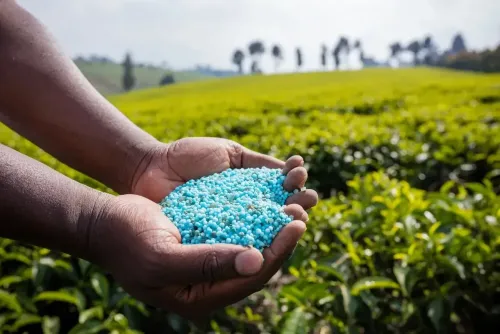
India imports 42.7 lakh tonnes of urea to secure farmer supplies amid global disruptions
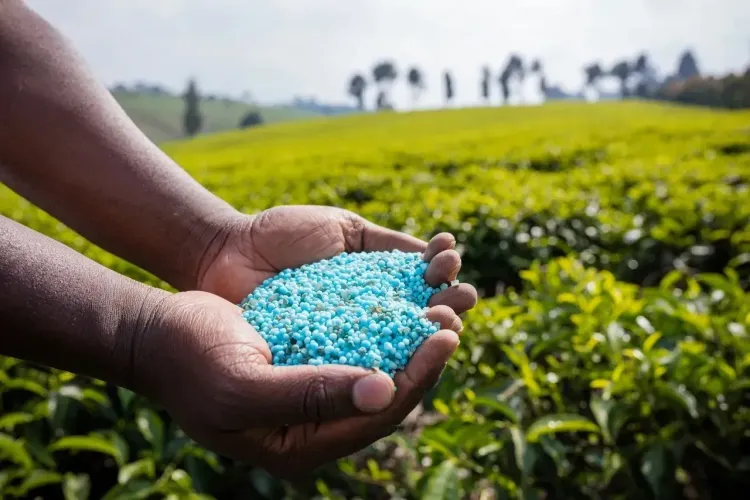
Synopsis
India has quietly built a two-track fertiliser strategy — ramping domestic urea capacity to 269.42 LMTPA while simultaneously importing 42.7 lakh tonnes through global tenders. With NIPU-2026 approved and two new plants in the pipeline, the Centre is betting that supply security for farmers can be engineered even when global commodity markets turn hostile.
Key Takeaways
The Centre procured 42.7 LMT of urea through global tenders — 25 LMT in April 2026 and 17.7 LMT in June 2026 .
Domestic urea production capacity has risen from 207.54 LMTPA in 2014-15 to 269.42 LMTPA in 2026-27 , aided by six new plants adding 76.2 LMTPA .
Urea output hit a record 314.07 LMT in 2023-24 ; production was 293.30 LMT in 2025-26 .
The National Investment Policy for Urea-2026 (NIPU-2026) was approved on 15 July 2026 to attract fresh sector investment.
A new 12.7 LMTPA brownfield urea complex at Namrup, Assam ( AVFCCL ) has been approved alongside the ongoing TFL project.
NBS rates of ₹41,533.81 crore approved for Kharif-2026 to sustain P&K fertiliser availability.
The Centre has procured 42.7 lakh metric tonnes (LMT) of urea through global tenders to ensure uninterrupted fertiliser availability for farmers, even as domestic production capacity has surged to 269.42 lakh metric tonnes per annum (LMTPA), according to an official statement issued on Tuesday, 21 July 2026. The move comes against a backdrop of global supply disruptions and volatile international commodity markets.
Import Procurement Details
To buffer against domestic production shortfalls — caused by raw material constraints, feedstock price swings, and technical plant shutdowns — the government secured 25 LMT of urea via global tenders in April 2026 and a further 17.7 LMT in June 2026. Together, these procurements form a strategic import cushion running alongside expanded domestic output.
Weekly review meetings with state officials and advance import planning are among the mechanisms used to maintain supply continuity, the statement noted. The Department of Agriculture and Farmers Welfare, in consultation with state governments, assesses seasonal demand, while the Department of Fertilisers allocates supplies through monthly plans tracked on the Integrated Fertiliser Management System (iFMS).
Domestic Capacity Expansion
Under the New Investment Policy (NIP)-2012, the Centre commissioned six new urea plants, each with a capacity of 12.7 LMTPA, adding 76.2 LMTPA to the national grid. The public-sector additions include the Ramagundam unit of Ramagundam Fertilisers and Chemicals Ltd (RFCL) in Telangana, and three units of Hindustan Urvarak and Rasayan Limited (HURL) at Gorakhpur (Uttar Pradesh), Sindri (Jharkhand), and Barauni (Bihar).
The private-sector additions are the Panagarh unit of Matix Fertilisers and Chemicals Ltd in West Bengal and the Gadepan-III unit of Chambal Fertilisers and Chemicals Ltd in Rajasthan. As a result, indigenous urea production capacity has grown from 207.54 LMTPA in 2014-15 to 269.42 LMTPA in 2026-27.
Record Production and New Policy Push
The New Urea Policy (NUP)-2015, notified on 25 May 2015 for existing gas-based urea units, has driven an additional 20–25 LMT of annual production compared to 2014-15 levels. Urea output climbed from 225 LMT in 2014-15 to a record 314.07 LMT in 2023-24, though output moderated to 293.30 LMT in 2025-26.
Building on this, the government approved the National Investment Policy for Urea-2026 (NIPU-2026) on 15 July 2026 to attract fresh private investment into the sector. Two additional projects are also in the pipeline: the Talcher Fertilisers Limited (TFL) project and a newly approved 12.7 LMTPA brownfield ammonia-urea complex at Namrup, Assam, to be developed as Assam Valley Fertiliser and Chemical Company Limited (AVFCCL).
Subsidy Framework for P&K Fertilisers
Beyond urea, the government continues to administer the Nutrient-Based Subsidy (NBS) Scheme — in effect since 1 April 2010 — for Phosphatic and Potassic (P&K) fertilisers. Under the scheme, companies may import or manufacture P&K fertilisers freely under the Open General Licence (OGL). For Kharif-2026, NBS rates worth ₹41,533.81 crore have been approved to keep P&K supplies accessible to farmers nationwide.
With NIPU-2026 now in force and two new production projects under development, India's fertiliser self-reliance push is set to intensify through the rest of the decade.
Point of View
Even as six new plants came online, suggesting that feedstock volatility and technical shutdowns can quickly erode capacity gains. The ₹41,533 crore NBS outlay for a single Kharif season also underscores the fiscal weight of India's fertiliser subsidy architecture — a cost that grows with every new plant and every global price spike. NIPU-2026 signals an intent to invite private capital, but whether it can move faster than the demand curve is the real question.
NationPress
20 Oct 2026
Frequently Asked Questions
Why did India import 42.7 lakh tonnes of urea in 2026?
India imported 42.7 LMT of urea through global tenders to compensate for domestic production variability caused by raw material constraints, feedstock price fluctuations, and technical plant shutdowns. The government split the procurement into two tranches — 25 LMT in April 2026 and 17.7 LMT in June 2026 — to maintain uninterrupted supplies to farmers during the crop season.
What is India's current domestic urea production capacity?
India's domestic urea production capacity stands at 269.42 LMTPA as of 2026-27, up from 207.54 LMTPA in 2014-15. The increase is largely due to six new plants commissioned under NIP-2012, which together added 76.2 LMTPA of capacity.
What is NIPU-2026 and why was it approved?
The National Investment Policy for Urea-2026 (NIPU-2026), approved on 15 July 2026, is a policy framework designed to attract fresh private and public investment into India's urea manufacturing sector. It follows the earlier NUP-2015 and NIP-2012 frameworks and aims to further reduce import dependence over the long term.
What is the new urea plant approved in Assam?
The government has approved a 12.7 LMTPA brownfield ammonia-urea complex at Namrup, Assam, to be developed as Assam Valley Fertiliser and Chemical Company Limited (AVFCCL). It is one of two new production projects in the pipeline, alongside the Talcher Fertilisers Limited (TFL) project.
How much has the government allocated for P&K fertiliser subsidies in Kharif-2026?
The Centre has approved Nutrient-Based Subsidy (NBS) rates worth ₹41,533.81 crore for Kharif-2026 to ensure the availability of Phosphatic and Potassic (P&K) fertilisers. Under the NBS scheme, companies are free to import or manufacture P&K fertilisers under the Open General Licence.