UN Establishes Task Force to Tackle Humanitarian Crisis in Hormuz
Synopsis
In a decisive move, the UN has formed a task force to mitigate the humanitarian crisis resulting from the Strait of Hormuz tensions. This initiative aims to secure vital agricultural supplies and promote diplomatic solutions among member states, addressing both food security and broader political impacts.
Key Takeaways
UN Task Force Established: Aimed at addressing humanitarian needs in Hormuz.
Focus on Agricultural Supplies: Essential for preventing a food crisis.
Global Food Security at Risk: FAO warns of significant implications beyond oil.
Collaboration with Member States: Respecting sovereignty while addressing the crisis.
Diplomatic Efforts Supported: By UN’s envoy for the Iran crisis.
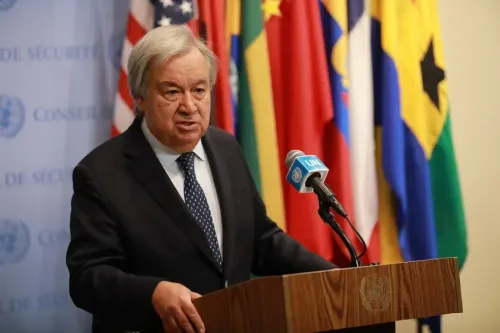
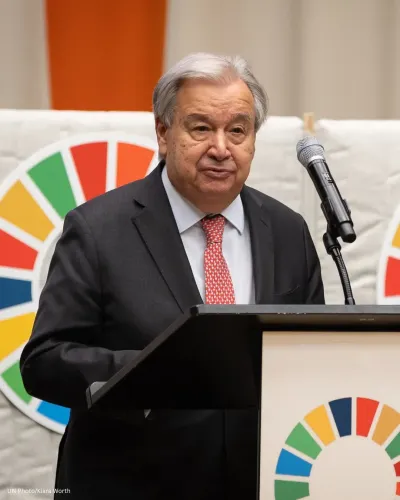
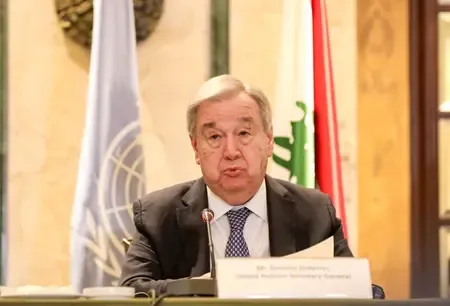
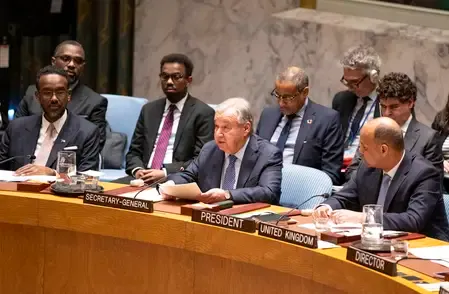
On March 27, the United Nations (UN) revealed the establishment of a specialized task force aimed at addressing the humanitarian repercussions stemming from the ongoing crisis in the Strait of Hormuz. Secretary-General Antonio Guterres made this announcement as the global community grapples with the implications of this critical maritime chokepoint.
The newly formed group is set to devise a strategy for the transportation of fertilizers and essential raw materials, which are crucial in preventing a potential agricultural catastrophe, according to the UN’s spokesperson, Stephane Dujarric.
Dujarric emphasized that the group, under the leadership of Under-Secretary-General Jorge Moreira da Silva, will concentrate on identifying and proposing technical solutions tailored to fulfill humanitarian needs within the Strait of Hormuz.
The Food and Agriculture Organisation (FAO) has issued a stark warning, indicating that the turmoil in the strait transcends oil disruptions, posing serious threats to food security, agricultural productivity, and global markets. FAO Chief Economist Maximo Torero stated, “This situation represents not just an energy crisis, but a systemic shock to agrifood systems worldwide.”
Torero pointed out that nearly 30% of globally traded fertilizers transit through this strait, along with essential gas and oil necessary for fertilizer processing.
Dujarric noted that the task force will leverage the UN's previous experiences in forming international frameworks to tackle crises similar to those witnessed in the Black Sea, Yemen, and Gaza.
He recalled the successful avoidance of famine in certain countries during the Ukraine-Russia conflict, which had obstructed food grain shipments through the Black Sea, thanks to a 2022 agreement with Turkiye that ensured safe passage for food-laden vessels.
The framework the task force develops will be created in close collaboration with pertinent member states, maintaining utmost respect for national sovereignty and established international law, Dujarric added.
Guterres has engaged in discussions with Foreign Ministers Abbas Araghchi of Iran, Adr Abdelatty of Egypt, and Ishaq Dar of Pakistan, as well as with Permanent Representatives Michael Waltz of the United States and Jamal Fares Alrowaiei of Bahrain.
If this UN initiative proves successful, it will foster trust among member states regarding the diplomatic resolution of the conflict and pave the way for broader political agreements, according to Dujarric.
Meanwhile, on the diplomatic front, Guterres’ appointed envoy for the Iran crisis, Jean Arnault, will maintain outreach efforts among the conflicting parties, supported by the task force, Dujarric concluded.
Point of View
The establishment of a UN task force to address the humanitarian fallout from the Strait of Hormuz is a critical step towards safeguarding food security and fostering diplomatic solutions. It reflects a proactive approach to a complex geopolitical issue, prioritizing humanitarian needs while navigating the intricacies of international law and sovereignty.
NationPress
3 Oct 2026
Frequently Asked Questions
What is the purpose of the UN task force?
The UN task force aims to develop strategies for transporting fertilizers and essential raw materials to prevent an agricultural crisis resulting from disruptions in the Strait of Hormuz.
Who is leading the task force?
The task force is led by Under-Secretary-General Jorge Moreira da Silva.
What warnings has the FAO issued?
The FAO has warned that disruptions in the Strait of Hormuz pose significant threats to food security and global agricultural markets, indicating a systemic shock to agrifood systems.
How does the task force plan to work with member states?
The task force will work closely with relevant member states, respecting their national sovereignty and established international legal frameworks.
What past experiences will the task force draw upon?
The task force will leverage UN's past experiences in managing crises in regions like the Black Sea, Yemen, and Gaza.