Awami League at 77: A party under pressure but unbowed, says writer
Synopsis
The Bangladesh Awami League turns 77 not with a quiet celebration but a defiant rallying cry. With thousands of activists reportedly arrested and the party's political space allegedly narrowed, the anniversary doubles as a public demand for democratic rights — framed against a 77-year legacy stretching from the Language Movement to the Liberation War of 1971.
Key Takeaways
The Bangladesh Awami League , founded in 1949 , marks its 77th anniversary amid what party leaders describe as political persecution.
The party claims thousands of its activists have been arrested and subjected to legally framed but politically motivated cases.
Former Prime Minister Sheikh Hasina is credited by supporters with major gains in infrastructure, poverty reduction, and women's empowerment during her tenure.
The Awami League is calling for release of political detainees, withdrawal of cases, and restoration of full political participation rights.
The party traces its founding role to the Language Movement , the Six-Point Movement , and the Liberation War of 1971 under Bangabandhu Sheikh Mujibur Rahman .
This article reflects the opinion of author Abu Obaidha Arin ; views are those of the author, not NationPress.
The Bangladesh Awami League, founded in 1949, marks its 77th anniversary amid what party leaders describe as a sustained campaign of political persecution — with thousands of activists reportedly arrested and legal cases filed against members in what the party calls instruments of suppression rather than genuine justice. As it enters its 78th year, the party's message is one of defiance, not celebration.
A Party Forged in Struggle
The Awami League's claim to Bangladesh's national identity is rooted in its role across the country's defining moments. The party stood at the forefront of the Language Movement, when Bengalis died for the right to speak their mother tongue, and championed the Six-Point Movement — the blueprint for Bengali self-determination. It led the mass uprising of 1969 and guided the country through the Liberation War of 1971 to independence under Bangabandhu Sheikh Mujibur Rahman.
According to the party and its supporters, this is not a political organisation that inherited power — it is one that earned it through sacrifice, imprisonment, and loss of life. No other political force in Bangladesh, they argue, can claim a comparably direct connection to the founding ideals of the nation.
Sheikh Hasina's Record in Government
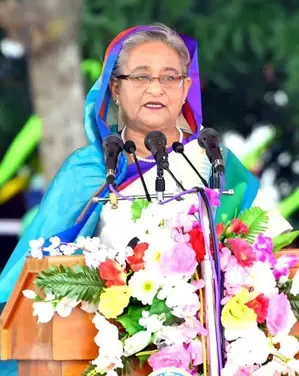
Former Prime Minister Sheikh Hasina, the party's most prominent leader, is credited by supporters with presiding over a period of significant national transformation. Under her tenure, Bangladesh reportedly expanded infrastructure at an unprecedented scale, extended electricity access to previously unserved communities, and built digital connectivity as a tool of governance and economic inclusion.
Poverty reduction, women's empowerment, and social welfare programmes targeting the most vulnerable are cited as pillars of her administration's record. Girls' enrolment in schools and women's participation in the formal workforce, particularly the garment sector, grew substantially during this period — gains that are now internationally documented. The party argues that no campaign of political persecution can erase these achievements from the record.
Allegations of Political Persecution
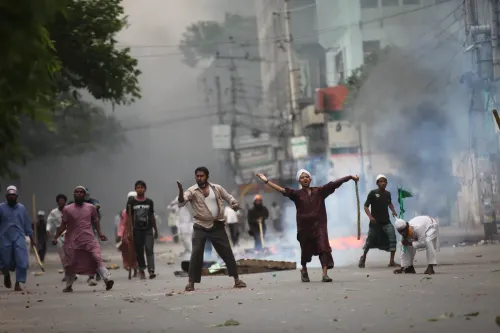
The 77th anniversary arrives under what party leaders describe as severe political pressure. According to the Awami League, thousands of its activists have faced arrests and legal cases that the party characterises as politically motivated. Restrictions on party activities have, it alleges, deliberately narrowed the democratic space that any functioning democracy requires.
The party has been explicit: these cases, in its view, are not about justice but about politics — legal instruments used to suppress an opposition rather than prosecute genuine wrongdoing. This is not an unprecedented pattern in South Asian political history; governments across the region have faced accusations of weaponising the judiciary against rivals.
The Awami League is calling for the release of political detainees, withdrawal of what it terms politically motivated cases, and restoration of full rights to political participation — demands it frames as the baseline requirements of democratic governance enshrined in Bangladesh's own constitution and international human rights frameworks to which Bangladesh is a signatory.
Core Values at 77
The party's stated values at this anniversary mirror those articulated at its founding: freedom of expression, democratic rights, peaceful political participation, equal treatment under the law, national unity, and rejection of extremism and communalism. Supporters argue these are not the demands of a party seeking dominance, but of one insisting that Bangladesh live up to the ideals of its independence movement.
Throughout its history, the Awami League has faced military dictatorship, assassination attempts on its leaders, exile, and imprisonment — and has, its supporters say, returned each time because of a deep popular base among farmers, garment workers, students, and freedom fighters' descendants.
What Comes Next
The Awami League has stated its commitment to pursuing political objectives through democratic means. Whether the current political environment in Bangladesh will permit that remains the central question as the party enters its 78th year. The path forward — for the party, for Sheikh Hasina, and for Bangladesh's democratic trajectory — will depend significantly on whether the space for legitimate political opposition is restored or further constrained.
This article is based on an opinion piece by Abu Obaidha Arin, a Bangladeshi writer focused on politics, governance, and the societal impact of digital systems. The views expressed are those of the author.
Point of View
Not a news report, and its framing is unambiguously pro-Awami League — a fact readers deserve to weigh. The claims of political persecution are serious and deserve scrutiny, but the article presents only one side: the party's own account, without independent verification or the current government's position. The Awami League's historical record is real, but so are the documented controversies of its later years in power — including press freedom concerns and allegations of electoral irregularities — none of which feature here. A complete picture of Bangladesh's democratic crisis requires both.
NationPress
21 Sept 2026
Frequently Asked Questions
What is the Bangladesh Awami League's 77th anniversary about?
The Bangladesh Awami League, founded in 1949, is marking 77 years of existence amid what the party describes as political persecution, including mass arrests of activists and restrictions on party activity. The anniversary has been framed by party leaders as a rallying call for democratic rights rather than a routine celebration.
What role did the Awami League play in Bangladesh's history?
The Awami League led several defining moments in Bangladesh's national history, including the Language Movement, the Six-Point Movement for Bengali self-determination, the mass uprising of 1969, and the Liberation War of 1971 that resulted in independence under Bangabandhu Sheikh Mujibur Rahman.
What is Sheikh Hasina's record as Prime Minister?
Former Prime Minister Sheikh Hasina is credited by supporters with significant gains in infrastructure, electricity access, digital connectivity, poverty reduction, and women's empowerment during her time in office. These achievements are internationally documented, though her tenure also attracted criticism on other governance fronts not covered in this opinion piece.
What is the Awami League demanding from the current government?
The Awami League is calling for the release of political detainees, the withdrawal of what it describes as politically motivated legal cases against its members, and the removal of restrictions on legitimate political activity — demands it frames as constitutionally guaranteed and consistent with international human rights standards.
Who wrote this article and what is its nature?
This article is based on an opinion piece by Abu Obaidha Arin, a Bangladeshi writer focused on politics, governance, and digital systems. It represents the author's views and those of the Awami League, and should be read as advocacy commentary rather than neutral news reporting.