The Reality of Enforced Disappearances in Balochistan: A Reflection of Military Control
Synopsis
In Balochistan, enforced disappearances reveal the waning authority of the Pakistani military. This article delves into the grim reality of how disappearances have become a method of governance, affecting the lives of countless families and the political landscape of the region.
Key Takeaways
Enforced disappearances are a critical issue in Balochistan.
The Pakistani military's control is increasingly characterized by coercion.
Families experience profound trauma due to the disappearance of loved ones.
The situation has significant implications for regional politics and human rights.
Activism and documentation efforts are vital for raising awareness.
Colombo, April 18 (NationPress) The issue of enforced disappearances in Balochistan transcends humanitarian concerns; it starkly illustrates the diminishing control of the Pakistani military.
A state may silence dissent temporarily through custody denial, postponements in court hearings, dispersing public protests, and relegating the missing individuals to mere spreadsheet entries. However, when enforced disappearance becomes normalized, it shifts from a display of authority to an admission of state fear, as noted in a recent report.
The Sri Lanka Guardian highlights that the grim truth in Balochistan indicates that Pakistan's most extreme means of governance reveals how much control has already eroded.
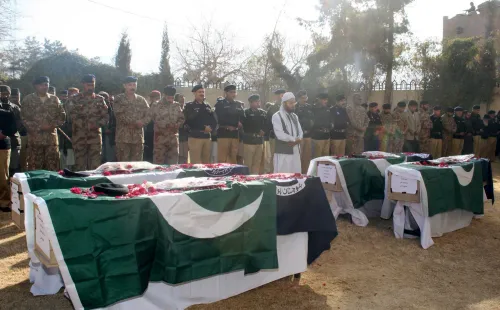
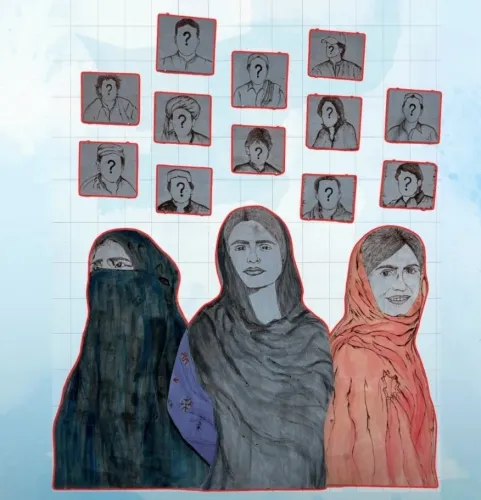
“In Balochistan, enforced disappearance is no longer just an accusation. It has evolved into a governance technique, a dialect of fear, and, for numerous families, the most personal representation of the Pakistani state. A son departs for his studies and never returns. A brother is apprehended at a checkpoint and disappears into an unmarked system,” the report elaborated.
“A corpse surfaces days later, marked by signs of custody yet devoid of any official recognition. Consequently, the crisis in Balochistan transcends being merely a peripheral human rights concern; it is now central to the region’s political landscape, influencing perceptions of the state, modes of dissent, and the ongoing conflict,” it continued.
The report points out that Balochistan has been at odds with Pakistan since its forced annexation in 1948, treated less as an integral part of the nation and more as an “occupied resource frontier.” This has led to recurrent military actions, political repression, with leaders frequently imprisoned, exiled, or assassinated, and pervasive poverty despite its substantial natural resources.
According to the report, the Pakistani military, the Inter-Services Intelligence (ISI), and civilian bureaucrats work collaboratively to establish a control system in the province based on coercion rather than consent.
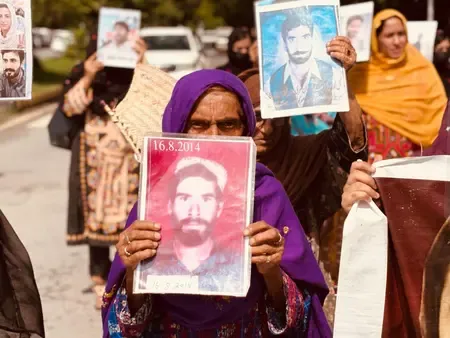
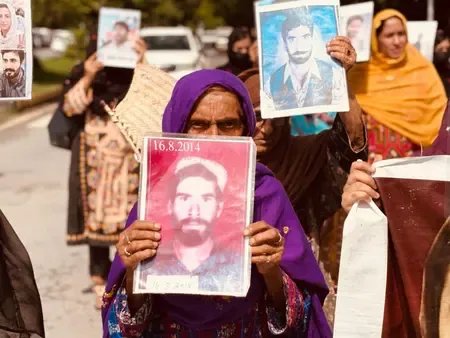
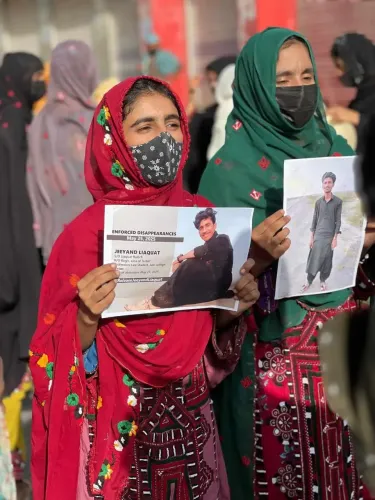
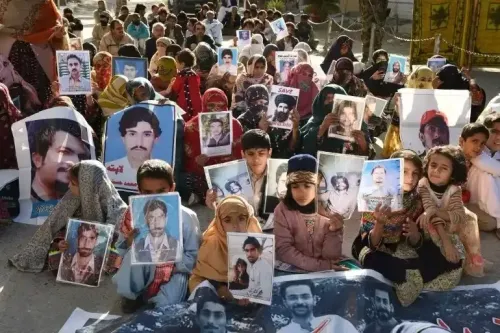
“Enforced disappearance is its most acute tool. For years, families in Balochistan have recounted instances of men taken from hostels, abducted from homes in front of bystanders, or seized at security checkpoints, only to vanish into a military and intelligence labyrinth that seldom admits to holding them. The aftermath has become ritualized: protests in front of press clubs, sit-ins on national highways, and petitions to courts that the deep state routinely disregards, with mothers clutching photographs that, over time, become their only official documentation,” the report stated.
The report referenced Paank, the human rights division of the Baloch National Movement, which recorded 1,355 enforced disappearances in 2025 and 225 extrajudicial killings.
“Its monthly records indicate this pattern has persisted into 2026, with 82 disappearances in January and 109 in February. These figures, while from activists, illustrate a phenomenon that extends far beyond occasional abuses; they depict a systematic issue that is province-wide and increasingly willing to transition from covert detention to what families and activists have termed ‘kill and dump,’” the report remarked.
Point of View
The ongoing crisis in Balochistan highlights a significant humanitarian and political issue. The systemic violations of human rights challenge our national integrity and call for a reevaluation of governance methods that prioritize coercion over consent.
NationPress
19 Sept 2026
Frequently Asked Questions
What are enforced disappearances?
Enforced disappearances refer to instances where individuals are abducted by state agents or organized groups, and their fate remains unknown, often leading to a lack of accountability.
How many enforced disappearances occurred in Balochistan?
In 2025, there were 1,355 documented enforced disappearances in Balochistan, according to human rights organizations.
What impact do enforced disappearances have on families?
Families of the disappeared face immense emotional trauma, uncertainty, and often engage in protests to seek justice and accountability from the state.
Why is the situation in Balochistan significant?
The situation in Balochistan reflects broader issues of human rights, governance, and the relationship between the state and marginalized regions within Pakistan.
What can be done to address enforced disappearances?
Addressing enforced disappearances requires comprehensive legal reforms, accountability for state agents, and greater engagement with affected families to ensure their rights are protected.