Balochistan is a 'fascist colony' under Pakistani Army rule, says Sindhi leader at Hannover event
Synopsis
At a Baloch National Movement event in Hannover, Sindhi leader Lakhu Luhana did not mince words — calling Balochistan a 'fascist colony' shaped by Punjabi chauvinism and military dominance. The charge was backed by BNM's human rights wing with stark numbers: 1,911 enforced disappearances and 452 extrajudicial killings in roughly 18 months, alongside a Pakistani official's own admission of 60,000 military raids in 2026 alone.
Key Takeaways
World Sindhi Congress Chairman Lakhu Luhana called Balochistan a 'fascist colony' at a BNM event in Hannover, Germany on 18 November 2026 .
He alleged politicians in Pakistan are 'employed' by the military and that parliament and the judiciary have been 'hollowed out.' Paank (BNM's human rights wing) documented 1,911 enforced disappearances and 452 extrajudicial killings across 2025 and the first half of 2026 .
Additional Chief Secretary Hamza Shafqat was reportedly quoted saying 60,000 military raids and operations were conducted across Pakistan between January and 20 October 2026 .
Luhana extended solidarity to Baloch , Pashtun , Sindhi communities and residents of Pakistan-occupied Kashmir , saying all face intensifying repression.
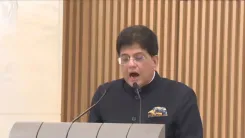
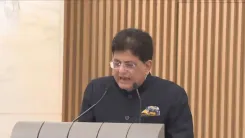
World Sindhi Congress Chairman Lakhu Luhana on 18 November 2026 declared that the Pakistani Army's dominance has reduced Balochistan to a 'fascist colony', accusing Islamabad of systematically looting the province's natural resources while unleashing escalating repression against its people. Luhana made the remarks while addressing an event organised by the Baloch National Movement (BNM) in Hannover, Germany.
Key Accusations Against Islamabad
Luhana rejected the conventional framing of Balochistan's condition as 'internal colonialism', arguing that the phenomenon had evolved into what he termed 'fascist colonialism driven by Punjabi chauvinism and the overwhelming dominance of the army.' He alleged that elected politicians in Pakistan are not genuinely representative but effectively 'employed' by the military, while parliament and the judiciary have been 'hollowed out.' He described the ruling elite as 'morally bankrupt.'
According to Luhana, Islamabad's economic model is built on extracting resources from oppressed provinces and securing foreign funds by acting as a proxy for external powers. With those external revenue streams reportedly weakening and Pakistan's economy under severe strain, he argued, the military's appetite has only intensified — now seeking to seize land, minerals, and water from Balochistan and other regions. He cited reports of millions of acres of land being appropriated and mineral samples being offered for sale abroad, though these claims could not be independently verified.
Human Rights Data: Disappearances and Killings
Paank, the Human Rights Department of the BNM, presented figures at the same event that painted an alarming picture of abuses on the ground. According to Paank's documentation, 1,911 cases of enforced disappearances and 452 extrajudicial killings were recorded in 2025 and the first half of 2026 combined.
Breaking down the data further, Paank reported 1,355 enforced disappearances and 225 extrajudicial killings in 2025 alone. In just the first six months of 2026, the organisation documented a further 556 disappearances and 227 extrajudicial killings — a pace that, if sustained, would mark a sharp year-on-year escalation.
60,000 Military Raids Cited by Pakistan's Own Officials
Paank's Human Rights Coordinator drew attention to a press conference held by the Balochistan government on 20 October 2026, during which Additional Chief Secretary Hamza Shafqat was reportedly quoted as saying that 60,000 military raids, intelligence-based operations, and house searches had been carried out across Pakistan between January and 20 October 2026. Critics at the event argued that this official figure itself validates concerns about the scale of state operations targeting civilian populations.
Broader Solidarity: Baloch, Pashtun, Sindhi and PoK Communities
Luhana broadened his critique beyond Balochistan, observing that indigenous communities across Pakistan — including Baloch, Pashtuns, Sindhis, and residents of Pakistan-occupied Kashmir (PoK) — were intensifying their resistance with, as he put it, 'no other option for survival.' He also linked Pakistan's economic desperation to an increase in pressure on relatives of activists living abroad, suggesting that transnational repression has become part of Islamabad's toolkit.
This comes amid growing international scrutiny of Pakistan's human rights record, with multiple diaspora organisations using European platforms to raise awareness. How Islamabad responds to the mounting documentation of abuses — and whether international bodies take up these cases — will shape the trajectory of the Baloch rights movement in the months ahead.
Point of View
000 state operations in 2026 is a rare instance of an official figure being weaponised against the state's own human rights narrative. What mainstream coverage tends to underweight is the transnational dimension: Luhana's explicit mention of pressure on 'relatives of activists living abroad' signals that Pakistan's repression is no longer geographically contained. As diaspora coalitions grow more organised and documentation more systematic, the question is whether multilateral bodies — the UN Human Rights Council in particular — will treat this evidence base as actionable, or continue to treat it as geopolitically inconvenient.
NationPress
18 Nov 2026
Frequently Asked Questions
What did Lakhu Luhana say about Balochistan at the Hannover event?
World Sindhi Congress Chairman Lakhu Luhana called Balochistan a 'fascist colony' shaped by Punjabi chauvinism and Pakistani Army dominance, alleging systematic looting of the province's resources. He also claimed Pakistan's parliament and judiciary have been 'hollowed out' by military control.
How many enforced disappearances and killings were documented in Balochistan?
BNM's human rights wing Paank documented 1,911 enforced disappearances and 452 extrajudicial killings in Balochistan across 2025 and the first half of 2026. Of these, 1,355 disappearances and 225 killings occurred in 2025, with 556 and 227 respectively in the first six months of 2026.
What is the Baloch National Movement (BNM)?
The Baloch National Movement is an organisation advocating for the rights and self-determination of the Baloch people. Its human rights wing, Paank, documents abuses in Balochistan and has presented its findings at international forums including the November 2026 Hannover event.
Why did Luhana reference a Pakistani government press conference?
Paank's Human Rights Coordinator cited a 20 October 2026 Balochistan government press conference at which Additional Chief Secretary Hamza Shafqat was reportedly quoted saying 60,000 military raids, intelligence operations, and house searches had been carried out across Pakistan from January to October 2026. Critics at the event used this official figure to argue that state operations against civilians are themselves documented by the Pakistani government.
Which communities did Luhana say are facing repression in Pakistan?
Luhana said Baloch, Pashtun, and Sindhi communities, as well as residents of Pakistan-occupied Kashmir, are all intensifying their resistance against what he described as growing state repression. He argued that all these groups are facing similar patterns of enforced disappearances and collective punishment.