Why Are Mobile Internet Services in Balochistan Suspended for Six Days?
Synopsis
Mobile internet services in Balochistan have faced a six-day suspension amid ongoing security challenges. Despite the restoration of trains, the region remains tense. Counter-terrorism operations have intensified, with significant military actions reported against terrorist groups. Stay tuned for updates on the evolving situation.
Key Takeaways
Mobile internet services in Balochistan suspended for six days.
Counter-terrorism operations have intensified in the region.
Train services have partially resumed despite the ongoing internet outage.
Military forces reported significant terrorist casualties during operations.
BLA has initiated coordinated attacks across multiple cities in Balochistan.
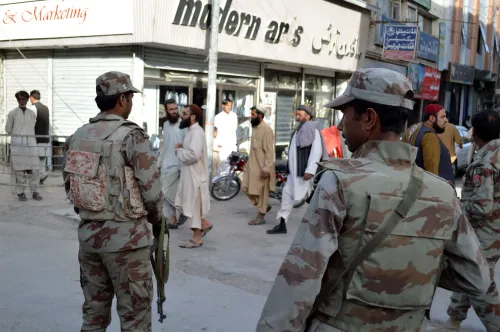
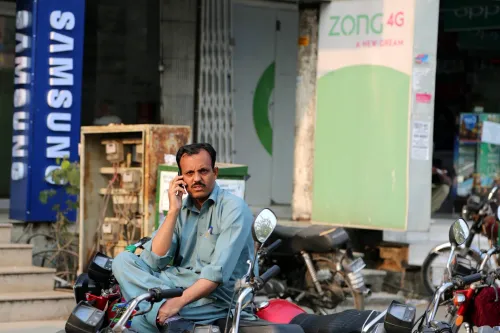
Quetta, Feb 5 (NationPress) Mobile internet services in Quetta and various regions of Pakistan's Balochistan have been suspended for the sixth consecutive day, despite the partial restoration of train services. This situation arises as the security conditions have improved following counter-terrorism operations in response to recent attacks, local media sources reported on Thursday.
Balochistan's Additional Chief Secretary Hamza Shafqaat confirmed to Dawn, a prominent Pakistani daily, that mobile internet remains unavailable in Quetta but is anticipated to be restored by midnight.
Mobile data services have also faced disruptions in Nushki, Sibi, and Mastung districts, with additional suspensions reported in Panjgur, Kalat, Khuzdar, Awaran, and Turbat due to prior security issues.
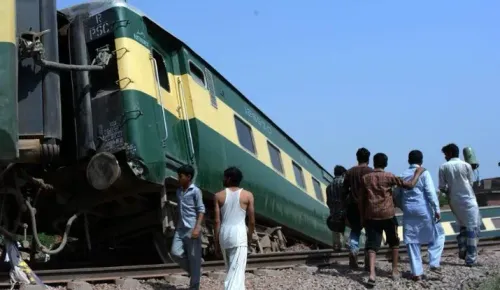
Meanwhile, the spokesperson for Pakistan Railways’ Quetta division, Muhammad Kashif, announced the resumption of the Jaffar Express train on the Quetta-Peshawar route and the Karachi-bound Bolan Mail, which had been suspended since January 31. He also indicated that the Quetta-Chaman passenger train has resumed operations.
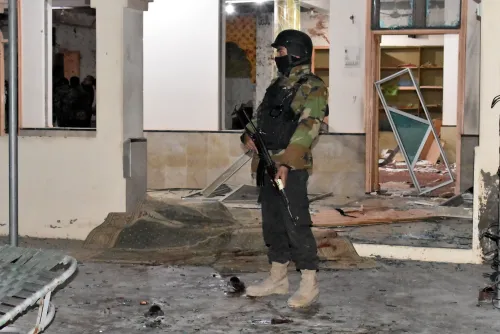
In a significant development, Pakistan’s security forces reported the elimination of 216 terrorists during 'Operation Radd-ul-Fitna-1', conducted in Balochistan following the attacks on January 31. The Inter-Services Public Relations (ISPR) stated that 36 individuals, including women and children, alongside 22 security personnel, lost their lives during these operations.
On January 31, the Baloch Liberation Army (BLA) declared the commencement of the second phase of 'Operation Herof' across Balochistan. Reports of armed confrontations, blasts, and attacks targeting military installations surfaced from multiple districts.
BLA spokesperson Jeeyand Baloch described this phase as a “declaration of decisive resistance” against the “occupying state and its military and administrative structures.” He urged the people of Balochistan to unite in their struggle against the enemy, asserting that the operation aims to demonstrate that “there is no place for the occupier in Balochistan.”
The BLA has reportedly launched “simultaneous, coordinated attacks” across 10 cities within the province, including Quetta, Nushki, Mastung, Dalbandin, Kalat, Kharan, Gwadar, Pasni, Tump, and Buleda.
According to Jeeyand Baloch, the group targeted “military and administrative structures,” disrupted the movement of “enemy forces,” and “pushed back” Pakistani troops in several areas. The BLA claimed that “Fidayeen attacks” struck Pakistani army and Inter-Services Intelligence (ISI) camps in Quetta, Pasni, Gwadar, Noshki, and Dalbandin, asserting that the group’s Majeed Brigade had “successfully entered army camps and controlled substantial portions,” with “intense fighting” ongoing.
Claims from the BLA indicated that “dozens” of Pakistani military personnel have been “neutralised” thus far, with further details set to be released soon.
In a separate message, BLA commander-in-chief Bashir Zeb Baloch called upon the citizens of Balochistan to “come out of their homes and combat Pakistani forces.” He emphasized that this struggle belongs to the collective consciousness of the nation, asserting that a united front would lead to the enemy’s defeat regardless of their power. Balochistan's populace is urged to actively participate in Operation Herof, as reported by The Balochistan Post.
Point of View
It is critical to ensure safety in the region. The nation must remain vigilant and supportive of efforts to restore order and security.
NationPress
2 Oct 2026
Frequently Asked Questions
Why is mobile internet suspended in Balochistan?
Mobile internet services in Balochistan are suspended due to ongoing security operations aimed at countering terrorist threats in the region.
How long has the mobile internet been down?
The mobile internet services have been down for six consecutive days as of February 5.
What other services are affected?
In addition to mobile internet, there have been disruptions to mobile data services in various districts, including Nushki, Sibi, and Mastung.
What measures are being taken by authorities?
Authorities are conducting counter-terrorism operations and have reported the elimination of 216 terrorists during these efforts.
What is the Baloch Liberation Army's role in this situation?
The Baloch Liberation Army has declared the start of 'Operation Herof', targeting military and administrative structures in Balochistan.