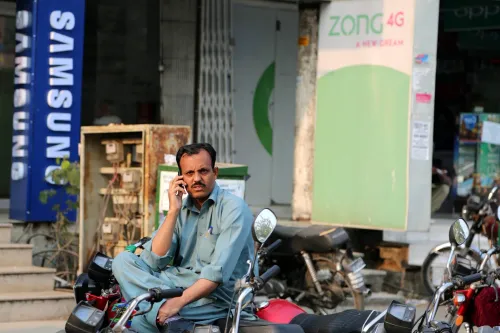
Why is mobile internet suspended in Balochistan for five days?
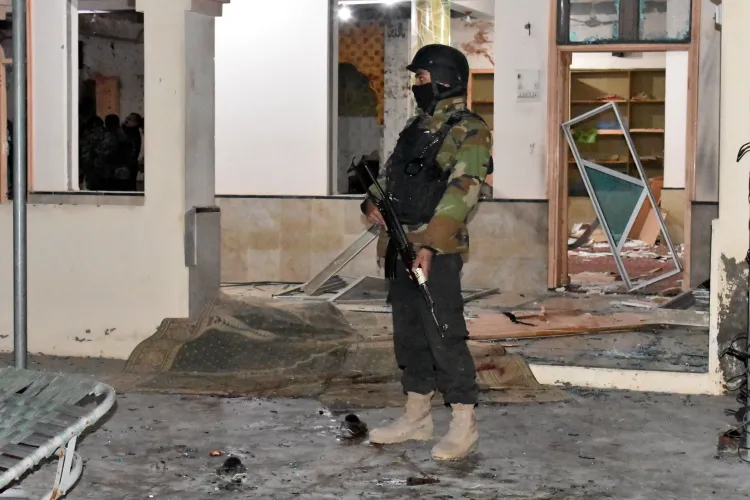
Synopsis
As Balochistan faces escalating violence and security challenges, authorities have suspended mobile internet services for five consecutive days. This disruption, along with halted train services, reflects the region's unstable situation after recent coordinated attacks. Explore the implications of these events on local safety and connectivity.
Key Takeaways
Mobile internet services suspended for the fifth day amid security concerns.
Train services in Balochistan are also halted due to the ongoing violence.
Authorities are conducting counter-terror operations to stabilize the region.
Defence Minister Khawaja Asif acknowledges challenges faced by security forces.
Negotiations with the Baloch Liberation Army are ruled out.
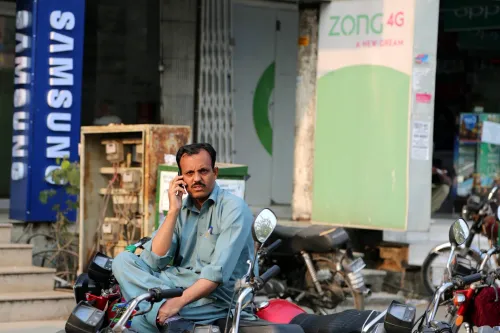
Quetta, Feb 4 (NationPress) The mobile internet has been disabled in Balochistan, Pakistan, for the fifth straight day, with local authorities also halting train services in response to coordinated attacks that occurred last week, as reported by local media on Wednesday.
In an interview with Pakistan's prominent newspaper, Dawn, Additional Chief Secretary Hamza Shafqaat stated, "In light of the escalating law and order situation in the region, mobile internet has been suspended." He added that mobile internet services are anticipated to be restored by Thursday as the circumstances in the area stabilize.
Reports indicate that mobile data services were briefly reinstated in Nushki and Mastung, but faced suspensions again. Services also remained intermittent in Khuzdar, Awaran, Kalat, Panjgur, Sibi, and Turbat due to previous security issues.
Additionally, Muhammad Kashif, spokesperson for Pakistan Railways’ Quetta division, informed Dawn that train services between Quetta and other regions of Pakistan are also suspended. He noted that operations of Jaffar Express and Bolan Mail would resume once the security situation is deemed safe.
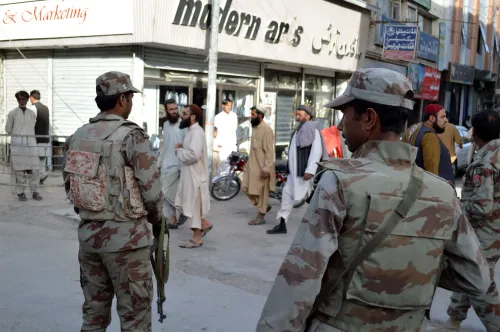
On Tuesday, security forces continued their operations in Nushki and other areas of Balochistan following the coordinated attacks.
In the meantime, Pakistan’s Defence Minister Khawaja Asif acknowledged that the security forces are currently 'handicapped' when it comes to addressing the Baloch rebels amidst a recent increase in militant activity in Balochistan, a region aspiring for independence from Islamabad.
His comments came after reports of 197 Baloch individuals, including members of 'Fitna al-Hindustan' and other militant groups, being killed in ongoing counter-terror operations in Balochistan over the last three days. Furthermore, 22 members of the security forces have also been reported deceased, according to state media on Tuesday.
While addressing the National Assembly (NA), Asif remarked, "Balochistan constitutes over 40 percent of Pakistan geographically... controlling it is significantly more challenging than a densely populated city and requires substantial troop deployment. Our forces are engaged there and active against the terrorists, but they face physical limitations due to the vast area they must cover."
Asif highlighted the geographical obstacles faced by troops in Balochistan, the largest yet least populated province in the country, in light of the serious security circumstances following coordinated attacks by separatist forces across at least 12 locations, resulting in one of the deadliest security crises in recent history. Authorities claim that at least 177 insurgents were killed in extensive counterterrorism operations throughout the province, as reported by the Pakistani daily The Express Tribune.
Khawaja Asif has dismissed any negotiations with the rebel group Baloch Liberation Army (BLA), which claimed responsibility for the attacks, stating that no discussions will occur with 'terrorists' accountable for the deaths of civilians, including women and children.
Point of View
It is vital to report on the ongoing turmoil in Balochistan with an unbiased lens. The suspension of mobile internet and the halt of train services are grave measures taken in response to increased violence. The implications of these actions warrant careful consideration, as they affect not only security but also the daily lives of citizens in this region. Our commitment is to provide clarity and context to our audience regarding these pressing issues.
NationPress
29 Sept 2026
Frequently Asked Questions
Why is mobile internet suspended in Balochistan?
Mobile internet has been suspended due to escalating violence and security concerns following coordinated attacks in the region.
When will mobile internet services be restored?
Authorities have indicated that mobile internet services may resume by Thursday, depending on the stabilization of the situation.
What other services are affected in Balochistan?
Train services have also been suspended in Balochistan due to security issues, with operations expected to resume once it is deemed safe.
What is the current security situation in Balochistan?
The security situation remains tense, with ongoing operations against insurgents and a recent surge in violence reported.
Who is responsible for the recent attacks in Balochistan?
The Baloch Liberation Army (BLA) has claimed responsibility for the coordinated attacks, leading to significant security measures in the province.