Why Are Health Workers in Bangladesh Protesting?
Synopsis
Health assistants in Bangladesh continue their sit-in protest for the 12th day, calling for essential reforms. This prolonged demonstration has disrupted health services nationwide, raising concerns about public health. Will the government respond to their pressing demands?
Key Takeaways
Health assistants are protesting for better working conditions.
The protests have disrupted health services nationwide.
120,000 vaccination centers have been temporarily closed.
The government has yet to address the workers' demands.
Continued protests may threaten public health.
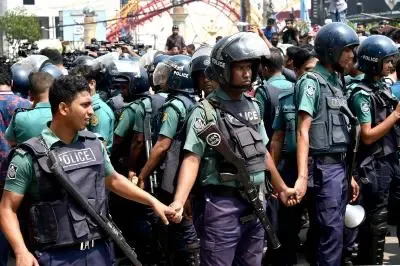
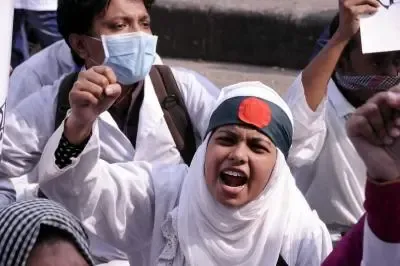
Dhaka, Dec 10 (NationPress) Health assistants in Bangladesh have been holding their sit-in protest for the 12th consecutive day on Wednesday outside the Directorate General of Health Services (DGHS). They are steadfastly advocating for a six-point demand charter, resulting in significant disruptions to health services across numerous districts, as reported by local media.
The demonstration is organized by the Bangladesh Health Assistant Association, representing health assistants, assistant health inspectors, and health inspectors, totaling 26,000 frontline workers. They have maintained a full-day work stoppage for twelve days in a row.
The six key demands include revisions to recruitment regulations, elimination of salary disparities, and the formal acknowledgment of their technical status.
Fazlul Haque Chowdhury, Member-Secretary of the Association’s Central Coordination Committee, stated that the protest will persist until the authorities issue a government order (G.O.) addressing their requests.
“Our file has already been forwarded to the Ministry of Public Administration. We are optimistic that the government will take the concerns of frontline workers, who are vital to grassroots healthcare, seriously. Once the G.O. is released, we will resume our duties,” Chowdhury mentioned, as quoted by UNB.
The work stoppage began on November 29 at the Shaheed Minar in Dhaka and has since transitioned to the DGHS premises, gaining participation from health workers across all districts.
The indefinite work stoppage continued after a meeting with Bangladeshi officials on November 30 yielded no solutions, according to The Daily Star.
Following the meeting, Chowdhury remarked, “We will stay here overnight. The health advisor promised us a meeting, but he did not meet us. Instead, a joint secretary listened to our concerns but offered no solutions. We will maintain our work stoppage.”
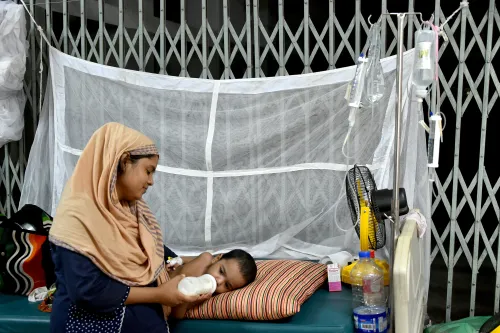
Reports indicate that the ongoing protests have led to the closure of approximately 120,000 temporary vaccination centers, impeding mothers and children from receiving essential vaccinations, while rural health services nationwide have also been severely impacted.
Health assistants caution that if the situation persists, mothers and children may face heightened risks of infectious diseases.
Bangladesh has seen a rise in protests under the Yunus-led interim government as the nation confronts economic challenges and worsening working conditions.
Point of View
It's crucial to report that the ongoing protests by health assistants in Bangladesh reflect broader systemic issues within the healthcare system. Addressing their demands is not just about the workers' rights, but fundamentally about ensuring public health and safety for the entire population. The government must respond effectively to restore services and prevent further health crises.
NationPress
3 Oct 2026
Frequently Asked Questions
What are the main demands of the health workers?
The health workers are advocating for six main demands, which include amendments to recruitment rules, elimination of salary discrimination, and granting of technical status.
How long have the protests been ongoing?
The protests have been ongoing for 12 consecutive days, starting on November 29.
What impact have the protests had on health services?
The protests have led to the closure of around 120,000 temporary vaccination centers, significantly disrupting health services and putting public health at risk.
What has the government response been so far?
The government has not yet issued a response to the workers' demands, despite ongoing discussions with health officials.
What could happen if the protests continue?
If the protests continue, there is a risk of increased health issues among mothers and children due to lack of access to vaccinations and other essential health services.