Bangladesh Press Failing Democracy: Columnist Sounds Alarm
Synopsis
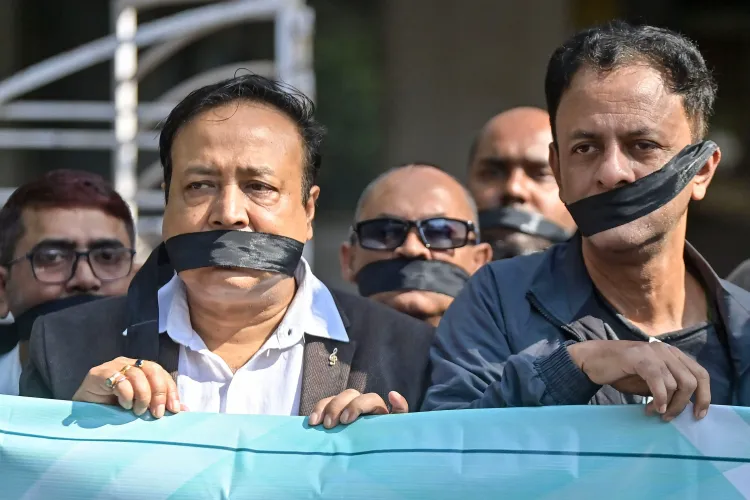
Veteran freedom fighter and columnist Anwar A Khan has issued a stark warning: Bangladesh's press has retreated into dangerous silence amid human rights violations and the unprecedented banning of the Awami League since August 2024 — calling it quiet complicity that threatens the nation's constitutional democracy.
Key Takeaways
Anwar A Khan , a 1971 Bangladesh Liberation War freedom fighter and columnist, has publicly criticised Bangladesh's mainstream press for staying silent on human rights violations since August 5, 2024 .
Khan's column, published in The Asian Age , argues that media silence is not neutrality but "quiet complicity" that undermines constitutional democracy.
The banning of the Awami League — Bangladesh's oldest and founding political party — has been flagged as a direct violation of Article 37 of the Bangladesh Constitution .
Khan cited Articles 11 and 39 of the Bangladesh Constitution , which guarantee democracy, fundamental rights, and freedom of speech, as principles currently under strain.
The columnist described the press as having retreated into "cautious ambiguity," offering tepid reportage where firm ethical conviction is required.
Bangladesh's press freedom has been a longstanding concern, with the country consistently ranking poorly on global indices such as those published by Reporters Without Borders (RSF) .
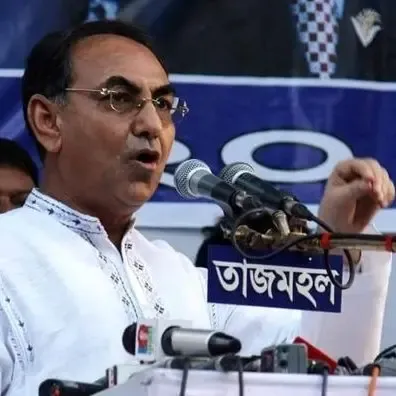
Dhaka, April 23 — Bangladesh's media landscape is facing a crisis of conscience, with a prominent 1971 Liberation War freedom fighter and columnist warning that the country's newspapers have abandoned their democratic duty by staying silent on serious human rights violations reported since August 5, 2024. The alarm was raised by Anwar A Khan, writing in Bangladeshi daily The Asian Age, in a sharp critique that has sparked renewed debate about press freedom and constitutional accountability in Bangladesh.
Press Silence Equals Complicity, Warns Columnist
Anwar A Khan, a decorated freedom fighter and veteran columnist, argued that the near-total silence of Bangladesh's mainstream press in the face of mounting human rights concerns is not neutrality — it is abdication. His column drew attention to what he described as an "unsettling silence" in the newspaper landscape following a wave of serious allegations that have cast, in his words, a "long and troubling shadow" over the nation.
Khan invoked the Constitution of Bangladesh directly, citing Article 11, which guarantees democracy and fundamental rights, and Article 39, which explicitly protects freedom of thought, conscience, and speech. He argued that when these constitutional principles appear to be under strain, the press has a "solemn duty to question, to investigate, and to speak."
"To remain muted is to stand in quiet complicity," Khan wrote, in a line that has resonated widely among media observers and civil society groups in Dhaka.
Banning of Awami League: A Blow to Pluralism
Khan reserved sharp criticism for what he called one of the most alarming democratic setbacks in recent Bangladeshi political history — the banning of the Awami League, historically described as the oldest, largest, and founding political force of the nation. He stressed that regardless of political affiliation, proscribing a major political party strikes at the very pluralistic foundation of democratic life.
Citing Article 37 of the Constitution, which guarantees the right to assemble and participate in political activity, Khan warned: "To erode this right is to hollow out democracy itself." This constitutional argument adds significant weight to growing international concerns about the direction of governance in Bangladesh since mid-2024.
Notably, the Awami League, which led Bangladesh to independence in 1971, has been a central pillar of the country's political identity for over five decades. Its prohibition marks an unprecedented moment in the nation's post-independence history.
The Fourth Estate Has Retreated Into Ambiguity
Khan's critique of the press was unflinching. He lamented the absence of editorially courageous reporting — the missing bold headlines, the lack of morally clear editorials, and the retreat of newspapers into what he termed "cautious ambiguity." He argued that the press, often celebrated as the "fourth estate," has offered only "tepid reportage where firm ethical conviction is required."
This reluctance, he warned, sets a "dangerous precedent": that truth may be tempered, injustice normalized, and power left unchallenged. The concern echoes global patterns where media self-censorship during political transitions has historically enabled authoritarian consolidation.
Critics and press freedom advocates have long noted that Bangladesh has struggled with media independence. According to Reporters Without Borders (RSF), Bangladesh has consistently ranked poorly on global press freedom indices, a structural vulnerability that makes Khan's warning all the more urgent.
Constitutional Framework Under Strain
Framing his argument in historical terms, Khan reminded readers that Bangladesh's constitutional framework was "hard-earned through sacrifice and struggle" — a direct reference to the blood spilled during the 1971 Liberation War, in which he himself participated. He called on newspapers to act as "custodians of public discourse" and to "reclaim their courage."
He urged the press to ask difficult questions, present inconvenient facts, and provide space for principled debate — warning that failure to do so "diminishes not only their own credibility but also the democratic fabric they are meant to uphold."
This comes amid a broader regional pattern where post-transition governments in South Asia have faced criticism for restricting political opposition and press freedoms, raising questions about whether democratic norms can be sustained without an independent and courageous media ecosystem.
Why This Moment Is Critical for Bangladesh
The significance of Khan's column extends beyond media criticism. Bangladesh is at a pivotal moment — navigating political transition, economic pressures, and international scrutiny over governance. The international community, including United Nations human rights bodies, has reportedly been monitoring the situation since the events of August 2024.
A press that fails to hold power accountable during such a juncture does not merely lose credibility — it potentially enables the erosion of the very democratic institutions that generations of Bangladeshis sacrificed to build. The coming months will test whether the country's media finds the courage to fulfill its constitutional and moral mandate.
Point of View
With the press as a silent accomplice. The banning of the Awami League is not a footnote — it is a seismic rupture in Bangladesh's political identity, and the fact that most newspapers have not treated it as such reveals a media ecosystem operating under fear or capture. India and the broader region must watch closely: when founding political parties are banned and the press goes silent, history tells us that the next chapters are rarely benign.
NationPress
24 Sept 2026
Frequently Asked Questions
What did columnist Anwar A Khan say about Bangladesh's press freedom?
Anwar A Khan, a 1971 Bangladesh Liberation War freedom fighter, wrote in The Asian Age that Bangladesh's newspapers have retreated into dangerous silence amid human rights violations since August 2024. He argued that this silence is not neutrality but abdication and quiet complicity.
Why was the Awami League banned in Bangladesh?
The Awami League, Bangladesh's oldest and founding political party, was banned as part of political developments following the events of August 5, 2024. Columnist Anwar A Khan has called this ban a direct violation of Article 37 of the Bangladesh Constitution, which guarantees the right to political assembly.
What constitutional rights are at risk in Bangladesh according to the report?
According to Anwar A Khan, Articles 11, 37, and 39 of the Bangladesh Constitution — covering democracy, political assembly, and freedom of speech — are under strain. He argues that the press has a constitutional duty to defend these rights through bold, accountable journalism.
What is the state of press freedom in Bangladesh in 2024?
Bangladesh has historically ranked poorly on global press freedom indices, including those by Reporters Without Borders. Since August 2024, concerns have intensified, with critics noting that mainstream newspapers have avoided challenging authority on human rights violations and political bans.
Why does Bangladesh's media silence matter for democracy?
A free press is considered the fourth estate of democracy, responsible for holding power accountable. When media self-censors during political crises, it enables the normalisation of injustice and the erosion of constitutional rights, weakening democratic institutions over time.