Bangladesh Startup Funding Collapses 90% by 2024: Crisis Report

Synopsis
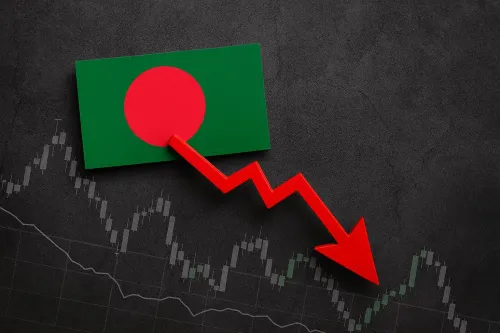
Bangladesh's startup ecosystem has seen funding crater by nearly 90% — from $434 million in 2021 to just $42 million in 2024. With Chaldal workers unpaid for four months and only one major deal keeping 2025 numbers afloat, the country's digital growth story faces its most serious crisis yet.
Key Takeaways
Bangladesh startup funding collapsed to $42 million in 2024 , down from a record $434 million in 2021 — a near 90% decline in just three years.
Chaldal employees protested in March 2025 outside the company's Jashore office over unpaid salaries of up to four months , spotlighting the crisis.
Chaldal , founded in 2013 , raised approximately $40 million and generated $55 million in annual revenue during the Covid-19 pandemic before facing financial difficulties.
In 2025 , only 12 startup deals were recorded in Bangladesh, with $110 million of the $124 million total coming from a single investment in SILQ Group .
Bangladesh's startup ecosystem once comprised over 1,200 active startups and attracted more than $1.12 billion in cumulative funding since 2010 .
Industry voices including Fahim Ahmed cited two years of deteriorating conditions driven by global investor risk-aversion and domestic macroeconomic pressures.
Bangladesh's once-celebrated startup ecosystem is experiencing a severe funding crisis, with annual investment plummeting by nearly 90% from its 2021 peak, forcing companies to slash operations and leaving workers unpaid for months, according to a report by The Daily Star. The downturn signals a dramatic reversal for a sector that was, until recently, considered a cornerstone of the country's digital economic ambitions.
Chaldal Salary Crisis Exposes Sector-Wide Distress
The depth of the crisis became starkly visible in early March 2025, when hundreds of employees staged protests outside the Jashore office of Chaldal, Bangladesh's pioneering online grocery delivery platform. Workers alleged they had not received salaries for up to four months, drawing national attention to the fragile state of the country's startup landscape.
Founded in 2013, Chaldal had grown into a household name in urban Bangladesh, raising approximately $40 million between 2015 and 2025. The company saw its annual revenue surge to $55 million during the Covid-19 pandemic, riding a wave of accelerated digital adoption. Waseem Alim, associated with the company, acknowledged the crisis, stating the firm had never encountered salary payment failures in its 12–13 years of operation prior to August 2025.
From $434 Million Peak to a $42 Million Trough
Bangladesh's startup sector attracted over $1.12 billion in cumulative funding since 2010, largely powered by foreign venture capital. The sector reached its zenith in 2021, when startups raised a record $434 million across 94 deals, headlined by a landmark $250 million investment in bKash by SoftBank.
The reversal since then has been sharp and unrelenting. By 2024, annual startup funding had collapsed to just $42 million across 41 deals. In 2025, only 12 deals were recorded, totalling approximately $124 million — though nearly $110 million of that came from a single transaction backing SILQ Group, the entity formed through the merger of ShopUp and Saudi-based Sary. Strip that deal away, and the underlying funding environment looks even more dire.
A Decade of Growth Now in Reverse
The 2010s were a golden era for Bangladeshi startups, producing category-defining companies such as bKash (mobile financial services), Pathao (ride-hailing), ShopUp (B2B commerce), and Shohoz (ticketing and logistics). Global giants including Uber and foodpanda entered the market, attracted by rapid digital penetration and consistent GDP growth.
At its height, Bangladesh hosted over 1,200 active startups, with nearly 200 new ventures launching annually. The ecosystem was widely cited as one of South Asia's most promising emerging markets for venture capital.
Industry stakeholder Fahim Ahmed noted that startups have been navigating increasingly precarious conditions over the past two years, citing a combination of global investor risk-aversion and domestic macroeconomic headwinds as key drivers of the slump.
Global Headwinds Meet Local Vulnerabilities
The Bangladesh startup crisis mirrors a broader global pattern. Following the 2021–2022 venture capital boom, rising interest rates in the United States and Europe triggered a worldwide pullback in risk capital, hitting emerging market startups particularly hard. Countries like India, Indonesia, and Nigeria saw similar funding contractions, though Bangladesh's dependence on foreign capital made it especially vulnerable.
Domestically, political uncertainty following the 2024 political transition in Bangladesh added another layer of risk for investors already cautious about deploying capital in frontier markets. Currency pressures and inflation further squeezed startup operating margins, making the path to profitability steeper for companies that had scaled aggressively during the pandemic boom years.
This is not merely a story about individual company failures — it is a structural reckoning for an ecosystem that grew rapidly on the back of cheap global capital without building sustainable unit economics. The concentration of 2025 funding in a single deal underscores how thin the investor base has become.
What Comes Next for Bangladesh's Startup Ecosystem
Analysts watching the sector suggest that a period of consolidation is now inevitable, with smaller, undercapitalised startups likely to shut down or merge. The survival of flagship companies like bKash — which has a more established revenue model — will be critical to maintaining investor confidence in the broader ecosystem.
For the Bangladesh government, the crisis presents both a challenge and an opportunity: introducing targeted policy support, easing foreign investment regulations, and creating domestic institutional capital pools could help stabilise the sector. Without such intervention, the country risks losing a generation of entrepreneurial talent to better-funded ecosystems in India, Southeast Asia, and the Gulf.
The coming months will be a critical test of whether Bangladesh's startup story is merely paused — or fundamentally broken.
Point of View
Neither of which exist anymore. What is most alarming is the concentration risk exposed in 2025 — strip out one $110 million deal, and the ecosystem raised virtually nothing. Policymakers in Dhaka cannot afford to treat this as a market correction; it demands urgent structural intervention before irreversible talent and capital flight sets in.
NationPress
19 Sept 2026
Frequently Asked Questions
Why is Bangladesh's startup ecosystem facing a funding crisis?
Bangladesh's startup funding crisis stems from a combination of global venture capital pullback following rising interest rates in 2022–2023, domestic political uncertainty, and over-reliance on foreign investors. Annual funding dropped from a peak of $434 million in 2021 to just $42 million in 2024, reflecting both global and local pressures.
What happened at Chaldal and why did workers protest?
Hundreds of Chaldal employees protested outside the company's Jashore office in early March 2025, alleging they had not been paid for up to four months. Chaldal, Bangladesh's pioneering online grocery delivery firm founded in 2013, had raised around $40 million and seen revenues of $55 million during the Covid-19 pandemic before facing financial strain.
How much funding have Bangladesh startups raised in total?
Bangladesh startups have attracted over $1.12 billion in cumulative funding since 2010, driven largely by foreign investors. The sector peaked in 2021 with $434 million raised across 94 deals, including a $250 million SoftBank investment in bKash, before declining sharply in subsequent years.
Which Bangladesh startups have been most successful?
The most prominent Bangladesh startups include bKash (mobile financial services), ShopUp (B2B commerce), Pathao (ride-hailing), Shohoz (logistics and ticketing), and Chaldal (online grocery delivery). Global firms like Uber and foodpanda also entered the market during the ecosystem's growth phase in the 2010s.
What is SILQ Group and why does it matter for Bangladesh startups?
SILQ Group was formed through the merger of Bangladesh's ShopUp and Saudi-based Sary, and received a $110 million investment in 2025. This single deal accounted for nearly all of Bangladesh's startup funding in 2025, highlighting how concentrated and fragile the investment environment has become.