Did a Transnational Campaign by Bangladeshi Activists Incite Violence in Dhaka?
Synopsis
A recent report unveils how a transnational campaign by Bangladeshi activists abroad incited violence against media houses in Dhaka, raising alarming questions about the power of social media in orchestrating real-world chaos. With increasing mob culture and diminished law enforcement, this incident marks a significant turning point in Bangladesh's socio-political landscape.
Key Takeaways
Transnational campaigns can incite real-world violence.
Social media platforms play a crucial role in mobilizing mobs.
The accountability of online platforms is under scrutiny.
Bangladesh's media landscape faces increasing threats.
Government response to mob culture is essential for safety.
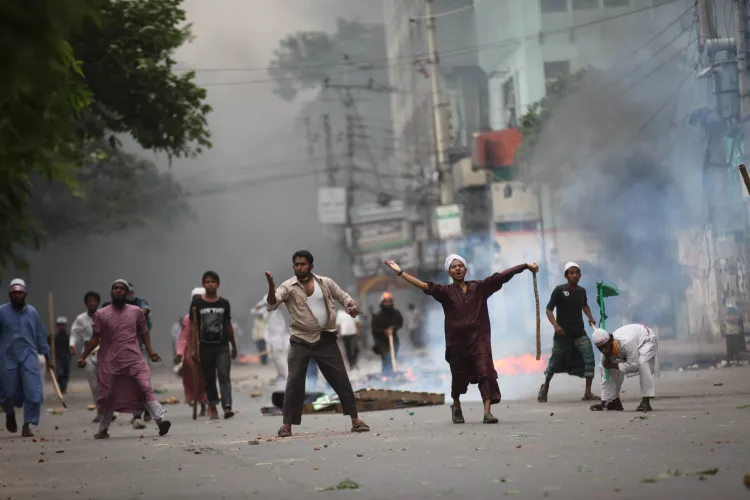
Dhaka, Feb 7 (NationPress) A transnational campaign orchestrated by two Bangladeshi online activists residing in the United States and France has incited violent assaults on prominent media outlets and cultural institutions in Bangladesh, revealing the significant threats posed by online incitement that traverses borders.
Journalists and analysts have cautioned that this incident represents one of the initial occurrences where cross-border social media platforms were leveraged to incite mass violence in Bangladesh, raising alarms regarding the accountability of these platforms and the government's capacity to combat remote, algorithm-driven mob mobilization, as detailed in a report.
“On the evening of December 18, 2025, Elias Hossain, an activist and former journalist in Jackson Heights, New York, shared on Facebook: ‘Let not a single brick of Prothom Alo remain.’ This post reached over 2.2 million followers of Hossain, boosted by Facebook’s verification badge and rapidly disseminated through WhatsApp, Instagram, and various Facebook pages,” reported 'Northeast News'.
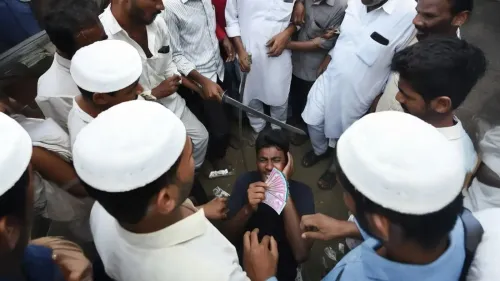
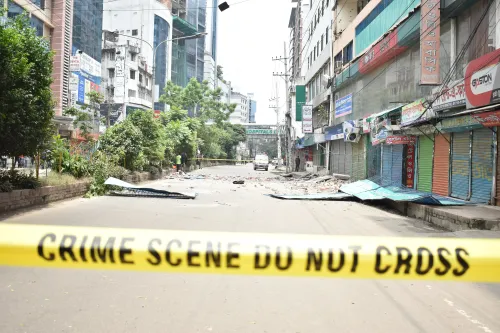
“Within hours, a crowd amassed outside the Dhaka office of Prothom Alo, vandalizing the premises. Hossain, in collaboration with Pinaki Bhattacharya in Paris, simultaneously directed assaults on 'The Daily Star' and other institutions, including Chhayanaut and Udichi. Social media played a crucial role in broadcasting their messages to millions, effectively mobilizing mobs in real-time,” the report continued.
Over the past year, both Elias Hossain and Pinaki Bhattacharya have initiated systematic campaigns against Prothom Alo and The Daily Star, alleging that these leading Bangladeshi newspapers acted on behalf of India's intelligence agencies and propagated misinformation, breeding distrust and inciting violence.
“Earlier attempts in October and November 2024 involved surrounding newsrooms and targeting personnel, with escalating online rhetoric. The duo also coordinated the demolition of former Prime Minister Sheikh Hasina's ancestral home in Dhanmondi on February 5, 2025, synchronizing the event with Hasina’s live Facebook address and guiding followers through continuous posts and videos,” the report noted.
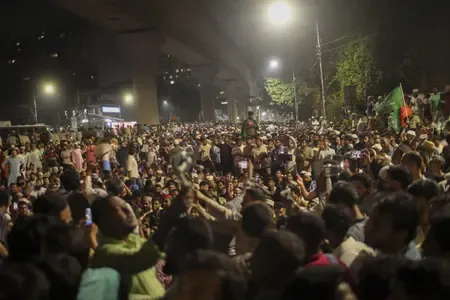
Citing BoomLive reports, it further stated, “On the night of December 18, as newsrooms were engulfed in flames, segments of the crowd openly demanded a new government led by Hossain and Bhattacharya. This was not merely online bravado; both individuals had established direct connections with government officials and publicly displayed these affiliations, enhancing their real-world influence.”
Bangladesh has witnessed an escalation in assaults on journalists, a rise in mob culture, and a deteriorating law and order situation since the Muhammad Yunus-led interim government took office in August 2024.
Point of View
It's imperative to approach this situation with a sense of responsibility. The alarming rise of mob violence fueled by online incitement showcases the urgent need for stronger regulations on social media platforms. Bangladesh's media landscape is under siege, and as custodians of truth, we must advocate for accountability and press freedom while holding the government accountable for protecting journalists and citizens alike.
NationPress
22 Sept 2026
Frequently Asked Questions
What triggered the recent violence in Dhaka?
The violence was triggered by a transnational campaign led by Bangladeshi activists in the U.S. and France, inciting attacks on media houses through social media.
Who are the activists involved?
The activists involved are Elias Hossain, based in New York, and Pinaki Bhattacharya, based in Paris.
What role did social media play in these events?
Social media amplified the activists' messages, mobilizing crowds in real-time and enabling them to orchestrate attacks on media institutions.
Has this been a recurring issue in Bangladesh?
Yes, there has been a noticeable increase in attacks on journalists and media outlets, reflecting a growing trend of violence against the press.
What are the implications of this incident?
This incident raises serious concerns about online accountability, the safety of journalists, and the overall law and order situation in Bangladesh.