Is Bangladesh Facing an Economic Downturn Amid Ongoing Violence?
Synopsis
As Bangladesh navigates a turbulent year defined by violence and political instability, the nation grapples with the risk of economic regression. How will these challenges affect its aspirations for development and stability? Dive into the complexities facing Bangladesh in 2025.
Key Takeaways
Bangladesh faces significant violence and instability.
The interim government struggles to maintain order.
Geopolitical shifts may destabilize the region.
Potential economic downturn could affect millions.
Future development status remains uncertain amidst chaos.
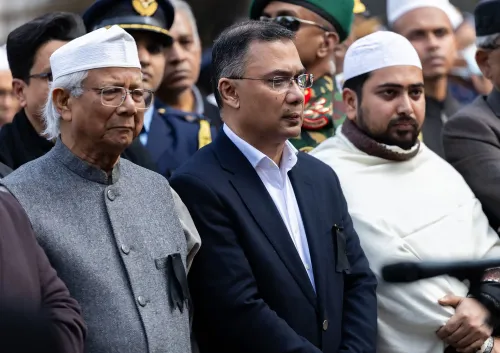
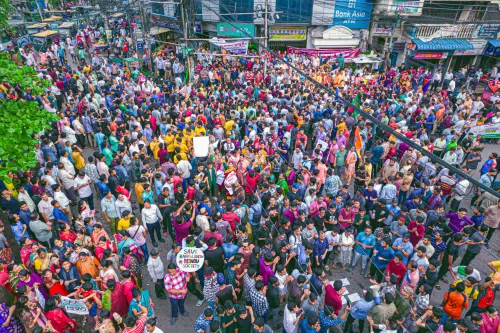
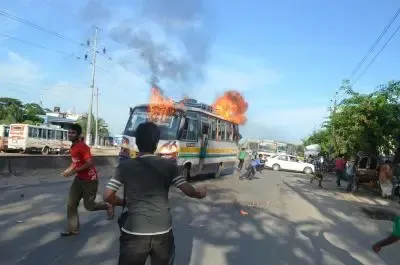
New Delhi, Dec 25 (NationPress) The year has been fraught with uncertainty for Bangladesh, characterized by violence, arson, religious intolerance, and killings, while the Nobel laureate-led transitional caretaker government appeared powerless to intervene.
Although the return of a member of the Zia family sparked some hope among segments of the population, a recent explosion served as a stark reminder of the harsh realities facing Dhaka. Since the uprising in August 2024, Bangladesh has descended from a potentially hopeful democratic and economic reset into a precarious situation marked by diminished state control, escalating political violence, and a geopolitical shift that endangers regional stability.
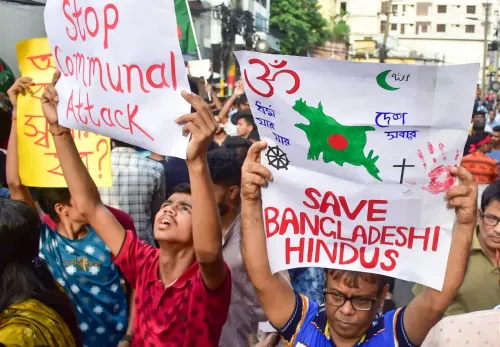
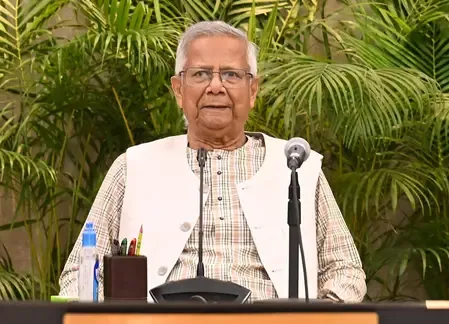
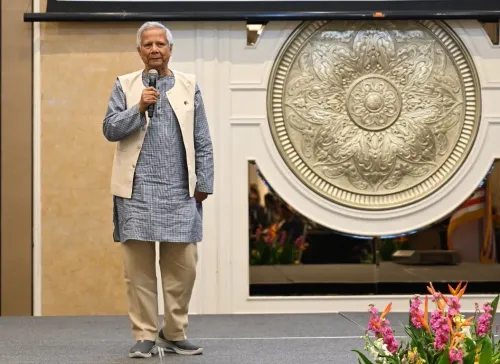
The interim administration under Muhammad Yunus has struggled to restore security, exacerbating internal divisions and drawing external influences that threaten regional safety. The leading newspaper, Prothom Alo, cited the Bangladesh Hindu Bouddha Christian Oikya Parishad (Bangladesh Buddhist Christian Unity Council), reporting 2,442 incidents of violence against religious and ethnic minorities in the 330 days following the student uprising on August 4, 2024.
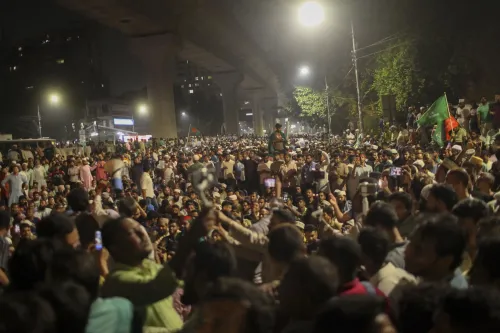
Recently, animosity towards New Delhi has intensified, with threats to isolate India's Northeastern states and provide sanctuary to separatists from leaders such as Hasnat Abdullah of the National Citizen Party. Following the death of youth leader Sharif Osman Hadi, a key figure in the 2024 uprising that toppled Sheikh Hasina’s administration, violence erupted throughout Bangladesh. This included arson, attacks on media outlets, and renewed anti-India protests, propelling the nation into further turmoil.
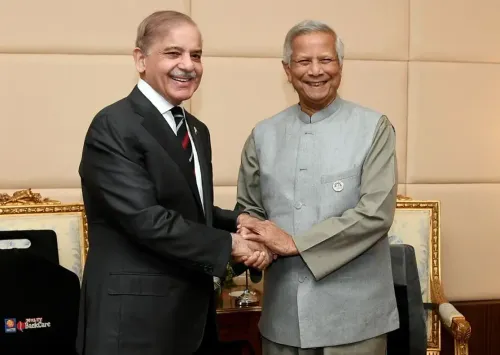
As external entities offer incentives to gain influence in Dhaka amidst the government's distraction, governance challenges have compounded. Dhaka's foreign policy has pivoted, with the interim administration establishing ties with Pakistan—its historical adversary from the 1971 independence war—and China.
A recent report from India’s Parliamentary Committee on External Affairs regarding the “Future of India-Bangladesh Relationship” expressed concern over the “growing presence” of China in Bangladesh, particularly in infrastructure, military collaborations, and port developments.
Experts consulted by the committee identified five key factors driving the current crisis: generational discontinuity, the collapse of the 1971 consensus, the emergence of new political forces, a rise in Islamic radicalism, and strategic reorientation towards China and Pakistan.
The committee noted a visit by leaders of Bangladesh’s Jamaat-e-Islami to China, indicating a broadening engagement with various factions within Bangladesh, which further cements China’s foothold. Additionally, the establishment of a submarine base at Pekua—capable of housing eight submarines, despite Bangladesh possessing only two—has raised alarms.
As Bangladesh's security forces seem overstretched and overwhelmed, coherent responses to coordinated violence are limited. The interim government grapples with legitimacy issues amidst competing narratives about the uprising and the prosecution of former officials. This has polarized society and hindered consensus on necessary reforms.
Amidst these threats to stability, uncertainty looms over Bangladesh’s aspirations to achieve developing nation status by 2026. In 2021, the United Nations General Assembly passed a resolution to elevate Bangladesh, alongside Nepal and the Lao People’s Democratic Republic, from their least developed country (LDC) status.
This transition could present significant opportunities for the nation; however, the ongoing instability poses major challenges to Dhaka’s economic growth and trade relations. “After being a model for poverty alleviation for over three decades, Bangladesh has shown signs of regression in various metrics,” reported the Financial Express, referencing a study by the Bangladesh Institute of Development Studies (BIDS).
Moreover, a World Bank report indicated that “the economic climate in 2025 is anticipated to reflect the sluggish conditions of 2020, the pandemic year, potentially increasing extreme poverty to 9.3% and pushing an additional 3 million individuals into poverty.”
The report highlights a significant lack of job opportunities for young graduates and women in urban settings. Economists have critiqued the proposed national budget for the 2025-26 financial year, noting its insufficient structural depth to tackle Bangladesh’s enduring economic issues, as reported by New Age.
“While the budget attempts to convey sincerity and practicality, it ultimately falls short in providing the reforms necessary for sustainable development,” the report stated.
Point of View
It is imperative to approach the situation in Bangladesh with a balanced perspective. While acknowledging the severe challenges posed by violence and political instability, we must also recognize the resilience of the Bangladeshi people and their ongoing efforts towards stability and development. Our coverage will remain committed to presenting both the struggles and the potential paths forward for this nation.
NationPress
2 Oct 2026
Frequently Asked Questions
What are the main reasons for violence in Bangladesh?
The violence in Bangladesh stems from political instability, rising religious intolerance, and external influences that exacerbate internal divisions.
How has the interim government responded to the unrest?
The interim government, led by Muhammad Yunus, has struggled to restore order amidst increasing violence and legitimacy challenges.
What impact could this unrest have on Bangladesh's economy?
The ongoing violence and instability could hinder Bangladesh's aspirations for economic development, potentially increasing poverty levels and limiting job opportunities.
What is the significance of Bangladesh's potential transition to a developing nation?
Achieving developing nation status could provide Bangladesh with increased opportunities for growth and international support, but ongoing instability poses serious challenges.
How is foreign influence affecting Bangladesh's situation?
External actors are trying to gain influence in Bangladesh during this period of distraction, complicating governance and foreign relations.