How Many Blasphemy-Linked Incidents Against Hindus Were Reported in Bangladesh From June to December?
Synopsis
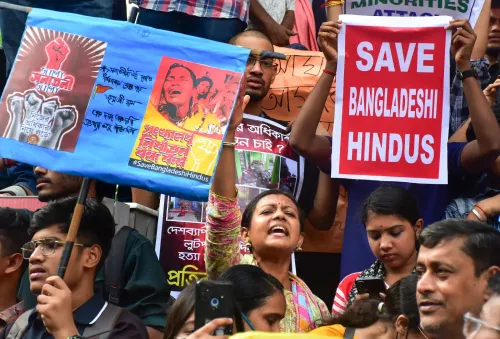
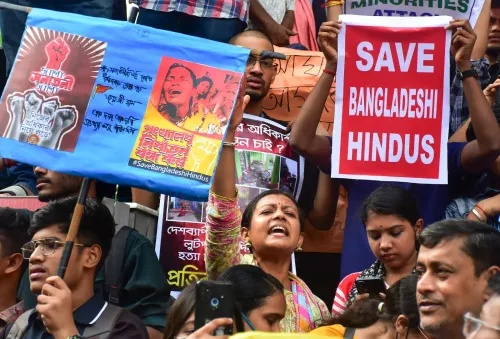
A recent report reveals alarming statistics regarding blasphemy allegations against Hindus in Bangladesh, highlighting systemic issues and alarming trends of violence and discrimination. With incidents documented across more than 30 districts, the report raises serious concerns about the safety and rights of minority communities.
Key Takeaways
71 blasphemy-related incidents reported in six months More than 30 districts affected Systemic vulnerabilities for Hindu minorities Alarming trends of mob violence and discrimination Urgent need for accountability and protective measures
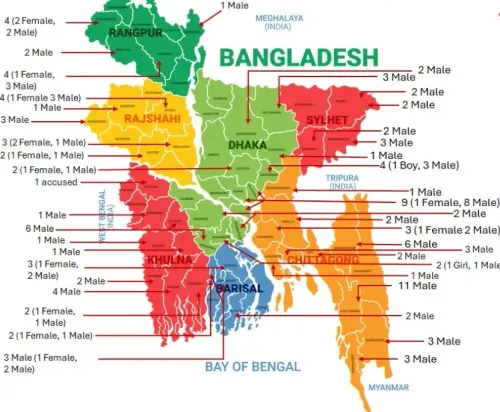
Dhaka, Dec 28 (NationPress) A staggering 71 incidents involving blasphemy accusations against Hindu minorities were documented in Bangladesh between June and December of this year, according to a report from the Human Rights Congress for Bangladesh Minorities (HRCBM). These cases were recorded across more than 30 districts, including Chandpur, Chattogram, Dinajpur, Lalmonirhat, Sunamganj, Khulna, Comilla, Gazipur, Tangail, and Sylhet.
The rights organization highlighted that the nature and frequency of these cases indicate a systemic vulnerability for minorities facing religiously motivated allegations, rather than merely isolated events.
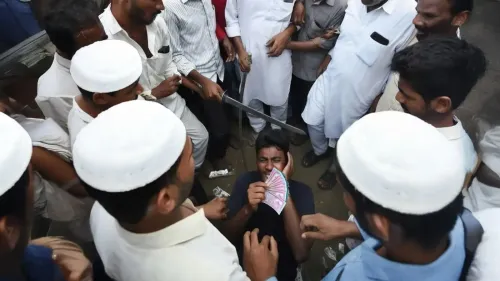
As per the report, blasphemy accusations often result in police interventions, mob violence, and various forms of punishment.
For example, on June 19, a 22-year-old named Tamal Baidya was taken into custody in Barishal's Agljhara over purported derogatory remarks about the Prophet Muhammad, as reported by Thailand-based Page 3 News.
Just three days later, Shanto Sutradhar, 24, was met with protests and unrest in Chandpur's Matlab due to similar allegations.
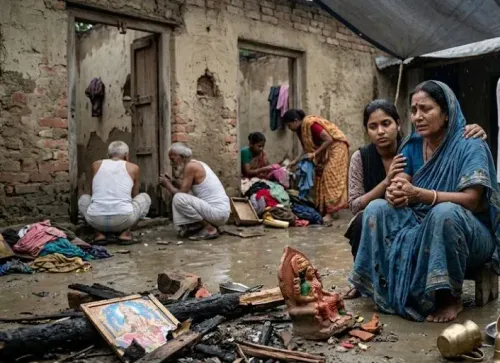
The report details a particularly violent incident on July 27, when Ranjan Roy, a 17-year-old, was arrested in Betgari Union, Rangpur. Following his arrest, a mob vandalized 22 Hindu homes, underscoring how such accusations can escalate to target entire communities. Overall, the report lists 71 unique incidents, including police arrests, mob beatings, vandalism of Hindu residences, suspensions and expulsions from educational institutions, and fatalities stemming from mob violence reported between June 2025 and December 2025.
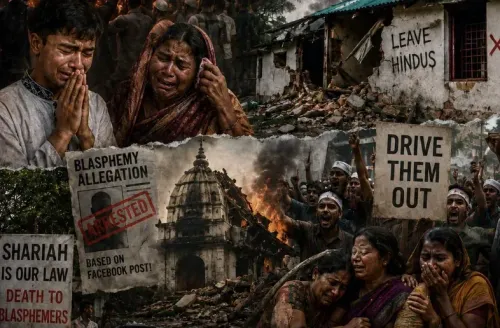
It notes that over 90 percent of those accused are Hindu, with some as young as 15 to 17 years old. Many of these cases arise from alleged Facebook posts, often contested, fabricated, or linked to hacked accounts. Other incidents are based on verbal accusations lacking forensic verification. In several instances, arrests occurred under mob pressure, even prior to any formal investigation.
Numerous complaints have been filed under the Cyber Security Act, particularly against students. Universities and colleges are witnessing students like Pranaya Kundu (PUST), Bikorno Das Divvya, Tonoy Roy (Khulna University), and Apurbo Pal (North South University) facing suspension, expulsion, or police actions following allegations of insulting Islam.
On December 18, Dipu Chandra Das, 30, was brutally murdered and his body set ablaze by a mob in Bhaluka over blasphemy allegations.
A report from Page 3 News indicates that human rights observers cited in the HRCBM report emphasize a troubling pattern—social media accusations, swift arrests, mob mobilization, and attacks on Hindu neighborhoods—suggesting that blasphemy allegations are increasingly utilized as a means of persecution, intimidation, and social exclusion. The report concludes that minors and economically disadvantaged individuals face disproportionate risks, warning that without accountability and protective measures, such accusations will continue to jeopardize minority communities in Bangladesh.
On December 19, a prominent international human rights organization condemned the recent wave of “horrific extremist” violence across Bangladesh. Justice Makers Bangladesh (JMBF) stated that coordinated assaults in multiple locations on Thursday nights demonstrate that Bangladesh is in a state of extreme insecurity and has significantly failed to meet its fundamental responsibilities.
These assaults targeted the offices of leading newspapers, Prothom Alo and The Daily Star; the national cultural institution Chhayanaut; members of minority communities; the remains of the Bangabandhu Museum—an essential symbol of the nation’s history; and the office of the Indian Assistant High Commission in Chattogram. The unrest erupted following the death of Sharif Osman Hadi, spokesperson for the radical group Inqilab Mancha.
According to the JMBF, the planned vandalism, arson, and looting of the offices of The Daily Prothom Alo and The Daily Star at Karwan Bazar in Dhaka were not just attacks on media outlets but also a direct assault on freedom of expression, the quest for truth, and independent journalism.
“The peril faced by journalists and the attempt to rescue them using cranes operated by the Fire Service, rather than helicopters, reveals stark state negligence. The harassment of the President of the Editors’ Council, a senior journalist, during these events further illustrates that extremist forces feel emboldened to suppress democratic voices,” remarked the rights organization.
“That same night, the attack and stone-throwing at the Indian Assistant High Commission in Chattogram not only reflected a severely deteriorating law-and-order situation but also raised serious concerns regarding the government's irresponsibility and its disregard for international diplomatic norms. An assault on a foreign diplomatic mission has gravely tarnished Bangladesh’s international reputation, for which the current government bears full accountability,” they added.
Point of View
It is crucial to emphasize that the ongoing blasphemy-related violence against Hindu minorities in Bangladesh represents a significant challenge to human rights and social harmony. The systematic targeting of these communities not only undermines national integrity but also poses a threat to our shared values of tolerance and coexistence. It is imperative that we advocate for accountability and protective measures to ensure the safety and dignity of all citizens.
NationPress
6 Oct 2026
Frequently Asked Questions
What regions in Bangladesh were affected by these incidents?
The incidents were reported from more than 30 districts, including Chandpur, Chattogram, Dinajpur, Lalmonirhat, Sunamganj, Khulna, Comilla, Gazipur, Tangail, and Sylhet.
What are the main causes of these blasphemy allegations?
Many blasphemy allegations stem from disputed Facebook posts, verbal accusations without forensic verification, and mob pressures leading to swift arrests.
How have these incidents impacted the Hindu minority community?
The Hindu minority community has faced violence, vandalism, arrests, and social exclusion due to these blasphemy allegations, affecting their safety and rights.
What actions are being taken by authorities regarding these incidents?
Authorities have made arrests under the Cyber Security Act, and there have been widespread protests and calls for accountability regarding the treatment of minority communities.
What is the international response to these incidents?
International human rights organizations have condemned the violence and called for accountability, highlighting the need for greater protections for minority communities in Bangladesh.