What Actions Are Being Urged for Hindus Facing Abuses in Bangladesh?
Synopsis
A call for urgent action has arisen from a global coalition to protect Hindus in Bangladesh who face ongoing violence and persecution. The appeal urges international intervention to uphold human rights and safeguard the cultural integrity of this marginalized community.
Key Takeaways
Urgent international action is needed to protect Hindus in Bangladesh.
Over 125 organizations have united to address the human rights crisis.
Violence and intimidation against minorities have sharply increased.
Demographic shifts reflect a troubling trend of ethnic and religious cleansing.
The call for intervention includes proposals for fact-finding missions and refugee protection.
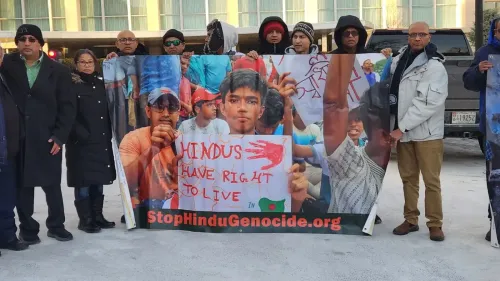
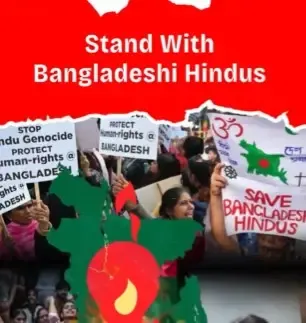
Washington, Feb 10 (NationPress) A worldwide coalition of Hindu and interfaith organizations has urgently called for international intervention to safeguard the rights of Hindus in Bangladesh. The coalition highlighted a disturbing trend of violence, intimidation, and forced migration affecting this community.
This initiative was organized by the Hindus Advancing Human Rights Initiative (HAHRI), a project of HinduPACT. Over 125 organizations and individuals from 15 nations have endorsed the appeal.
The letter, addressed to global governments and organizations, urges immediate action.
“The Hindus of Bangladesh, as the indigenous people of the nation, deserve protection for their lives and culture in accordance with the UN Convention on the Rights of Indigenous Peoples, 2007,” stated Rahul Sur, Executive Director of HAHRI. “What we witness is the complete opposite. This is not isolated violence or lawlessness; it is a prolonged human rights crisis driven by a culture of impunity.”
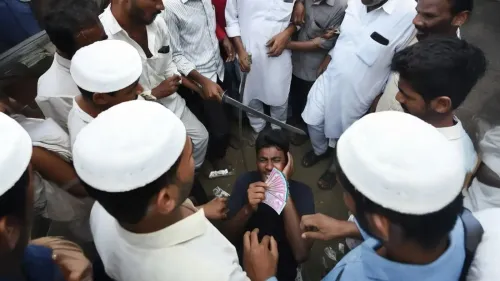
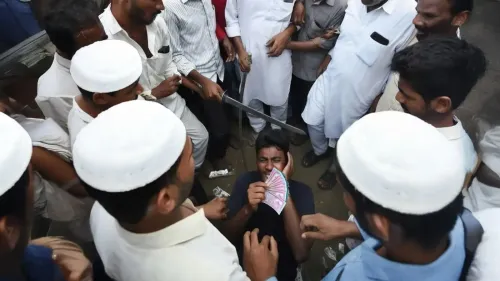
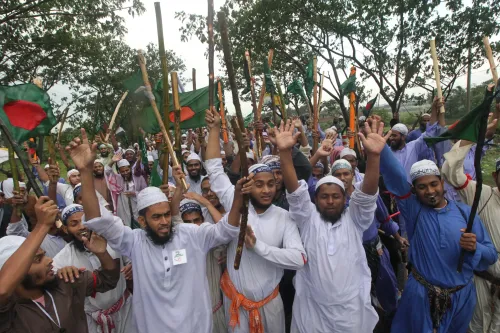
The document details instances of killings and mob assaults, including attacks on temples and homes, and the misuse of blasphemy claims to target Hindus.
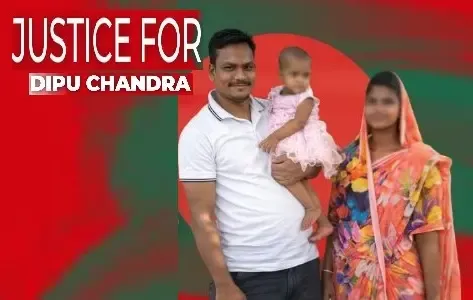
It particularly addresses the public execution of Dipu Chandra Das on December 18, 2025, who was accused of blasphemy. Footage of this brutal act circulated widely, attracting global scrutiny.
According to the report, from August 2024 to November 30, 2025, Bangladesh recorded 2,673 incidents targeting minorities, following the regime change. The coalition noted that these actions have instilled fear within Hindu communities.
The letter references findings from international organizations, including the US Commission on International Religious Freedom, highlighting the escalation of intimidation and violence against Hindus in 2025.
Ajay Shah, Founder and Executive Chair of HinduPACT, remarked on the demographic changes as indicative of deeper issues. “The figures tell a heartbreaking narrative,” Shah asserted. “A democracy cannot selectively uphold rights. When a minority diminishes significantly amid ongoing violence and intimidation, it reflects a failure of both the state and the international framework designed to avert such crises.”
Historically, Hindus constituted around 22 percent of Bangladesh’s population in 1951; today, that figure has plummeted to below 7 percent, with approximately 230,000 Hindus migrating from the country annually.
The coalition described this trend as a form of ethnic and religious cleansing, asserting that the migration is not voluntary.
The letter calls upon the United States to take definitive action, including sending a fact-finding mission, imposing trade restrictions, protecting refugees, and reassessing Bangladesh’s involvement in UN peacekeeping operations.
It also urges the European Union to implement punitive tariffs and initiate an investigative mission.
The organizations demand that the United Nations denounce these abuses and conduct an independent inquiry into the violations.
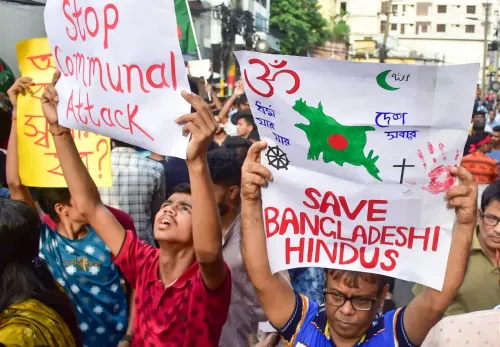
HAHRI reported that demonstrations were organized in over 25 US cities, alongside a petition to the UN High Commissioner for Human Rights that has garnered thousands of signatures globally.
“These petitions, rallies, and formal submissions signify that this issue transcends mere policy discussions,” Sur emphasized. “Citizens from diverse faiths are collectively insisting that universal human rights principles be applied without bias.”
The plight of religious minorities in Bangladesh has previously drawn international focus, appearing in UN reports and discussions in the US Congress. Both India and the United States have addressed minority rights within regional and multilateral contexts.
Point of View
It is essential to acknowledge the profound implications of the situation faced by Hindus in Bangladesh. The call for international intervention underscores a critical human rights crisis that demands our collective attention and action. Upholding the rights of religious minorities is not only a moral imperative but also a fundamental aspect of maintaining global peace and justice.
NationPress
19 Sept 2026
Frequently Asked Questions
What is the current situation for Hindus in Bangladesh?
Hindus in Bangladesh are experiencing a sustained pattern of violence, intimidation, and forced displacement, prompting urgent calls for international action.
What organizations are involved in the appeal for action?
The appeal is coordinated by the Hindus Advancing Human Rights Initiative (HAHRI), with support from over 125 organizations and individuals across 15 countries.
What specific actions are being urged from international bodies?
The coalition is urging governments to take action, including sending fact-finding missions, imposing trade penalties, and providing refugee protections for persecuted Hindus.
How has the demographic of Hindus in Bangladesh changed over the years?
Hindus were about 22% of Bangladesh’s population in 1951, but now they represent less than 7%, with many leaving the country each year due to violence and persecution.
What historical context is important for understanding this issue?
The rights of religious minorities in Bangladesh, particularly Hindus, have been a point of concern in international discussions and reports, highlighting long-standing issues of discrimination and violence.