Will Violence Against Minorities in Bangladesh Escalate Ahead of Elections?
Synopsis
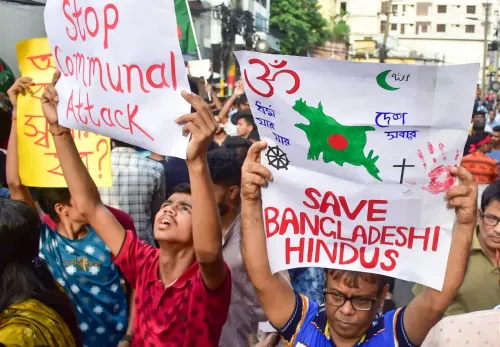
The alarming rise of violence against minorities in Bangladesh has become a pressing issue, with the situation intensifying since 1989. Recent reports indicate a worrying trend that could escalate further as elections draw near, raising serious concerns for the safety of these communities.
Key Takeaways
Systematic violence against minorities has been escalating in Bangladesh.
The minority population has decreased significantly over the decades.
Current violence appears to be well-coordinated and politically motivated.
Law enforcement is often ineffective, leading to impunity for perpetrators.
Political interference hampers justice for victims.
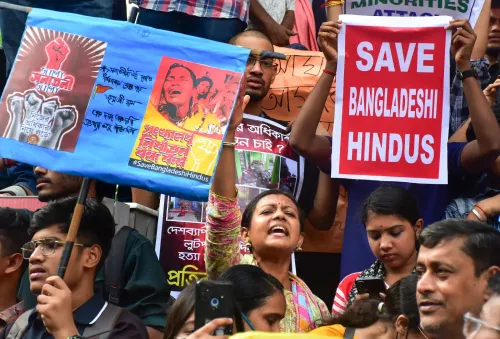
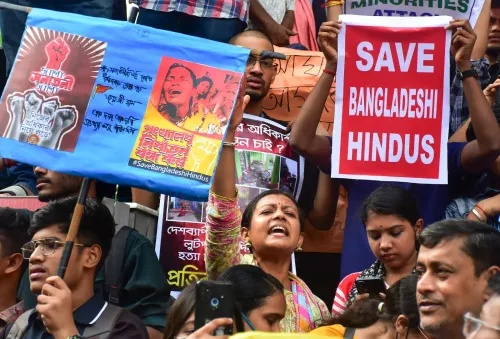
New Delhi, Jan 15 (NationPress) The violence targeting minorities in Bangladesh is a longstanding issue that has persisted for decades, with significant escalations noted since 1989. A sharp increase in attacks against minority communities was recorded in 2025, and officials from India indicate that this relentless targeting has continued unabated since then.
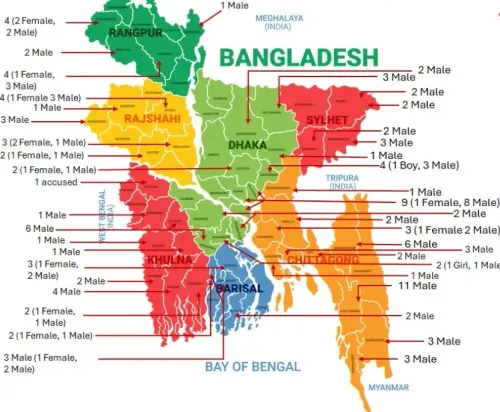
According to a report by the Human Rights Congress for Bangladesh Minorities (HRCBM), between June 6, 2025, and January 5, 2026, 116 individuals from minority communities were killed.
An official from the Intelligence Bureau remarked that this ongoing campaign against minorities feels markedly different from previous ones. The orchestrators appear to be committed to their agenda, showing no signs of halting irrespective of which government assumes power.
Historically, outbreaks of violence would subside following government intervention. However, the current situation seems to suggest that the perpetrators are intent on continuing until every minority community is eradicated.
Previously, violence was often confined to specific divisions in Bangladesh, but the HRCBM report indicates that this wave of violence has now permeated all eight divisions and 45 districts.
Officials observe that this pattern appears meticulously planned, with explicit instructions to ‘not stop until the task is fully accomplished.’
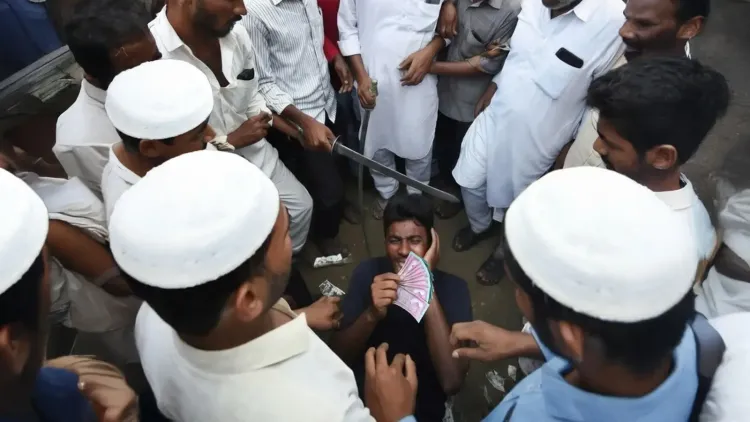
The targeted killings, particularly of Hindus, serve a dual purpose: to rid Bangladesh of minority groups and to send a provocative message to India.
This strategy has reportedly gained momentum following the ousting of Sheikh Hasina. Under Muhammad Yunus, the ISI and Jamaat have executed this plan without facing pressure to cease these assaults.
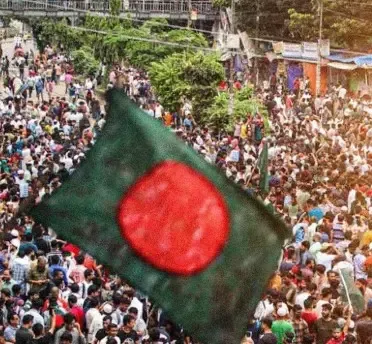
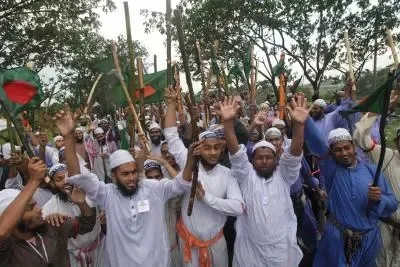
Intelligence agencies caution that as elections approach, attacks on minorities are likely to escalate. Political factions such as the Jamaat are believed to be fostering a radical voter base by inciting violence against minorities.
This anticipation has led Indian agencies to predict an increase in incidents leading up to the elections.
The HRCBM report emphasizes that these acts of violence are not isolated instances but rather reflect a structure of systemic discrimination and long-lasting demographic shifts, noting that the minority population has plummeted from 30% to 9% between 1946 and 2020.
Officials claim the Yunus administration has attempted to downplay these incidents as isolated events, often attributing killings to personal disputes. However, investigations consistently reveal that these acts are deliberate and aimed at minorities.
Moreover, it appears that law enforcement agencies have refrained from acting, despite having the capacity to intervene, which suggests institutional backing for the perpetrators.
The report also uncovers deficiencies in the justice system, indicating that police are often hesitant to file reports, and thorough investigations are seldom conducted.
Political interference and selective enforcement of the law further embolden those committing acts of violence against minority communities.
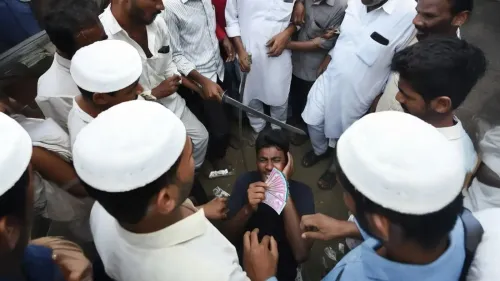
According to the report, 48% of the killings were targeted murders, while mob lynchings accounted for 10.9%. About 12.9% were unexplained deaths linked to broader violence, and custodial deaths by police and other agencies represented 6.9%.
Point of View
I firmly believe in presenting the facts without bias. The situation in Bangladesh regarding minority violence is concerning and requires urgent attention. Our responsibility is to shed light on these critical issues and ensure that the voices of the affected communities are heard.
NationPress
26 Sept 2026
Frequently Asked Questions
What is causing the rise in violence against minorities in Bangladesh?
The violence has been attributed to long-standing systemic discrimination and demographic shifts, with political motives escalating the situation as elections approach.
How has the international community reacted to this violence?
International reactions vary, but there are increasing calls for accountability and protection of minority communities in Bangladesh.
What measures can be taken to protect minorities in Bangladesh?
Strengthening legal frameworks, ensuring law enforcement accountability, and fostering inter-community dialogue are crucial steps.
How can the situation improve for minority communities?
Increased awareness, political will, and international support for minority rights can help improve the situation.
What role do political parties play in this violence?
Certain political factions are believed to incite violence against minorities to consolidate their radical voter base.