Is There a Rising Threat to Minorities in Bangladesh Due to False Blasphemy Claims?
Synopsis
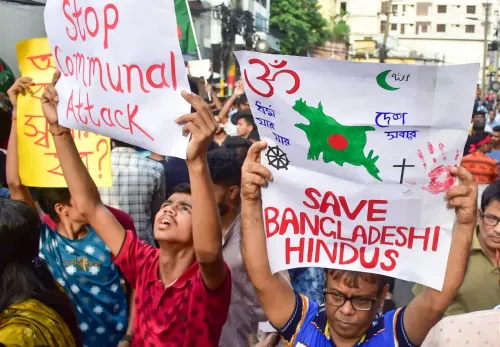
In Bangladesh, the alarming rise of blasphemy accusations poses a grave threat to religious minorities. The Human Rights Congress for Bangladesh Minorities reveals a chilling trend of violence, highlighted by the tragic case of Dipu Chandra Das, a young Hindu man who was lynched and burned alive. This report delves into the systemic issues fueling this crisis.
Key Takeaways
Blasphemy allegations are increasingly used as tools of oppression against minorities in Bangladesh.
The brutal killing of Dipu Chandra Das highlights a disturbing trend of mob violence.
Systemic issues contribute to the misuse of blasphemy laws, endangering lives.
Eyewitness accounts reveal failures in police intervention during critical moments.
Human rights organizations urge for accountability and protection of minority communities.
Dhaka, Dec 20 (NationPress) The Human Rights Congress for Bangladesh Minorities (HRCBM) has emphasized that blasphemy accusations have transformed into a lethal tool of oppression in Bangladesh, increasingly endangering religious minorities.
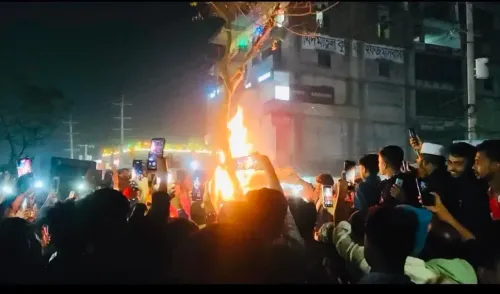
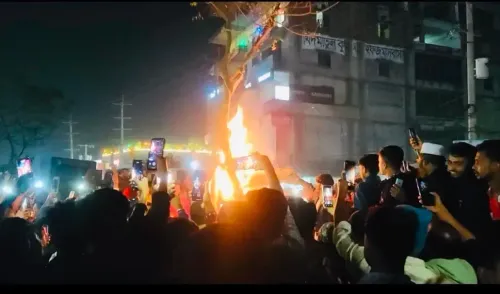
The organization pointed out that this alarming trend peaked recently during a horrific incident when Hindu youth Dipu Chandra Das was brutally murdered in a mob lynching on Thursday night in Bhaluka Upazila of Mymensingh district based on false blasphemy claims, with his remains later set ablaze.
According to eyewitness accounts, the HRCBM reported that Das could have been alive when he was ignited, and that police intervention to rescue him was either delayed or nonexistent at a crucial moment.
"The killing of Dipu Chandra Das is not an isolated case. It showcases a systematic and escalating trend wherein blasphemy allegations are manipulated to terrorize, dispossess, and eliminate minority groups," stated the HRCBM.
The HRCBM underscored that this heinous act not only contravened individual criminal laws but also violated the fundamental principles of Bangladesh's constitutional framework and its international commitments.
“The premeditated lynching and ensuing cremation of an individual—whether alive or deceased—constitute severe crimes in themselves. To limit discussions solely to the act of burning is legally and morally insufficient; the entire sequence signifies a total breakdown of the rule of law,” it added.
The organization asserted that this was not a case of “mob justice” but rather an extrajudicial execution justified by false religious allegations, aimed not just at killing one individual, but at instilling fear within an entire minority community.
“Such actions signify profound social and institutional degeneration. When repeated without consequence, they do not remain as isolated incidents; they send messages, teaching both offenders and victims that minority lives are expendable and that violence will be tolerated or justified,” the HRCBM remarked.
Earlier this month, the rights organization documented 73 blasphemy-related occurrences across 32 districts from January to November 2025, warning that Bangladesh is confronting a deepening human rights crisis fueled by the misuse of blasphemy charges.
The HRCBM noted that a significant number of these cases involved falsified or manipulated digital evidence, such as hacked social media profiles, fabricated screenshots, impersonation, or unverified online postings, often resulting in arrests or mob violence without cyber-forensic validation.
It mentioned that Das has become one of the most tragic representations of this pattern—where an accusation alone was sufficient to obliterate a life.
Condemning this brutal act, the rights organization stated, “He was accused without evidence, dismissed from his job, lynched by a mob, and set on fire. Whether death occurred before or during the burning, the essence of the act remains unchanged: impunity has fueled brutality, making minority lives disposable.”
Point of View
It is crucial to acknowledge the alarming situation faced by minorities in Bangladesh, as highlighted by the HRCBM. The misuse of blasphemy laws has created an environment of fear and violence, threatening the very essence of justice and human rights. It is imperative for society to recognize these patterns and advocate for the protection of all citizens, regardless of their faith.
NationPress
20 Sept 2026
Frequently Asked Questions
What are blasphemy allegations?
Blasphemy allegations are accusations made against individuals for allegedly disrespecting religious beliefs or figures, which can lead to severe social and legal consequences.
How are blasphemy laws misused in Bangladesh?
In Bangladesh, blasphemy laws are often misused to target religious minorities, resulting in violence, mob lynchings, and extrajudicial killings without proper legal proceedings.
What happened to Dipu Chandra Das?
Dipu Chandra Das was a young Hindu man who was lynched and set on fire by a mob in Bhaluka Upazila, Mymensingh district, over false blasphemy accusations.
What does HRCBM stand for?
HRCBM stands for the Human Rights Congress for Bangladesh Minorities, an organization advocating for the rights of minorities in Bangladesh.
What impact do false blasphemy accusations have on society?
False blasphemy accusations lead to violence, fear, and a breakdown of social cohesion, ultimately undermining human rights and justice.