Is Violence Against Hindus in Bangladesh a Sign of State Fragility?
Synopsis
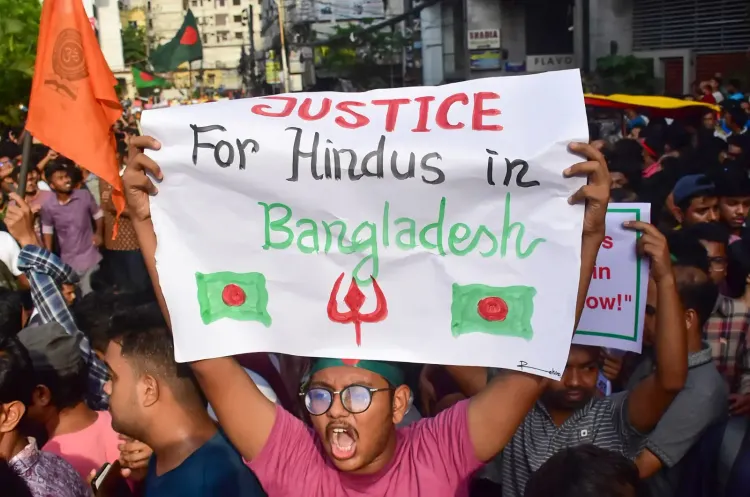
The recent surge in violence against Hindus in Bangladesh raises serious concerns about the fragility of state authority. With multiple attacks occurring within weeks, the report highlights the vulnerabilities faced by Hindu communities, shedding light on the political turmoil affecting their safety.
Key Takeaways
Surge in Hindu killings reveals state fragility.
Hindu communities lack political influence.
Absence of a clear chain of command in policing.
Political instability heightens vulnerability.
Recent murders signal a serious breakdown in state protection.
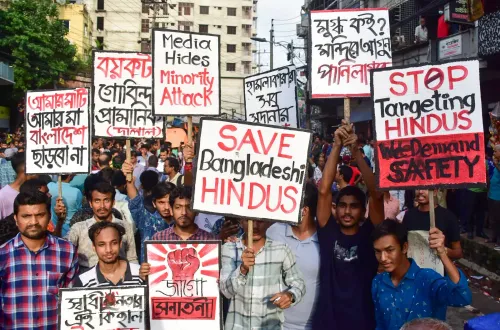
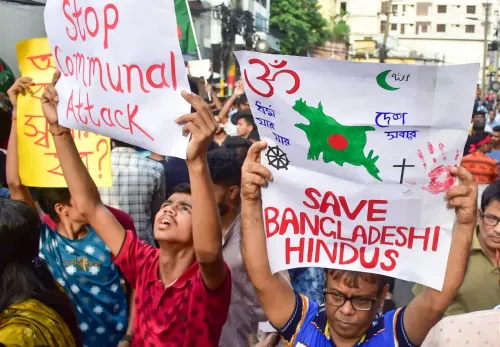
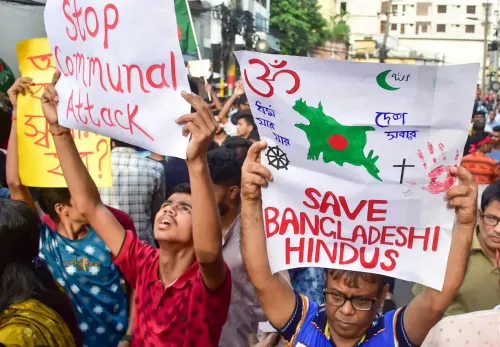
Male, Jan 6 (NationPress) The alarming rise in murders of Hindus throughout Bangladesh reveals a troubling trend where violence against Hindu minorities escalates as the state's authority diminishes. Hindu merchants and small business owners are often targeted due to their economic significance yet social vulnerability, according to a report released on Tuesday.
The report further noted that their shops, situated in public areas, make them particularly susceptible. The Hindu communities in the region also lack the necessary political clout to demand swift investigations.
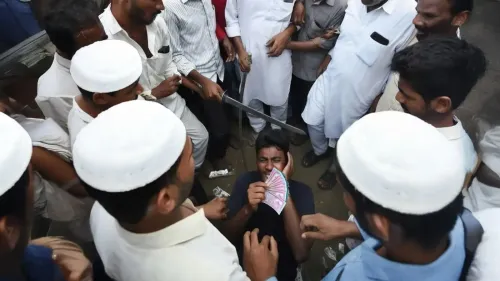
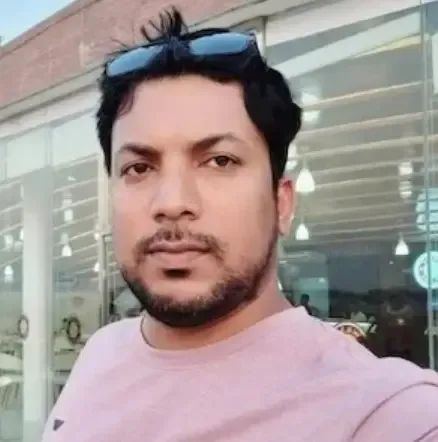
“The murder of Mani Chakraborty, a Hindu grocery vendor in Narsingdi, marks the sixth violent attack against members of Bangladesh’s Hindu population in under three weeks. His assassination occurred in a bustling market, yet the attackers evaded capture. This pattern is becoming increasingly recognizable. A community that has long existed on the fringes of political consideration is again facing the repercussions of a national transition that has unsettled the institutions meant to safeguard it,” the Maldives media outlet Kaafu News detailed.
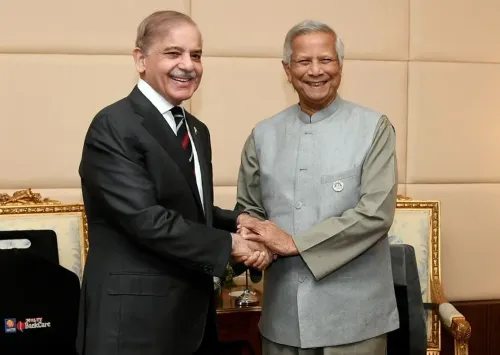
“Bangladesh is currently navigating an unusual political landscape. The exit of Sheikh Hasina has concluded a prolonged era of centralized governance. While her administration faced criticism for authoritarian practices, it maintained a well-organized security framework that reacted promptly to communal discord. The interim government led by Muhammad Yunus has inherited a state structured around a singular political authority. With that center now absent, the system struggles to maintain coherence,” it stated.
The report highlighted that the absence of a clear chain of command presents the most immediate challenge.
“For years, policing in Bangladesh operated under a highly centralized model. Officers were accustomed to receiving direct political directions from the top. The interim government has yet to establish a stable framework for directing law enforcement. Consequently, police units across numerous districts are acting hesitantly, unsure of which political entities hold authority and which decisions are supported institutionally,” it noted.
Highlighting the rising violence against minorities in Bangladesh, the report emphasized that the situation signifies not just violent crime but a failure of the state to protect its citizens. When six Hindu men are murdered within 18 days, it indicates that the perpetrators perceive the state as distracted and the likelihood of repercussions as minimal.
“Bangladesh has experienced political upheaval in the past. However, what distinguishes the current situation is the combination of institutional fragility and increasing communal anxiety. The murder of Mani Chakraborty is not just an isolated incident. It serves as a warning that the state is faltering in its duty to protect those who depend on it the most,” the report concluded.
Point of View
It is crucial to recognize the ongoing challenges faced by Hindu communities in Bangladesh. The recent surge in violence underscores the importance of a robust state mechanism to ensure the protection of all citizens, regardless of their religious affiliations. Our commitment remains with the nation, advocating for justice and security for the vulnerable.
NationPress
22 Sept 2026
Frequently Asked Questions
What is the current situation regarding violence against Hindus in Bangladesh?
The situation is alarming, with a notable increase in violent attacks against Hindus, highlighting the fragility of state authority.
What factors contribute to the targeting of Hindu minorities?
Hindu minorities are often economically significant yet socially vulnerable, making them easy targets during times of political instability.
How does the current political landscape affect Hindu safety?
The absence of a centralized authority has led to hesitancy among law enforcement, leaving Hindu communities more exposed to violence.
What measures can be taken to protect Hindu minorities?
Strengthening political influence and ensuring prompt law enforcement responses are crucial for the protection of Hindu communities.
What is the significance of the murder of Mani Chakraborty?
His murder marks a concerning trend of violence against Hindus and signals a breakdown in the state's ability to provide safety.