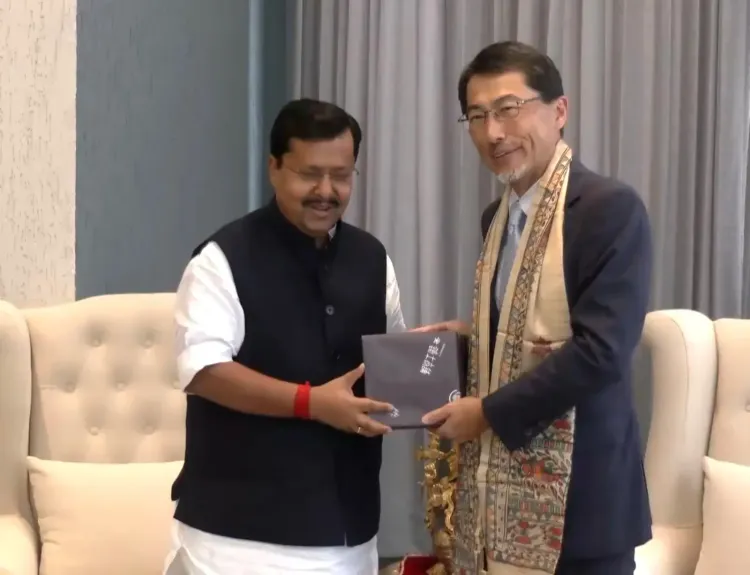
BJP chief Nitin Nabin meets Japan envoy, eyes 2027 diplomatic milestone
Synopsis
BJP National President Nitin Nabin's meeting with Japan's Ambassador Keiichi Ono goes beyond diplomatic courtesy — it signals a deliberate push to institutionalise party-to-party ties between the BJP and Japan's LDP ahead of the landmark 2027 anniversary of 75 years of India–Japan diplomatic relations, with the Indo-Pacific security framework as the strategic backdrop.
Key Takeaways
BJP National President Nitin Nabin met Japan's Ambassador Keiichi Ono in New Delhi on 24 August .
Both sides discussed the upcoming 75th anniversary of India–Japan diplomatic relations in 2027 and opportunities to deepen cooperation.
Nabin cited the Mumbai–Ahmedabad High-Speed Rail project as a key example of Japan's contribution to India's development.
The meeting recalled the personal bond between PM Narendra Modi and late PM Shinzo Abe as a foundation for bilateral strategic depth.
Party-to-party engagement between the BJP and Japan's Liberal Democratic Party (LDP) is being actively structured through dialogue and best-practice exchanges.
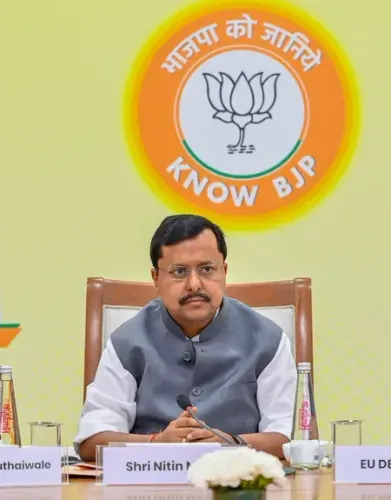
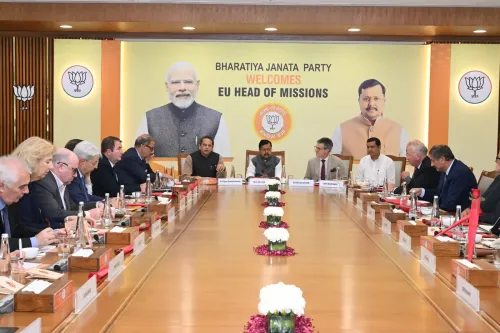
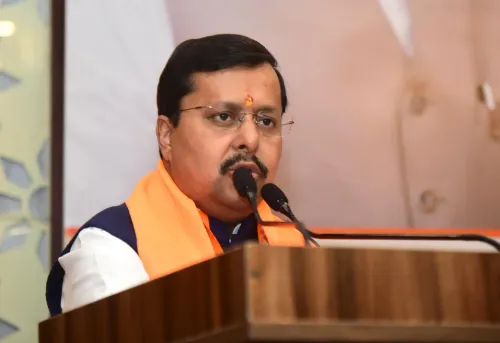
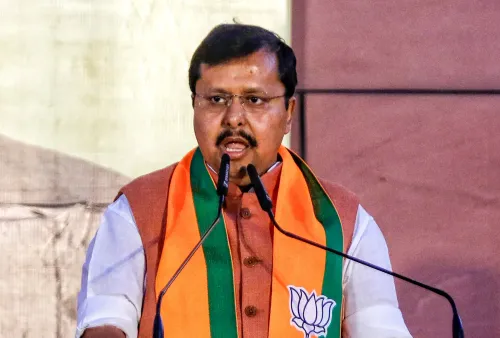
Bharatiya Janata Party (BJP) National President Nitin Nabin on Monday, 24 August met Japan's Ambassador to India, Keiichi Ono, in New Delhi, with both sides reaffirming the strength and momentum of the India–Japan bilateral relationship. The meeting covered party organisation, infrastructure cooperation, and the upcoming 75th anniversary of India–Japan diplomatic ties in 2027.
Key Discussions at the Meeting
During the interaction, Nabin briefed Ambassador Ono on the BJP's organisational structure — its grassroots network of members and karyakartas, its morchas and departments, the recently constituted national team, and the party's emphasis on continuous engagement beyond electoral cycles. The BJP central office, in a statement issued after the meeting, noted that Nabin highlighted India's transformation under Prime Minister Narendra Modi across infrastructure, digitalisation, manufacturing, social development, and internal security.
Modi–Abe Legacy and Strategic Depth
Nabin invoked the close personal friendship between Prime Minister Narendra Modi and the late former Japanese Prime Minister Shinzo Abe, crediting their relationship with giving greater strategic depth and momentum to bilateral ties. He also acknowledged Japan's role in India's development journey, specifically citing the Mumbai–Ahmedabad High-Speed Rail project as a landmark example of bilateral cooperation in infrastructure.
Ambassador Ono's Remarks and 2027 Milestone
According to the BJP statement, Ambassador Ono elaborated on various Japanese initiatives aimed at further strengthening bilateral relations across multiple sectors. Both sides discussed the significance of 75 years of India–Japan diplomatic relations, set to be marked in 2027, and the opportunities it presents to deepen cooperation further.
Party-to-Party Engagement
Nabin also recalled his earlier interaction with a Liberal Democratic Party (LDP) delegation led by Takayuki Kobayashi, Chairperson of the Policy Research Council, during a meeting in May this year. That discussion had centred on structured dialogue and the exchange of best practices between the two parties. Following that meeting, Kobayashi posted on X: 'Japan and India are not merely major powers. We are nations with rich civilisations and long histories. Deepening Japan-India relations through cooperation in security, economic and industrial investment, and people-to-people exchanges will contribute to the stability and prosperity of the Indo-Pacific region. To that end, I shared the view with BJP President Nitin Nabin that it is necessary to promote party-to-party exchanges.'
What Comes Next
With 2027 approaching as a landmark year in the India–Japan diplomatic calendar, both governments and their ruling parties appear to be laying the groundwork for an elevated engagement framework. The BJP's outreach to the LDP signals an intent to institutionalise party-level ties alongside the existing state-to-state relationship — a model that could prove significant as the Indo-Pacific security architecture continues to evolve.
Point of View
Institutionalising ruling-party ties gives both sides a channel that outlasts any single administration. Nabin invoking the Modi–Abe friendship is also a signal: the BJP is positioning itself as the custodian of that legacy, not merely a beneficiary of it. The real test will be whether structured dialogue translates into concrete deliverables — joint positions on Indo-Pacific governance, faster movement on the high-speed rail, or deeper defence-industrial linkages — or remains at the level of warm symbolism.
NationPress
24 Aug 2026
Frequently Asked Questions
Why did Japan's Ambassador meet BJP President Nitin Nabin?
Japan's Ambassador Keiichi Ono met BJP National President Nitin Nabin on 24 August in New Delhi to discuss the strong and growing India–Japan bilateral relationship, party-to-party engagement, and preparations for the 75th anniversary of diplomatic ties in 2027.
What is the significance of 2027 for India–Japan relations?
2027 marks 75 years of formal diplomatic relations between India and Japan. Both sides discussed the milestone as an opportunity to further deepen cooperation across security, economic, and people-to-people sectors.
What role does Japan play in India's infrastructure development?
Japan is a key partner in India's infrastructure push, most notably through the Mumbai–Ahmedabad High-Speed Rail project, which Nabin specifically cited during the meeting as a landmark example of bilateral cooperation.
What is the BJP–LDP party-to-party engagement about?
The BJP and Japan's Liberal Democratic Party (LDP) have been building a structured dialogue framework focused on exchanging best practices and deepening bilateral ties at the party level, separate from government-to-government channels. This was discussed during a May meeting with LDP's Takayuki Kobayashi.
What did LDP's Takayuki Kobayashi say about India–Japan relations?
Kobayashi posted on X that India and Japan are 'nations with rich civilisations and long histories' and that deepening ties in security, economic investment, and people-to-people exchanges would contribute to the stability and prosperity of the Indo-Pacific region. He emphasised the need for party-to-party exchanges with the BJP.