BLF female unit KAAD claims killing 9 Pakistani troops in Balochistan attacks
Synopsis
The BLF's newly formed all-female combat unit, KAAD, has claimed responsibility for killing nine Pakistani security personnel across multiple Balochistan operations — a structural escalation in the province's long-running insurgency. With the BRA simultaneously striking an energy site in Dera Bugti and the BRG seizing government buildings, multiple armed groups appear to be coordinating a sustained offensive in the same week.
Key Takeaways
The BLF's Karima Armed Assault Division (KAAD) , a newly formed all-female unit, claimed killing nine Pakistani security personnel across attacks in Balochistan on 27 September 2026 .
Six personnel were reportedly killed in a KAAD strike on a QRF convoy on the CPEC highway near Turbat on 22 September ; BLF acknowledged one of its own fighters, Chakar Murad , was killed.
The Baloch Republican Army (BRA) claimed a rocket attack on a Mari Energies Limited site in Dera Bugti , killing three company employees and allegedly nine Pakistani military personnel in subsequent clashes.
The Baloch Republican Guards (BRG) claimed seizure of Haji Shehr and destruction of a police station, along with a separate operation in Eri Shehr .
All casualty figures originate solely from the respective militant groups and have not been independently verified; Pakistani security forces had not publicly responded at time of reporting.
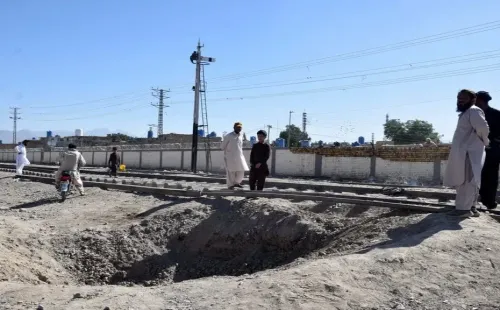
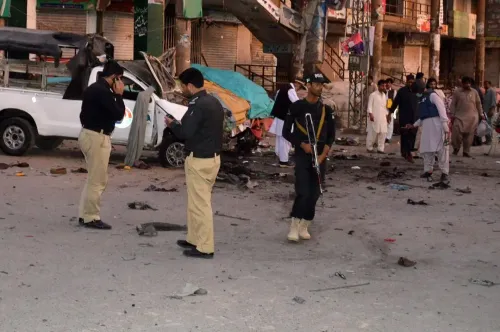
The Balochistan Liberation Front (BLF) has claimed that its newly formed all-female combat unit, the Karima Armed Assault Division (KAAD), was responsible for killing nine Pakistani security personnel in a series of attacks across Balochistan province, local media reported on Sunday, 27 September 2026. The claims, which could not be independently verified, mark a significant escalation in insurgent activity in the restive Pakistani province.
The CPEC Highway Attack Near Turbat
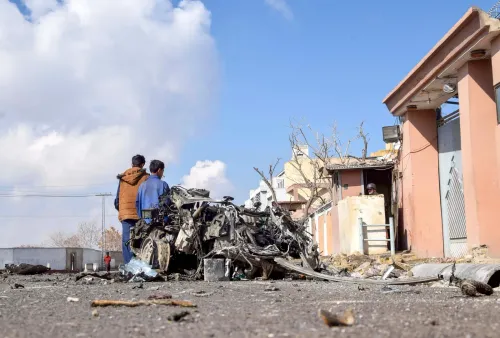
According to a statement attributed to BLF spokesperson Major Gwahram Baloch, KAAD fighters targeted a three-vehicle Quick Response Force (QRF) convoy on the China Pakistan Economic Corridor (CPEC) highway in Jusak, near Turbat, on 22 September. The spokesperson claimed six personnel were killed and several others injured in the strike, with multiple Pakistani military vehicles reportedly severely damaged.
The BLF's Qurban unit is said to have provided support to KAAD during the operation. Gwahram Baloch stated that both units successfully repelled an encirclement attempt by Pakistani forces and covered their withdrawal. The BLF acknowledged the death of one of its own fighters — Qurban unit member Chakar Murad, also identified by the alias Dileep Jan — in the engagement.
Quetta-Karachi Highway Blockades in Kalat District
In a separate claimed operation, KAAD fighters reportedly established blockades at three points on the Quetta-Karachi highway in Manguchar tehsil of Kalat district. The BLF statement alleges that two Pakistani military personnel were killed when fighters attacked approaching forces travelling in an armoured vehicle and two other vehicles from Manguchar bazaar. A subsequent exchange, triggered by another Pakistani encirclement attempt, reportedly killed one additional security personnel and wounded several others.
BRA Attack on Mari Energies Site in Dera Bugti
Separately, the Baloch Republican Army (BRA) claimed responsibility for a rocket and heavy weapons attack on a Mari Energies Limited facility in the Beh Loti area of Dera Bugti. According to a statement from BRA spokesperson Sarbaz Baloch, three company employees were killed and several others injured in the assault.
The BRA further alleged that a clash erupted between Pakistani forces and what the group described as a local state-backed armed group
in the aftermath of the energy site attack. The statement claimed nine Pakistani military personnel and three members of that armed group were killed in the fighting, while six BRA fighters also lost their lives. The targeting of a Mari Energies Limited site is notable given the company's role in Pakistan's gas production infrastructure in Dera Bugti — a district historically at the centre of Baloch separatist conflict.
BRG Seizes Government Buildings, Destroys Police Station
The Baloch Republican Guards (BRG) also claimed operations during the same period. According to the group, its fighters seized control of Haji Shehr and destroyed a police station there using explosives. The BRG additionally claimed that BRA fighters entered Eri Shehr, took control of government buildings, and withdrew after completing their stated objectives.
Earlier in the week, on Wednesday, the BRG claimed an attack on what it characterised as a state-backed death squad
in the Kachhi Qalandar area of Kachhi district. BRG spokesperson Dostain Baloch said fighters encountered the armed men during a routine patrol; the group claimed the death squad members fled, abandoning their weapons.
Broader Context: Escalating Insurgency in Balochistan
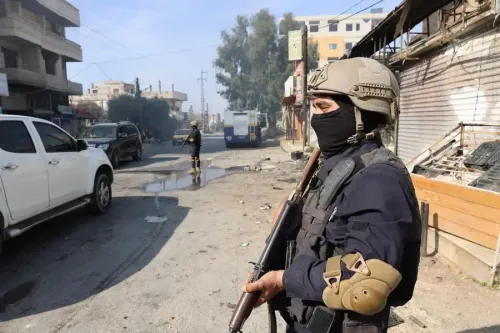
These incidents collectively reflect a sharp uptick in coordinated militant activity across Balochistan, with multiple armed groups — BLF, BRA, and BRG — claiming simultaneous operations against Pakistani security forces and civilian infrastructure within a compressed timeframe. Notably, the deployment of an organised all-female combat unit by the BLF represents a structural shift in the insurgency's operational profile, drawing comparisons to similar tactical adaptations seen in other prolonged asymmetric conflicts.
Balochistan has been the site of a decades-long separatist insurgency, with Pakistani authorities regularly attributing attacks to foreign-backed militant networks — a charge the groups deny. Pakistani security forces had not publicly responded to these specific claims at the time of reporting. All casualty and operational claims originate solely from the respective militant groups and have not been independently corroborated.
With energy infrastructure, highway networks, and administrative posts now all cited as targets in a single week, the trajectory of violence in the province will be closely monitored by regional security analysts and governments with interests in the CPEC project.
Point of View
Borrowing a page from asymmetric conflicts where female combatants have historically drawn outsized media and political coverage. The simultaneous operations by the BLF, BRA, and BRG within the same week suggest a degree of coordination — or at minimum, a shared escalatory calculus — that Pakistani security planners will find harder to contain than isolated incidents. The targeting of a Mari Energies site in Dera Bugti, directly threatening CPEC-linked energy infrastructure, raises the strategic stakes well beyond a security operation and into the domain of Pakistan's economic stability and its obligations to Chinese investors. What mainstream coverage often underplays is how consistently Pakistani authorities have failed to produce verifiable counter-narratives to these claims — a silence that, in the information vacuum of Balochistan, effectively cedes the story to the insurgents.
NationPress
27 Sept 2026
Frequently Asked Questions
What is the Karima Armed Assault Division (KAAD)?
The Karima Armed Assault Division (KAAD) is a newly formed all-female combat unit of the Balochistan Liberation Front (BLF), a Baloch separatist militant group operating in Pakistan's Balochistan province. KAAD claimed its first major operations in late September 2026, targeting Pakistani security forces on the CPEC highway near Turbat and on the Quetta-Karachi highway in Kalat district.
What happened in the BLF attack on the CPEC highway near Turbat?
On 22 September 2026, KAAD fighters attacked a three-vehicle Quick Response Force convoy on the CPEC highway in Jusak, near Turbat, Balochistan. The BLF claimed six Pakistani personnel were killed and several others injured, with multiple military vehicles damaged; the BLF also acknowledged the death of one of its own fighters, Chakar Murad.
What was the BRA attack on Mari Energies Limited?
The Baloch Republican Army (BRA) claimed a rocket and heavy weapons attack on a Mari Energies Limited facility in the Beh Loti area of Dera Bugti, Balochistan. According to the BRA's statement, three company employees were killed, several others injured, and subsequent clashes allegedly killed nine Pakistani military personnel and six BRA fighters.
Have Pakistani authorities confirmed the casualty figures?
Pakistani security forces had not publicly responded to these specific claims at the time of reporting. All casualty and operational figures originate solely from the BLF, BRA, and BRG, and have not been independently verified.
Why is the escalation in Balochistan significant?
Balochistan is home to the China Pakistan Economic Corridor (CPEC), a multi-billion dollar infrastructure project, and has been the site of a decades-long separatist insurgency. The coordinated operations by multiple armed groups targeting military convoys, energy infrastructure, and government buildings in a single week mark a notable intensification — one with direct implications for CPEC security and Pakistan's broader economic commitments.