BLA, BLF female combat units expand in Balochistan, target Pakistan forces
Synopsis
The Balochistan insurgency has crossed a structural threshold — women are no longer support staff, they are commanders and suicide attackers. With the BLA formally appointing a women's wing commander and the BLF's KAAD ambushing a convoy on the CPEC highway, a movement once defined by male combatants is now a cross-gender armed mobilisation, complicating Pakistan's counterinsurgency calculus at a moment of acute regional tension.
Key Takeaways
The BLF's Karima Armed Assault Division (KAAD) ambushed a Pakistan Army convoy on the CPEC highway near Turbat , Balochistan.
The BLA formally established a women's wing and appointed Shahnaz Baloch as its commander following Operation Herod 2.0 in February 2026 .
Shari Baloch's April 2022 suicide attack at Karachi University , which killed three Chinese teachers , is cited as a pivotal early precedent.
Over 8,000 people have reportedly gone missing in Balochistan since the mid-2000s , according to human rights groups, with cases spiking in recent months.
Despite vast reserves of natural gas, gold, coal, copper, and uranium , Balochistan remains Pakistan's most underdeveloped province .
Officials assess that women are joining the BLA and BLF voluntarily , motivated by both personal grievance and collective political alignment.
The Balochistan Liberation Army (BLA) and the Balochistan Liberation Front (BLF) have significantly expanded their female combat wings, with women now conducting direct armed assaults on Pakistani security force convoys and military installations — marking a decisive tactical shift in the decades-long separatist insurgency in Balochistan.
The Karima Armed Assault Division and the Turbat Ambush
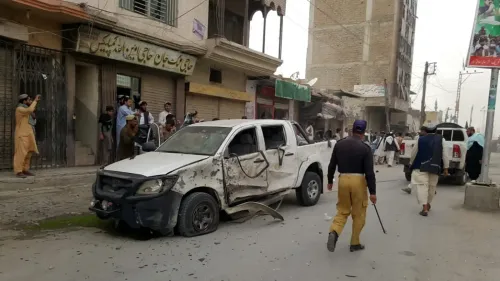
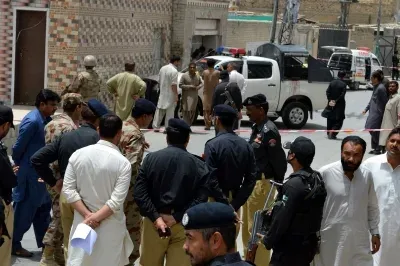
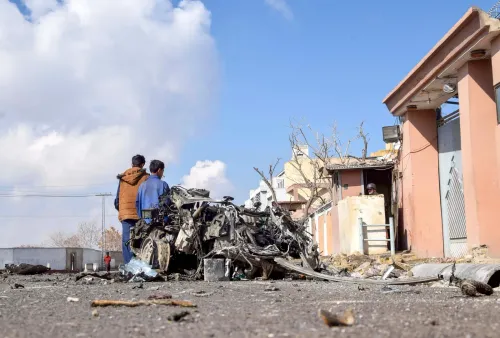
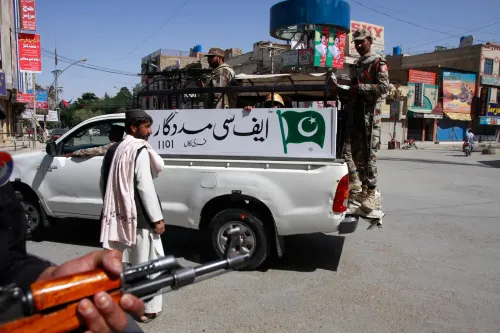
A Pakistan Army Action Task Force convoy was ambushed on the CPEC highway near Jusak, close to Turbat, in an attack claimed by the Karima Armed Assault Division (KAAD) — the newly formed all-female combat unit of the BLF. The ambush underscores that women in Balochistan are, according to officials, 'no longer merely passive observers of the separatist movement.'
'Over time, their involvement expanded from activism and political mobilisation to support roles for the BLA and BLF. The significant change now is the reported direct participation of women in attacks targeting Pakistani security forces,' an official said.
From Shari Baloch to Operation Herod 2.0
One of the earliest documented cases of direct female involvement dates to April 2022, when Shari Baloch, affiliated with the BLA, carried out a suicide attack at Karachi University's Confucius Institute, killing three Chinese teachers and their Pakistani driver. Officials described the attack as a turning point that emboldened further recruitment of women into combat roles.
The BLF followed a similar trajectory in 2025, when Kareena Rafiq carried out a vehicle-borne attack against a Frontier Corps facility in Nokundi. In February 2026, the BLA confirmed its women's squad participated in Operation Herod 2.0, a major offensive against Pakistani forces. The BLA subsequently formalised its women's wing, appointing Shahnaz Baloch as its commander.
Why Women Are Joining the Armed Struggle
Officials note two converging motivations. First, widespread frustration over alleged repression — human rights groups report that over 8,000 people have gone missing in Balochistan since the mid-2000s, with figures spiking in recent months alongside a rise in reported extra-judicial killings and abductions. Victims have reportedly included students, political activists, teachers, journalists, and lawyers. Human rights organisations have documented the recovery of 'bullet-ridden' bodies bearing signs of torture.
Second, the visible presence of women in combat is seen as a deliberate strategic signal — one intended to demonstrate that the movement transcends gender lines and to apply social pressure on men who have remained on the sidelines. According to officials, some men have subsequently joined the BLA and BLF, reportedly influenced by this social dynamic.
Officials also noted that the women involved are, to their assessment, joining voluntarily and are prepared for high-risk roles including suicide missions. 'While some have gone on to become part of the attack squads, many still spread political messages, raise funds, take part in protests and also support families of the fighters. It has become like one big family whereby everyone feels the need to be involved in this battle against the Pakistani establishment,' an official said.
Balochistan's Grievances: Resource Wealth, Development Deficit
Balochistan holds some of Pakistan's largest reserves of natural gas, gold, coal, copper, and uranium, yet remains the country's most underdeveloped province. Critics argue this resource disparity — combined with alleged security force abuses — has deepened alienation across gender and generational lines, broadening the support base for armed groups beyond their traditional constituencies.
Strategic Implications
The formalisation of female combat wings within the BLA and BLF represents a structural evolution in the insurgency, not merely a tactical novelty. For the Pakistani security establishment, it complicates counterinsurgency doctrine and expands the profile of operational threats. As these units reportedly grow in size and capability, analysts expect further escalation along CPEC corridors — an outcome with implications not only for Pakistan but for the broader regional security architecture.
Point of View
The voluntary nature of this recruitment, if accurate, suggests the movement's social base has widened beyond hardened cadres to include women radicalised by direct experience of enforced disappearances and extrajudicial killings. That 8,000 missing persons figure — largely uncontested by Islamabad — is the insurgency's most powerful recruiting tool, and neither military operations nor CPEC investment has meaningfully addressed the underlying grievance.
NationPress
24 Sept 2026
Frequently Asked Questions
What is the Karima Armed Assault Division (KAAD)?
The Karima Armed Assault Division (KAAD) is the newly formed all-female combat unit of the Balochistan Liberation Front (BLF). It claimed responsibility for ambushing a Pakistan Army Action Task Force convoy on the CPEC highway near Jusak, close to Turbat in Balochistan.
Who was Shari Baloch and what role did she play?
Shari Baloch was a member of the BLA who carried out a suicide attack at Karachi University's Confucius Institute in April 2022, killing three Chinese teachers and their Pakistani driver. Officials describe her as a pivotal figure whose action encouraged more women to join the BLA and BLF's combat units.
Who is Shahnaz Baloch?
Shahnaz Baloch was appointed commander of the BLA's formally announced women's wing following the group's February 2026 Operation Herod 2.0 offensive. Her appointment marked the BLA's first public formalisation of a female combat command structure.
Why are women joining armed groups in Balochistan?
According to officials, women in Balochistan are motivated by deep frustration over alleged repression — including over 8,000 reported enforced disappearances since the mid-2000s, extra-judicial killings, and abductions documented by human rights groups. The movement also actively recruits women to signal that the struggle is a broad-based, cross-gender cause and to apply social pressure on uncommitted men.
What are Balochistan's core grievances against Pakistan?
Balochistan, despite holding Pakistan's largest reserves of natural gas, gold, coal, copper, and uranium, remains the country's most underdeveloped province. Residents and activists allege systematic economic marginalisation, security force abuses including a 'kidnap, kill and dump' pattern, and political exclusion — grievances that have fuelled both male and female recruitment into armed separatist groups.