BLA targets China-linked projects in Balochistan with new intimidation tactics
Synopsis
The BLA is no longer just blowing up pipelines — it is now targeting the human workforce behind Chinese-backed projects in Balochistan, forcing contractors and engineers to abandon sites. With a suicide squad, rotating tactics, and a recent ambush that killed over a dozen soldiers, the group is outmanoeuvring Pakistan's security apparatus at every turn.
Key Takeaways
The Balochistan Liberation Army (BLA) has shifted to intimidating contractors and engineers on China-linked projects in Balochistan as its latest tactical phase.
The BLA claimed an ambush in Mastung district that reportedly killed more than a dozen Pakistani army soldiers .
The group has cycled through three distinct strategies: infrastructure attacks, direct military engagements, and now workforce intimidation.
The BLA has reportedly formed a suicide squad that includes women operatives , complicating Pakistani threat assessment.
Field Marshal Asim Munir is accused by officials of ordering crackdowns on Baloch civilians while directing politicians to make development assurances.
Officials say trust between the Baloch population and the Pakistani establishment has eroded to a point that is 'extremely hard to restore.'
The Balochistan Liberation Army (BLA) has intensified its campaign against Chinese investments in Balochistan, shifting to a deliberate strategy of intimidating contractors, engineers, and workers associated with China-linked infrastructure projects in the region. According to officials, the move marks the latest phase in the BLA's evolving tactical playbook — one that has consistently kept Pakistani security forces off-balance.
A Shifting Tactical Playbook
Officials tracking the insurgency note that the BLA has methodically rotated its focus over the years. Initially, attacks concentrated on physical infrastructure. That was followed by sustained, direct engagements with Pakistani army units. The current phase — targeting the human capital behind Chinese-backed projects — is, according to analysts, a calculated escalation designed to drain projects of their workforce without triggering large-scale military confrontations.
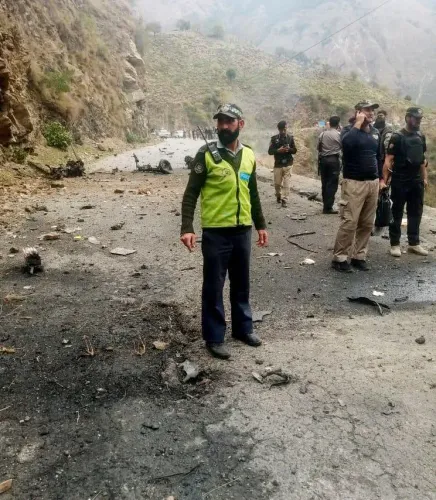
Notably, the BLA also claimed responsibility for an ambush in Mastung district several weeks ago in which reportedly more than a dozen Pakistani army soldiers were killed — an incident that, according to officials, exposed the military's vulnerability in the province.
The CPEC Dimension
At the heart of the BLA's grievances lies the question of who benefits from Balochistan's resource wealth. The province is rich in natural resources, yet residents have long argued that revenues are siphoned toward major urban centres, enriching politicians, bureaucrats, and military brass rather than local communities. Critics argue that Chinese investments — largely channelled through the China-Pakistan Economic Corridor (CPEC) — have followed the same pattern, generating little tangible benefit for the Baloch population.
Islamabad has attempted to counter this narrative by assuring residents that ongoing projects are designed to generate local employment and deliver economic stability. However, officials familiar with the situation say trust between the establishment and the people of Balochistan has eroded so deeply over decades that such assurances carry little credibility on the ground.
Security Forces on the Back Foot
The BLA's deliberate tactic rotation has created a significant operational problem for Pakistan's security apparatus. According to officials, the unpredictability of the group's methods — oscillating between infrastructure sabotage, armed ambushes, and now workforce intimidation — prevents the deployment of any fixed counter-insurgency strategy.
Adding to the complexity, the BLA has reportedly built a suicide squad that includes women operatives, a development officials say has further complicated threat assessment. The cumulative effect, according to observers, is that the losses being incurred by the Pakistani establishment — both in personnel and in project delays — are substantial.
The Political and Military Calculus
Officials point to a disconnect at the top of Pakistan's military establishment. Field Marshal Asim Munir has, according to these accounts, directed the political class to make assurances of development and inclusion to the Baloch people, while simultaneously ordering crackdowns that contradict those promises. Critics argue this double-track approach has only deepened alienation in the province.
Pakistan watchers say the only credible path to reducing BLA influence runs through honouring commitments to Balochistan's population — a task made harder by decades of broken assurances. With the BLA reportedly growing in strength and tactical sophistication, the road ahead for Islamabad's security planners is, by most assessments, increasingly difficult.
Point of View
Direct military engagement, and workforce intimidation, the group forces Pakistani security planners into a reactive posture with no stable counter-strategy. What is often missed in mainstream coverage is the CPEC dimension: Chinese investment, far from pacifying Balochistan, has become a recruitment tool for the insurgency by reinforcing the perception that the province's resources serve outsiders. Islamabad's dual-track of public assurances and military crackdowns — reportedly directed at the highest levels — is not just failing; it is actively widening the trust deficit it claims to be closing.
NationPress
14 Sept 2026
Frequently Asked Questions
What is the BLA's new strategy in Balochistan?
The BLA is now directly threatening contractors, engineers, and workers employed on Chinese-linked infrastructure projects in Balochistan, aiming to drive them away from project sites. This follows earlier phases focused on infrastructure sabotage and armed attacks on Pakistani security forces.
Why is the BLA targeting Chinese investments in Balochistan?
The BLA and many Baloch residents argue that Chinese investments — largely under the CPEC framework — have not benefited the local population, with revenues reportedly diverted to major cities and political, military, and bureaucratic elites. The BLA frames these projects as an extension of what it calls the Pakistani establishment's exploitation of Balochistan's resources.
What happened in the Mastung district ambush?
The BLA claimed responsibility for an ambush in Mastung district in which reportedly more than a dozen Pakistani army soldiers were killed. Officials described the attack as a significant embarrassment for the Pakistan army, highlighting its vulnerability in the province.
How has the BLA's tactical evolution affected Pakistani security forces?
According to officials, the BLA's unpredictable rotation of tactics — from infrastructure attacks to armed ambushes to workforce intimidation — prevents Pakistani forces from deploying any fixed counter-insurgency strategy, keeping them in a reactive posture. The group has also reportedly formed a suicide squad that includes women, further complicating threat assessment.
What is Pakistan's response to the Balochistan insurgency?
Pakistan has attempted to counter the BLA's narrative by assuring Baloch residents that CPEC projects will generate local jobs and economic stability. However, officials say decades of broken promises have made these assurances ineffective, and Field Marshal Asim Munir is accused of simultaneously ordering crackdowns that contradict the government's stated outreach efforts.