India, Brazil push to expand Mercosur trade pact beyond 450 tariff lines
Synopsis
The India-Mercosur trade pact covers just 450 tariff lines — Brazil's trade minister calls it 'nothing absolutely.' Now, after a meeting with Commerce Minister Piyush Goyal at the G20 Trade Ministers' summit in Milwaukee, both sides have finished drafting terms of reference for a far broader deal, putting a long-stalled commercial relationship on the cusp of a genuine upgrade.
Key Takeaways
Brazil and India have completed drafting terms of reference to expand the India-Mercosur Preferential Trade Agreement , as of 1 October 2026 .
Brazilian minister Márcio Elias Rosa called the existing pact 'very shy', covering only 450 tariff lines .
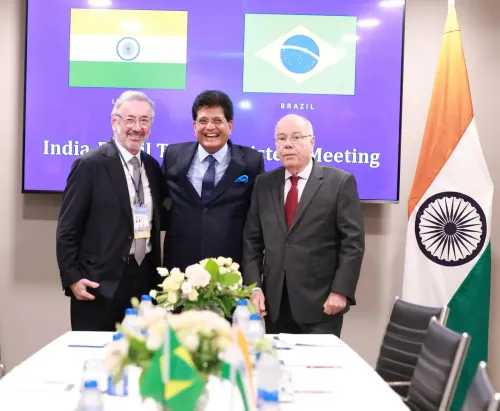
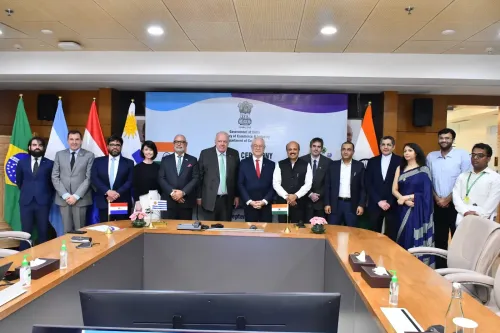
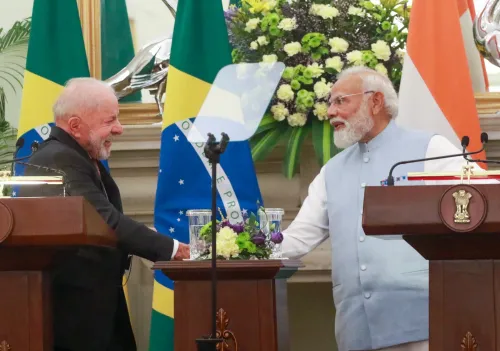
The announcement came after Rosa met India's Commerce and Industry Minister Piyush Goyal at the G20 Trade Ministers' Meeting in Milwaukee .
Sectors flagged for deeper cooperation include the bioeconomy , digital economy , artificial intelligence , skills development , and defence .
The terms of reference framework mirrors a similar process reportedly underway between Mercosur and the United States .
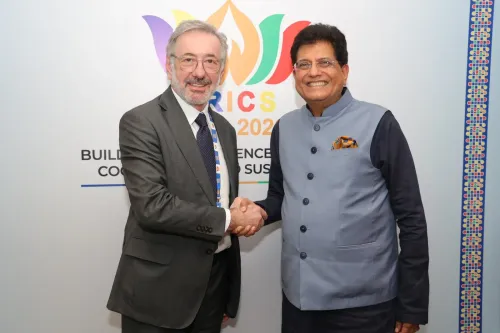
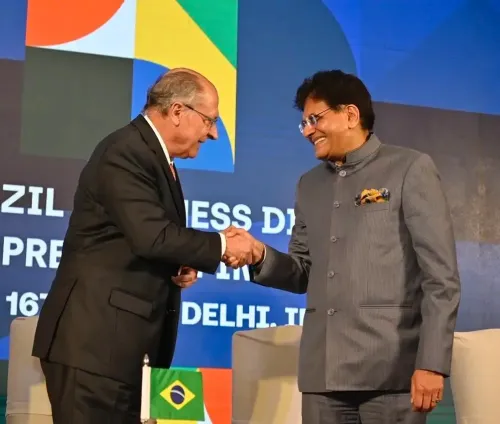
Brazil and India are moving to substantially widen the existing India-Mercosur Preferential Trade Agreement, with both sides completing terms of reference that could unlock negotiations on a far broader commercial arrangement, a senior Brazilian minister said on the sidelines of the G20 Trade Ministers' Meeting in Milwaukee on 1 October 2026. The development signals a shared recognition that the current pact — limited to just 450 tariff lines — falls well short of the two economies' potential.
What the Brazilian Minister Said
Márcio Elias Rosa, Brazil's Minister of Development, Industry, Trade and Services, described India as 'a highly important trading partner' following his meeting with India's Commerce and Industry Minister Piyush Goyal. Rosa called the existing preferential arrangement 'very shy', saying it covered so few product lines that it amounted to 'nothing absolutely.'
'What we discussed now is a possibility of having an agreement, a broad agreement, between the two economies and Mercosur,' Rosa said, according to remarks made at the ministerial gathering.
Terms of Reference Now Drafted
Rosa confirmed that both sides had completed drafting a terms of reference document — a key procedural step that defines the scope and ambition of a prospective trade deal. He drew a parallel to a similar framework being developed between Mercosur and the United States.
'We've just finished drafting a term of reference. Similar to what is just now being drafted with the US,' he said. 'Once we define that, we can build proposals,' he added. Rosa described his meeting with the Indian side as 'excellent' and indicated that substantive work would continue over the coming months.
Sectors Identified for Deeper Cooperation
Beyond tariff expansion, Rosa pointed to several areas where Brazil and India could deepen ties, including the bioeconomy, circular economy, and digital economy. He also flagged artificial intelligence, skills development, and defence as part of the broader conversation with the Indian side.
Notably, Mercosur — the South American trade bloc that includes Brazil, Argentina, Uruguay, and Paraguay — has been actively pursuing new trade frameworks globally, having reached a landmark deal with the European Union after more than two decades of negotiations. An expanded arrangement with India would represent another significant step in that outward push.
Why This Matters for India
India's trade with Latin America has grown steadily but remains underweight relative to the region's size. The existing India-Mercosur Preferential Trade Agreement, signed in 2009, covers a narrow basket of goods and has long been seen by trade analysts as a missed opportunity. An expanded framework could open access for Indian pharmaceuticals, IT services, and manufactured goods, while giving Brazil and its Mercosur partners a larger foothold in one of the world's fastest-growing consumer markets.
With terms of reference now reportedly in place, the next step will be formal proposal-building — a process that could take several months before any negotiating rounds are announced.
Point of View
It is a formality. The completion of terms of reference is a procedural step, not a deal, and the gap between a framework document and a ratified agreement is where most such initiatives go to stall. What is notable here is the timing: Brazil is simultaneously pursuing a Mercosur-US terms of reference, suggesting a broader strategy of parallel trade-building rather than exclusivity with any one partner. For India, the real prize is not tariffs on a narrow goods list but market access for services and pharmaceuticals — sectors conspicuously absent from Rosa's public remarks. Whether New Delhi has pushed those interests into the actual negotiating scope is the question that will determine whether this upgrade is transformative or merely cosmetic.
NationPress
1 Oct 2026
Frequently Asked Questions
What is the India-Mercosur Preferential Trade Agreement?
The India-Mercosur Preferential Trade Agreement is a limited tariff-reduction deal signed in 2009 between India and the Mercosur bloc, which includes Brazil, Argentina, Uruguay, and Paraguay. It currently covers only 450 tariff lines, which Brazil's trade minister has described as insufficient for the scale of the two economies' relationship.
What did Brazil's minister announce at the G20 Trade Ministers' Meeting?
Brazil's Minister of Development, Industry, Trade and Services Márcio Elias Rosa confirmed on 1 October 2026 that Brazil and India had completed drafting terms of reference for a broader trade agreement. He made the announcement on the sidelines of the G20 Trade Ministers' Meeting in Milwaukee, following talks with India's Commerce Minister Piyush Goyal.
What sectors could be covered under a broader India-Mercosur deal?
Rosa identified the bioeconomy, circular economy, digital economy, artificial intelligence, skills development, and defence as areas for potential deeper cooperation. The specific product and service coverage of any expanded deal would be determined in the negotiating rounds that follow the terms of reference.
How does this compare to the existing India-Mercosur arrangement?
The current preferential agreement covers just 450 tariff lines, which Rosa described as 'very shy' and practically negligible. A broader arrangement, if negotiated, would significantly expand market access for both sides across a wider range of goods and potentially services.
What happens next in the India-Mercosur trade talks?
With terms of reference now reportedly drafted, both sides are expected to move toward formal proposal-building over the coming months. Rosa indicated that further work would follow, though no timeline for the start of formal negotiating rounds has been announced publicly.