India, MERCOSUR sign protocol enabling electronic certificates of origin
Synopsis
For the first time in over 17 years, India and MERCOSUR have amended their Preferential Trade Agreement — replacing the paper-only certificates of origin requirement with a framework that gives electronic certificates equal legal standing. It is a quiet but consequential step toward frictionless bilateral trade across four continents.
Key Takeaways
India and MERCOSUR signed the first additional protocol to their Preferential Trade Agreement (PTA) on 14 September 2026 in New Delhi.
The protocol grants electronic certificates of origin the same legal validity as paper certificates under the PTA.
The signing involved Commerce Secretary Rajesh Agarwal , Uruguay's Ambassador Alberto Guani , and Paraguay's Ambassador Fleming Raul Duarte Ramos .
The India-MERCOSUR PTA, originally signed on 25 January 2004 , covers 450 tariff lines by India and 452 by MERCOSUR.
The digital certificates proposal was endorsed at the fifth Joint Administrative Committee meeting on 9 April 2026 .
The protocol takes effect after both sides complete internal ratification and notify each other.
India and the MERCOSUR trade bloc on 14 September 2026 signed the first additional protocol to their Preferential Trade Agreement (PTA), paving the way for electronic certificates of origin to carry the same legal force as paper ones — a move the Commerce Ministry described as a significant step toward paperless trade and modernised customs procedures between the two sides.
Who Signed and Where
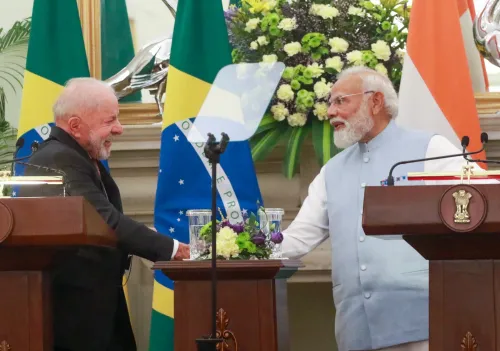
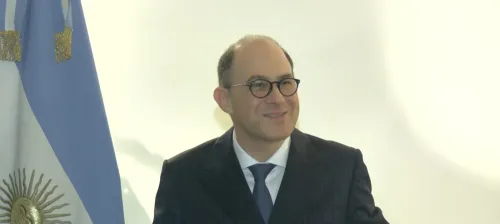
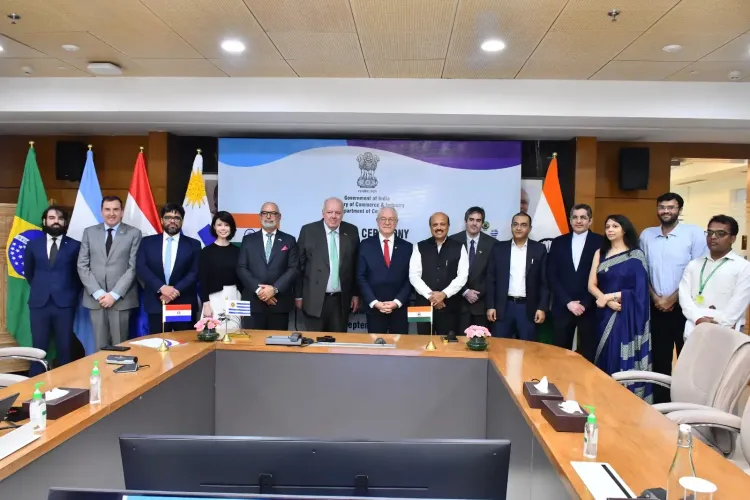
The protocol was signed in New Delhi by Commerce Secretary Rajesh Agarwal on the Indian side and Uruguay's Ambassador to India Alberto Guani and Paraguay's Ambassador to India Fleming Raul Duarte Ramos on behalf of MERCOSUR. The ceremony was held in the presence of Uruguay's Foreign Affairs Minister Mario Lubetkin, who was exercising MERCOSUR's pro tempore Presidency, along with representatives from the embassies of Argentina and Brazil.
What the Protocol Changes
The first additional protocol amends Article 16 of Annex III (Rules of Origin) of the PTA, establishing that certificates of origin issued in electronic format shall carry identical legal validity to those issued in paper format. Such electronic certificates must be issued and electronically signed in accordance with the respective domestic legislation of each party, by duly authorised entities and officials.
The amendment is expected to reduce transaction costs and processing time linked to the issuance and verification of certificates of origin, and to improve the overall efficiency of preferential trade flows under the existing agreement.
Background: The India-MERCOSUR PTA
The India-MERCOSUR PTA was originally signed on 25 January 2004 and entered into force on 1 June 2009. It currently provides preferential tariff concessions on 450 tariff lines by India and 452 tariff lines by the MERCOSUR side. MERCOSUR has six full member countries — Argentina, Brazil, Paraguay, Uruguay, Bolivia, and Venezuela (the last suspended since December 2016) — as well as seven associate members, including Chile, Colombia, and Peru.
The push for digital certificates of origin emerged from discussions at the Joint Administrative Committee of the India-MERCOSUR PTA. At its fourth meeting on 27 November 2025, both sides agreed to explore updating the agreement to enable digital certificates. The proposal was formally adopted at the fifth meeting of the Joint Administrative Committee on 9 April 2026.
When It Takes Effect
The protocol will enter into force once both India and the MERCOSUR parties complete their respective internal ratification procedures and formally notify each other. No specific timeline for that process has been announced yet.
What It Signals for India-MERCOSUR Trade
This is the first amendment to the India-MERCOSUR PTA since the agreement took effect more than 17 years ago, reflecting a renewed institutional engagement between the two sides. The signing underscores both parties' stated commitment to deepening trade facilitation, adopting modern customs practices, and strengthening the bilateral economic partnership — particularly as India pursues a broader strategy of expanding trade ties with Latin America.
Point of View
But this is the first time the India-MERCOSUR PTA has been amended in its 17-year existence — signalling that a long-dormant trade relationship is finally being tended to. Electronic certificates of origin are a known friction-reducer, and their absence has quietly raised compliance costs for exporters on both sides. What is missing from the announcement, however, is any indication of a push to expand the PTA itself — the tariff concession list of roughly 450 lines on each side is thin by modern FTA standards, and no timetable for deeper market access has been mentioned. Paperless procedures are useful, but trade volumes between India and MERCOSUR will not move decisively until the tariff architecture is upgraded to match the digital plumbing now being built.
NationPress
14 Sept 2026
Frequently Asked Questions
What did India and MERCOSUR sign on 14 September 2026?
India and MERCOSUR signed the first additional protocol to their Preferential Trade Agreement (PTA), allowing electronic certificates of origin to carry the same legal validity as paper ones. The signing took place in New Delhi and was announced by India's Commerce Ministry.
What is the India-MERCOSUR Preferential Trade Agreement?
The India-MERCOSUR PTA was signed on 25 January 2004 and entered into force on 1 June 2009. It provides preferential tariff concessions on approximately 450 tariff lines each way and covers trade between India and MERCOSUR's full member states — Argentina, Brazil, Paraguay, Uruguay, and Bolivia.
How does the new protocol affect exporters?
Exporters on both sides can now use electronically issued and signed certificates of origin, which will be accepted as legally equivalent to paper certificates. This is expected to cut processing time, reduce administrative costs, and speed up customs clearance under the PTA.
When will the protocol come into force?
The protocol will enter into force after India and the MERCOSUR parties each complete their internal ratification procedures and notify one another. No specific deadline for this process has been announced.
How was the electronic certificate proposal agreed upon?
The idea was first discussed at the fourth meeting of the Joint Administrative Committee of the India-MERCOSUR PTA on 27 November 2025. It was formally adopted by mutual consent at the committee's fifth meeting on 9 April 2026, leading to the protocol signed on 14 September 2026.