Canadian Army Chief: Korea War Bonds Growing Stronger in 2025
Synopsis
Seventy-five years after Canadian soldiers bled on Korean soil, Canada's Army Commander says the Seoul-Ottawa military alliance is growing stronger than ever — with billion-dollar defence deals involving K9 howitzers and Redback fighting vehicles now on the table as Canada undertakes its biggest military modernisation in 25 years.
Key Takeaways
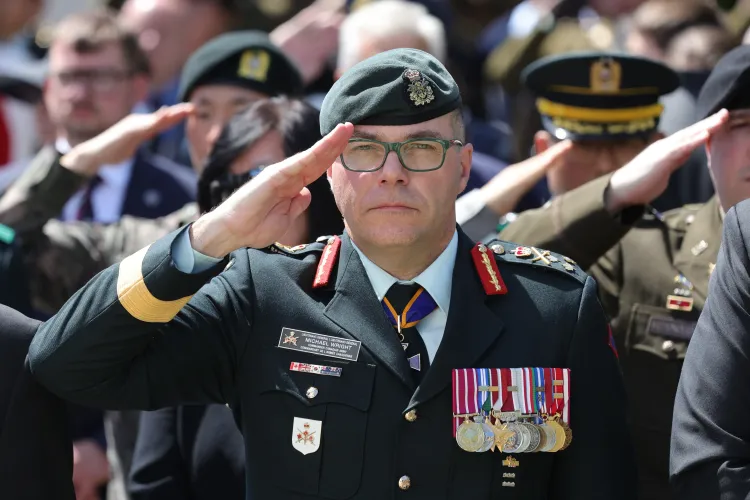
Michael Wright , Commander of the Canadian Army , visited South Korea on April 25, 2025 to mark the 75th anniversary of the Battle of Gapyeong .
Canada is undertaking its largest military equipment modernisation in over 25 years , with South Korean defence firm Hanwha Aerospace pitching a bundled deal including K9 howitzers, Chunmoo rockets, and Redback IFVs .
Troops from Princess Patricia's Canadian Light Infantry conducted their first high-tech joint drills with the South Korean Army ahead of the anniversary.
Over 26,000 Canadians served in the Korean War; 516 were killed and approximately 1,200 were wounded , according to the UN Command .
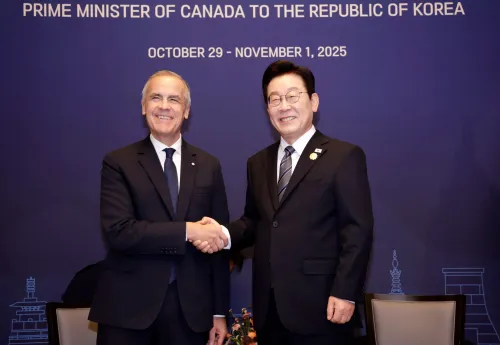
South Korean President Lee Jae Myung and Canadian PM Mark Carney agreed at the Gyeongju summit to deepen strategic ties in defence, security, and intelligence sharing.
Wright described the bilateral relationship as operating in an increasingly fractured world , signalling that the alliance is being explicitly positioned as a response to global geopolitical instability.
Seoul, April 25 — Lieutenant General Michael Wright, Commander of the Canadian Army, declared on Friday that the military partnership between South Korea and Canada — rooted in the shared sacrifice of the 1950–53 Korean War — is not merely surviving but actively strengthening, as both nations deepen defence cooperation and explore major arms deals worth billions. Wright made the remarks during a visit to South Korea to mark the 75th anniversary of the Battle of Gapyeong, a pivotal engagement that cemented the two nations' bond in blood.
Battle of Gapyeong: The Historic Roots of a Strategic Alliance
The Battle of Gapyeong, fought in April 1951 in the northern county of Gapyeong, saw approximately 2,000 troops of the 27th Commonwealth Brigade — drawn from Britain, Canada, Australia, and New Zealand — engage in three days of brutal combat against Chinese forces at the height of the Korean War.
Over 26,000 Canadians served in the Korean War, with 516 killed and approximately 1,200 wounded, according to the UN Command (UNC). The anniversary ceremony served as a solemn reminder of the human cost that underpins the modern strategic relationship.
Lt. Gen. Wright said the anniversary was far more than a commemoration. For Canada, it is a reaffirmation of our partnership that started on the battlefields in Korea in 1950 and endures to this day and, if anything, is getting stronger, he told Yonhap News Agency.
Modern Military Drills Signal Deepening Operational Ties
Ahead of the anniversary, troops from Princess Patricia's Canadian Light Infantry — the very unit that fought at Gapyeong — arrived in South Korea for their first high-tech joint military drills with the South Korean Army. This marks a significant operational milestone, moving the alliance from symbolic commemoration to active battlefield interoperability.
The drills reflect a broader strategic realignment. South Korean President Lee Jae Myung and Canadian Prime Minister Mark Carney agreed during summit talks in Gyeongju to deepen their strategic partnership across defence, security, and military intelligence sharing. That political mandate is now translating into concrete military activity on the ground.
Canada's Army Modernisation: A Multi-Billion Dollar Opportunity for South Korea
Lt. Gen. Wright revealed that Canada is currently engaged in its largest military equipment modernisation programme in over 25 years, and that discussions with South Korea's defence industry are already underway. This is where the alliance carries enormous economic and strategic weight.
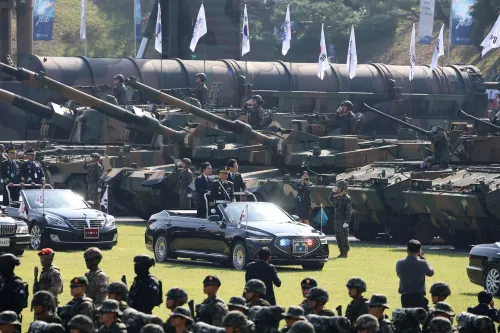
He specifically named two South Korean defence systems under consideration: the K9 self-propelled howitzer and the Redback Infantry Fighting Vehicle, both manufactured by Hanwha Aerospace. Hanwha has proposed an integrated package deal combining the K9 howitzer, the Chunmoo multiple launch rocket system, and the Redback IFV — a bundled offer designed to maximise its competitive advantage in the Canadian procurement race.
Final decisions on procurement will rest with Canada's Department of National Defence and its defence investment agency, Wright clarified, but the fact that the Army Commander is publicly naming these systems signals strong institutional interest.
Geopolitical Context: Why This Alliance Matters in a Fractured World
Wright's visit comes at a moment of acute global instability. The ongoing Russia-Ukraine war, rising tensions in the Indo-Pacific, and North Korea's continued weapons development and reported deployment of troops to support Russian forces have collectively elevated the strategic value of alliances like the one between Seoul and Ottawa.
South Korea has emerged as one of the world's most competitive defence exporters, with its K9 howitzers already sold to Poland, Norway, Finland, Estonia, Egypt, India, and Australia. A Canadian contract would further legitimise South Korean defence hardware as the NATO-standard choice for Western nations seeking cost-effective, battle-tested systems.
Notably, this deepening Canada-South Korea axis also carries implications for India, which operates the K9 Vajra — a localised version of the K9 howitzer — and has its own expanding defence-industrial relationship with South Korea. A Canadian procurement would strengthen the global supply chain and interoperability ecosystem that India is increasingly plugged into.
What Comes Next: Procurement Decisions and Strategic Milestones
The immediate focus will be on whether Canada formally advances Hanwha's integrated package proposal through its defence procurement process. Industry analysts expect a shortlisting decision within the next 12 to 18 months as Canada accelerates its modernisation timeline under growing NATO pressure to meet the 2% GDP defence spending target.
Beyond hardware, the two nations are expected to expand cooperation in military intelligence sharing, cyber defence, and joint exercises in the Indo-Pacific — areas where both countries have identified strategic convergence. As Lt. Gen. Wright put it, the history the two nations share is an indicator of what they will do together in the future.
Point of View
But the real headline is a multi-billion-dollar arms procurement race dressed in the language of shared history. Canada's public naming of Hanwha's K9 and Redback systems by its Army Commander is a calculated signal — procurement politics conducted through press interviews. More broadly, South Korea's transformation from a war-devastated recipient of Western military aid in 1950 to a preferred arms supplier for NATO-aligned nations in 2025 is one of the most underreported strategic reversals of our era — and it carries direct implications for India's own defence-industrial ambitions.
NationPress
19 Sept 2026
Frequently Asked Questions
What is the significance of the Battle of Gapyeong for Canada and South Korea?
The Battle of Gapyeong, fought in April 1951, saw 2,000 Commonwealth troops including Canadians repel Chinese forces in a pivotal Korean War engagement. It is considered the foundational event of the modern Canada-South Korea military alliance, commemorated this year on its 75th anniversary.
What defence deals is Canada considering with South Korea?
Canada is evaluating South Korean defence manufacturer Hanwha Aerospace's integrated package proposal, which includes K9 self-propelled howitzers, Chunmoo multiple launch rocket systems, and Redback infantry fighting vehicles. This is part of Canada's largest military modernisation programme in over 25 years.
Who is Lt. Gen. Michael Wright and why is he in South Korea?
Lieutenant General Michael Wright is the Commander of the Canadian Army. He visited South Korea to attend the 75th anniversary ceremony of the Battle of Gapyeong and to discuss deepening military and defence-industrial cooperation between Canada and South Korea.
How many Canadians fought in the Korean War?
Over 26,000 Canadians participated in the Korean War, with 516 killed and approximately 1,200 wounded, according to the UN Command. Canada's contribution is commemorated annually in South Korea.
What did South Korean President Lee Jae Myung and Canadian PM Mark Carney agree on?
During summit talks in Gyeongju, President Lee Jae Myung and Prime Minister Mark Carney agreed to deepen their strategic partnership covering defence cooperation, security, and military intelligence sharing. This political agreement is now driving concrete military and procurement-level discussions between the two nations.