How Will Defence and AI Transform India-US Relations?

Synopsis
As the India-US relationship evolves, the focus on defence, artificial intelligence, and emerging technologies is set to redefine bilateral ties. Experts highlight the significance of strategic cooperation amid lingering political and trade challenges, paving the way for a resilient partnership. Discover how these domains could shape future engagements between the two nations.
Key Takeaways
Defence collaboration is a resilient pillar of India-US ties.
Artificial intelligence represents a growing area of engagement.
Private-sector involvement is crucial for progress in defence and technology.
Energy cooperation has delivered practical results despite political slowdowns.
Working-level engagements continue in the Quad, despite political momentum lagging.
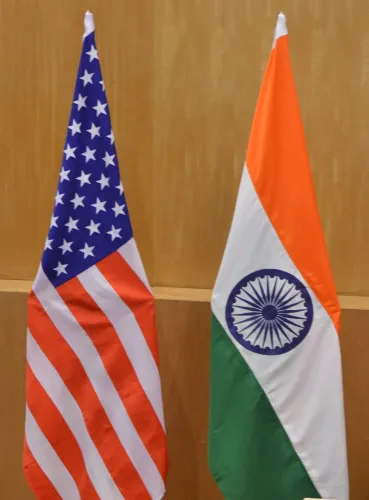
Washington, Dec 23 (NationPress) Defence collaboration, artificial intelligence, and emerging technologies are poised to become the cornerstone of the upcoming chapter in India-United States relations, as both nations strive to maintain progress in strategic domains despite lingering political and trade hurdles, according to a senior policy analyst specializing in India-US affairs.
Dhruva Jaishankar, the Executive Director of the Observer Research Foundation America, conveyed to IANS that while high-level political interactions have encountered limitations, advancements in defence, technology, and energy continue to flourish, laying a solid groundwork for enhancing bilateral relations by 2026.
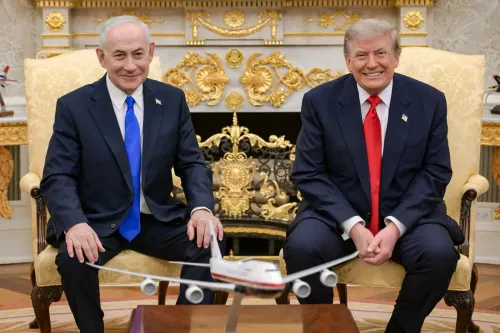
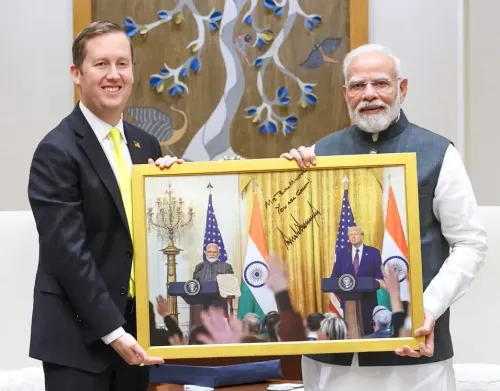
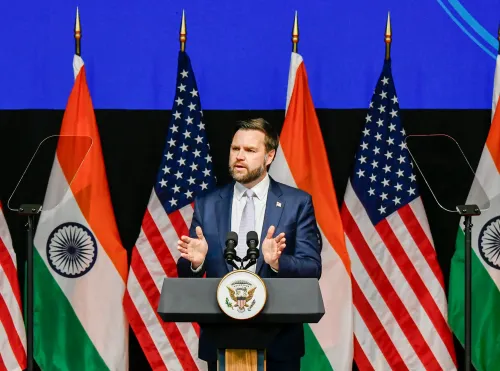
“The India-US relationship has shown signs of stabilization,” Jaishankar remarked, highlighting that Prime Minister Narendra Modi and President Donald Trump engaged in discussions “at least four times” from mid-September to year-end, coupled with the resumption of cabinet-level dialogues after a brief intermission.
He cited “fruitful agreements related to defence and energy” as proof that practical cooperation has persisted despite political tensions.
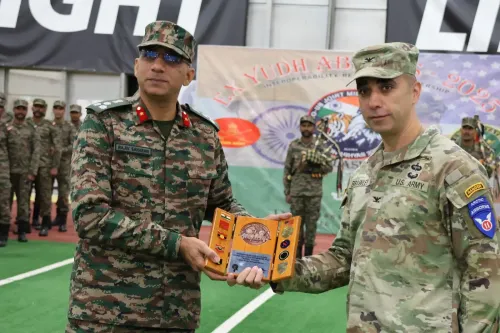
Jaishankar emphasized that defence remains one of the most robust aspects of the partnership. Military interactions have steadily increased, characterized by exercises involving all three branches, joint training initiatives, and ongoing defence sales.
“There is a positive trajectory in military engagements,” he stated, noting that the historical challenge has been transitioning from sales to joint defence co-production and development.
While advancements in this area have been inconsistent, Jaishankar indicated that the most promising prospects lie in advanced and niche capabilities rather than traditional systems. “The sectors that will be particularly noteworthy are those involving cutting-edge technologies,” he remarked, mentioning autonomous underwater systems and counter-drone technologies.
In these fields, he pointed out, India has operational needs, while the United States is at the technological forefront, creating opportunities for deeper collaboration. He cautioned, however, that progress will depend more on private-sector participation than government-to-government agreements.
“Much of this interaction occurs less at the governmental level and more between businesses,” he noted.
Artificial intelligence emerges as another area of expanding collaboration, though Jaishankar acknowledged that expectations differ on both sides. India is keen on the rapid implementation of AI applications that offer tangible benefits to the public and commercial viability.
“India desires swift applications and use cases for AI that genuinely enhance the daily lives of individuals,” he stated.
Conversely, the United States is focusing on maintaining a lead in cutting-edge AI development, influenced in part by broader strategic competition. “The US prioritizes the creation of advanced AI applications,” Jaishankar explained, suggesting that these diverging aims limit the potential for overlap more than is often recognized.
Nevertheless, he remarked that collaboration persists where mutual interests align. Major American tech companies, including Google, Microsoft, and OpenAI, have made substantial investments in India, showcasing their confidence in the nation’s digital environment and talent pool.
Jaishankar also underscored the ongoing energy cooperation, describing it as a domain where practical agreements have yielded results despite a slowdown in broader political engagements.
Addressing a query about the Quad, Jaishankar noted that political momentum has lagged, with expected leaders’ summits being repeatedly postponed. However, he emphasized that working-level engagements have continued.
“Working-level interactions remain active,” he stated, referencing counter-terrorism discussions and maritime drills that have taken place under a more focused agenda.
Looking ahead, Jaishankar asserted that advancements in trade, particularly concerning tariffs, are crucial for unlocking higher-level political interactions, though he expressed cautious optimism that some resolution may be reached in 2026, potentially coinciding with the US hosting the G20 summit.
Point of View
The relationship between India and the United States is vital for global stability. The emphasis on defence and emerging technologies signals a commitment to mutual growth and security. As both nations navigate political complexities, their collaboration in strategic sectors can serve as a beacon for international cooperation, underscoring the importance of building resilient partnerships that benefit not just their citizens but the world at large.
NationPress
20 Sept 2026
Frequently Asked Questions
What are the key areas of cooperation between India and the US?
Key areas of cooperation include defence collaboration, advancements in artificial intelligence, and energy partnerships, which are expected to strengthen bilateral ties despite political challenges.
How does artificial intelligence play a role in India-US relations?
AI is pivotal as India focuses on rapid deployment for public benefits, while the US aims for leadership in advanced AI development, showcasing both nations' differing objectives.
What challenges exist in the India-US defence relationship?
Challenges include transitioning from defence sales to joint co-production and development, as well as aligning expectations regarding technological advancements.