Dhaka University female students harassed over watching football World Cup match
Synopsis
Islami Chhatra Shibir — actively rebranding as 'women-friendly' ahead of DUCSU elections — now faces harassment allegations after female students at Dhaka University were reportedly blocked and humiliated for watching a FIFA World Cup match. The backlash, including a solidarity protest and a formal memorandum to the proctor, lays bare the gap between the group's electoral image and its conduct on campus.
Key Takeaways
Female students at Dhaka University were allegedly harassed while attempting to watch a FIFA World Cup match at Shahidullah Hall ground.
Student Muhtasin Billah Emon alleged he and companions were forced off the field on 26 June ; a female student with them was questioned and pressured to leave.
Saju Mia , Hall Union's Social Services Secretary, was elected on the Shibir -backed panel.
Female students gathered in solidarity on 28 June to watch the Argentina–Jordan match and submitted a memorandum to the university proctor with three demands.
DUCSU executive member Hema Chakma and Bangladesh Chhatra Federation leader Seema Akhter condemned the incidents and the student union's silence.
The episode contradicts Shibir's pre-election campaign to project itself as a 'women-friendly' organisation.
Female students at Dhaka University were allegedly harassed and restricted from watching a FIFA World Cup match on a giant screen on campus, according to a report by the Times of Bangladesh. The incident has triggered protests, political criticism, and fresh scrutiny of Islami Chhatra Shibir — the student wing of Jamaat-e-Islami — ahead of the Dhaka University Central Students' Union (DUCSU) elections.
What Happened at Shahidullah Hall
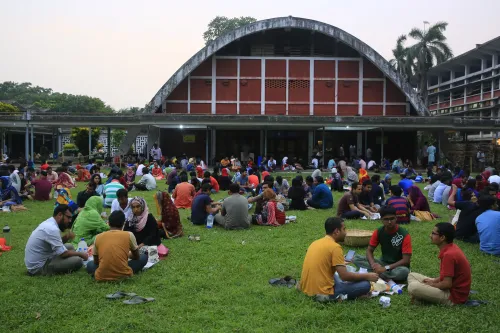
The flashpoint occurred at the Shahidullah Hall ground during the Norway–France World Cup match, when a female student was allegedly subjected to harassment by members associated with the Shibir-backed panel. According to reports, student Muhtasin Billah Emon, of the 2018–19 session, alleged that he and his companions were forced to vacate the field on the night of 26 June despite having signed the official entry register. A female student accompanying the group was reportedly questioned about her presence and pressured to leave immediately.
One of the accused in the incident is reportedly Md. Saju Mia, the Hall Union's Social Services Secretary, who was elected on the Shibir-backed panel.
Students Protest in Solidarity
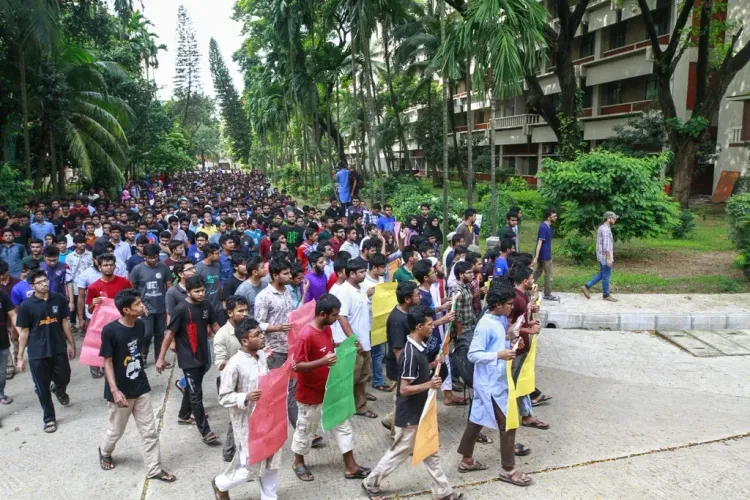
In response, a large number of female students gathered at the Shahidullah Hall field on the morning of 28 June to collectively watch the Argentina–Jordan World Cup match as an act of solidarity and defiance. Following the screening, students submitted a memorandum to the university proctor outlining three key demands, according to reports.
Earlier, on Sunday, girls had also gathered en masse to watch the Argentina–Jordan match, reportedly in direct defiance of the group's opposition to women spectating at the venue. Despite numerous complaints, Shibir is said to have taken no internal disciplinary action.
Political Criticism Mounts
DUCSU executive member Hema Chakma, representing the left-backed Pratirodh Parshad, condemned the student union's silence over the incidents and alleged that those involved appeared to have close ties with the top DUCSU leadership, where Shibir-backed candidates hold the maximum number of posts.
Seema Akhter, vice president of the university unit of Bangladesh Chhatra Federation, denounced the episode as part of what she described as a wider 'politics of control.' She criticised attempts to restrict women's movement after sunset in the name of security, calling them a reflection of patriarchal mentality that targets victims rather than holding offenders accountable.
Akhter also alleged that a coordinated campaign against women's rights activists has intensified since July last year, and that the DUCSU has consistently failed to act on recent harassment incidents.
The Contradiction at the Heart of Shibir's Campaign
The controversy arrives at a particularly sensitive moment for Shibir, which has been actively attempting to rebrand itself as a 'women-friendly' organisation ahead of the DUCSU elections. Critics argue the incidents at Shahidullah Hall expose a stark contradiction between that carefully cultivated public image and the ground reality on campus. This comes amid Bangladesh's broader reckoning with campus safety and women's rights — issues that have gained sharper political salience in recent months.
As pressure mounts on the DUCSU leadership to respond, the university administration's next steps will be closely watched by student groups and rights advocates alike.
Point of View
It signals whose interests the union actually serves. Bangladesh's student politics has long oscillated between ideological control and democratic aspiration — and incidents like this one reveal which impulse currently holds the ground.
NationPress
2 Oct 2026
Frequently Asked Questions
What happened to female students at Dhaka University during the World Cup?
Female students at Dhaka University were allegedly harassed and pressured to leave the Shahidullah Hall ground while attempting to watch FIFA World Cup matches on a giant screen. The incidents, reported around 26 June and 28 June, have been linked to members of the Shibir-backed Hall Union panel.
Who is Islami Chhatra Shibir and why is it under scrutiny?
Islami Chhatra Shibir is the student wing of Jamaat-e-Islami, a radical Islamist party in Bangladesh. It is under scrutiny because its members stand accused of harassing female students at Dhaka University even as the organisation has been campaigning to present itself as 'women-friendly' ahead of DUCSU elections.
What action have students and political leaders demanded?
Female students submitted a memorandum to the university proctor on 28 June outlining three key demands. DUCSU executive member Hema Chakma and Bangladesh Chhatra Federation leader Seema Akhter have both publicly condemned the incidents and called out the DUCSU's failure to take action.
Who is accused in the Shahidullah Hall harassment incident?
Md. Saju Mia, the Hall Union's Social Services Secretary elected on the Shibir-backed panel, has been named as one of the accused in the harassment incident, according to reports citing the Times of Bangladesh.
Why does this matter beyond the campus?
The incident reflects broader concerns about women's rights and campus safety in Bangladesh. Critics argue it exposes a pattern of patriarchal control dressed up in security language, and that the DUCSU's silence points to a structural problem in student governance where Shibir-backed candidates hold the maximum number of posts.