India-Vietnam defence cooperation deepens as Doval meets General Phan in Hanoi
Synopsis
NSA Ajit Doval's Hanoi visit on 2 November marks the third high-level India-Vietnam defence engagement in six months — following a presidential State visit in May and a BRICS-sidelines defence secretary meeting in September. The rapid cadence signals New Delhi is treating Hanoi as a strategic anchor in its Indo-Pacific posture, not merely a diplomatic courtesy call.
Key Takeaways
NSA Ajit Doval met Vietnamese Defence Minister General Phan Van Giang in Hanoi on 2 November 2026 to review and deepen bilateral defence cooperation.
Doval's visit is conducted under the India-Vietnam Enhanced Comprehensive Strategic Partnership , elevated during President To Lam's State visit to India in May 2026 .
Defence Secretary Rajesh Kumar Singh had already held defence industrial cooperation talks with Vietnam at the 18th BRICS Summit in September 2026 .
Lok Sabha Speaker Om Birla met Vietnamese MPs on 27 October 2026 at the 12th BRICS Parliamentary Forum , covering trade, IT, and AI cooperation.
The three high-level contacts in under six months reflect a deliberate, multi-track deepening of India-Vietnam ties.
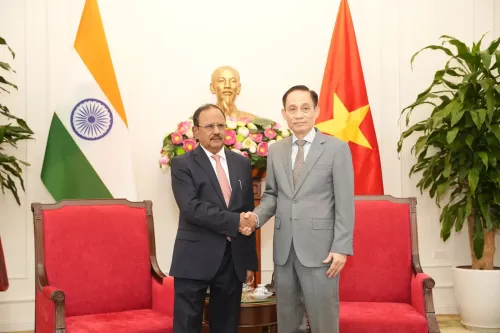
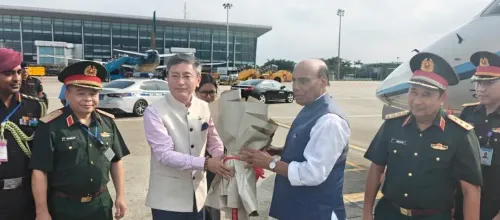
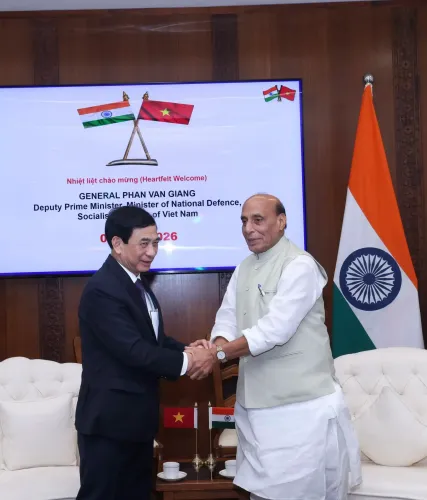
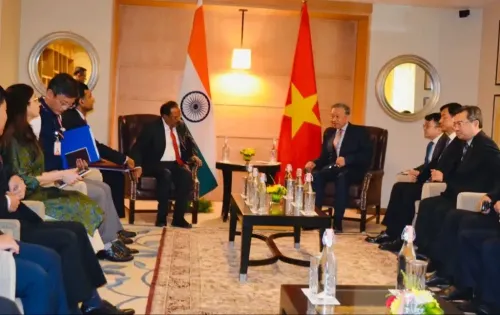
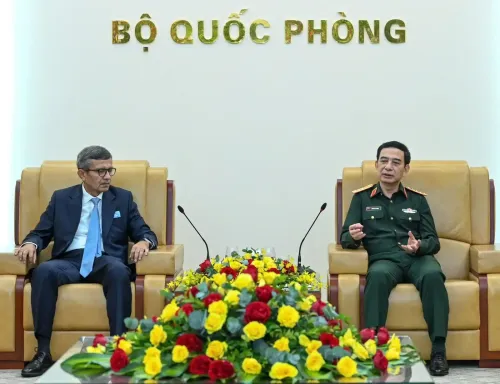
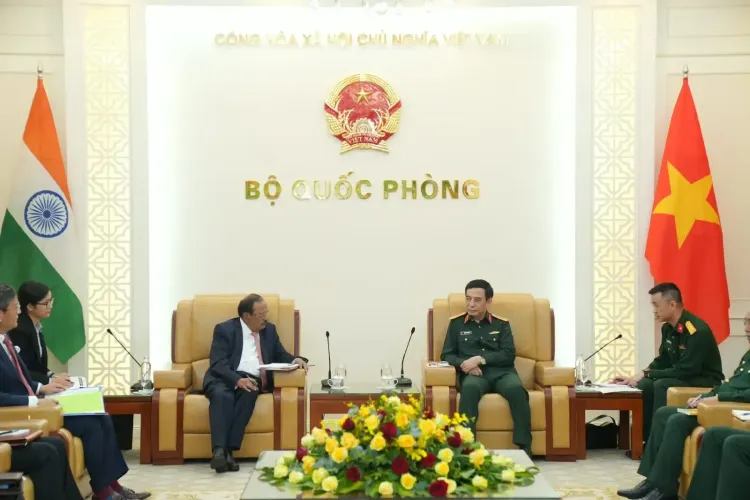
National Security Advisor Ajit Doval on Monday, 2 November 2026 held high-level talks in Hanoi with Vietnamese Deputy Prime Minister and Minister of National Defence General Phan Van Giang, with both sides reviewing the state of bilateral defence cooperation and committing to further strengthen activities in the field. The meeting underscores the growing strategic weight of the India-Vietnam Enhanced Comprehensive Strategic Partnership in the Indo-Pacific region.
Key Developments from the Hanoi Talks
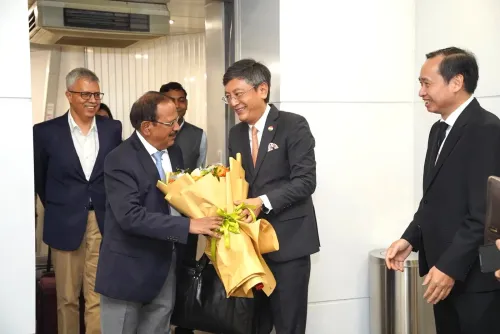
Doval arrived in Hanoi on Sunday, 1 November on an official visit, during which he is scheduled to meet Vietnam's top leadership. The Indian Embassy in Vietnam confirmed the meeting, stating: 'National Security Advisor of India Ajit Doval met today with General Phan Văn Giang, Member of the Politburo of the Central Committee of the Communist Party of Vietnam, Deputy Prime Minister and Minister of National Defence of Vietnam. Both sides reviewed the status of ongoing bilateral defence cooperation and agreed to continue further strengthening activities in this field.'
The talks were conducted under the framework of the Enhanced Comprehensive Strategic Partnership — a status that India and Vietnam formalised as recently as May 2026, during Vietnamese President To Lam's State visit to India.
A Rapidly Deepening Strategic Relationship
The Hanoi meeting is not an isolated development. In September 2026, Defence Secretary Rajesh Kumar Singh held talks with Vietnamese Deputy Minister of National Defence Senior Lt Gen Nguyen Truong Thang on the sidelines of the 18th BRICS Summit in New Delhi, where the two sides discussed strengthening the partnership and advancing defence industrial cooperation. Monday's NSA-level engagement signals a step-up in the diplomatic tempo.
This comes amid a broader regional calculus: both India and Vietnam share an interest in a stable, rules-based Indo-Pacific, and analysts have noted the convergence of their positions on maritime security, particularly in the South China Sea.
Parliamentary Engagement Adds Institutional Depth
Beyond executive-level diplomacy, parliamentary ties have also seen fresh momentum. On 27 October 2026, Lok Sabha Speaker Om Birla met Vietnamese parliamentarian Mai Dung Thai Quynh and members of the Parliamentary Friendship Group on the sidelines of the 12th BRICS Parliamentary Forum in New Delhi. The discussions covered parliamentary engagement, institutional collaboration, and new avenues of cooperation in trade, industry, information technology, and Artificial Intelligence.
Congress MP Shashi Tharoor and Bharatiya Janata Party (BJP) MP Dilip Saikia were also present. Birla said: 'I am confident that these exchanges will further enrich our parliamentary partnership and add new vigour to the enduring friendship between our two nations.'
What This Means for India's Indo-Pacific Strategy
The succession of high-level contacts — a State visit in May, a BRICS-sidelines defence meeting in September, and an NSA-level visit in November — reflects a deliberate effort by New Delhi to institutionalise its ties with Hanoi across multiple tracks simultaneously. Vietnam is increasingly seen as a critical node in India's Act East Policy, offering both a counterbalance calculus in the region and concrete opportunities in defence manufacturing and technology transfers.
With the Enhanced Comprehensive Strategic Partnership now providing the formal architecture, the next phase is expected to focus on translating diplomatic intent into tangible defence industrial collaboration and trade growth.
Point of View
A BRICS-sidelines defence secretary meeting, and now an NSA visit — signal that India is systematically converting its relationship with Vietnam from a warm bilateral into a structured strategic partnership. What mainstream coverage tends to underplay is the defence industrial dimension: the real prize for both sides is not just dialogue but co-production and technology transfer, areas where India has historically overpromised. The parliamentary track, with AI and IT on the agenda, adds a layer of institutional scaffolding that past partnerships lacked. Whether this architecture produces deliverables, or remains a cadence of communiqués, will be the measure of the Enhanced Comprehensive Strategic Partnership's actual worth.
NationPress
2 Nov 2026
Frequently Asked Questions
Why did NSA Ajit Doval visit Hanoi in November 2026?
NSA Ajit Doval visited Hanoi on 2 November 2026 on an official visit to meet Vietnamese leadership, including Defence Minister General Phan Van Giang. The talks reviewed the status of bilateral defence cooperation and agreed to further strengthen activities under the India-Vietnam Enhanced Comprehensive Strategic Partnership.
What is the India-Vietnam Enhanced Comprehensive Strategic Partnership?
It is the highest tier of bilateral relations between India and Vietnam, formalised during Vietnamese President To Lam's State visit to India in May 2026. The partnership provides the framework for deepened cooperation across defence, trade, technology, and parliamentary engagement.
What was discussed at the 18th BRICS Summit between India and Vietnam?
On the sidelines of the 18th BRICS Summit in New Delhi in September 2026, Defence Secretary Rajesh Kumar Singh met Vietnamese Deputy Minister of National Defence Senior Lt Gen Nguyen Truong Thang. The two sides discussed strengthening the Enhanced Comprehensive Strategic Partnership and advancing defence industrial cooperation.
How have India and Vietnam expanded parliamentary ties recently?
Lok Sabha Speaker Om Birla met Vietnamese MP Mai Dung Thai Quynh and members of the Parliamentary Friendship Group on 27 October 2026 at the 12th BRICS Parliamentary Forum in New Delhi. Discussions focused on parliamentary engagement, institutional collaboration, and cooperation in trade, IT, and Artificial Intelligence.
What is India's broader strategic interest in strengthening ties with Vietnam?
Vietnam is a key node in India's Act East Policy and shares New Delhi's interest in a stable, rules-based Indo-Pacific. Deepening defence and economic ties with Hanoi is seen as part of India's wider strategy to build partnerships across Southeast Asia, particularly amid shared concerns over maritime security in the South China Sea.