Russia's Duma Speaker Visits North Korea for War Memorial Ceremony
Synopsis
Russia's State Duma Speaker Vyacheslav Volodin arrived in North Korea on April 25 to inaugurate a war memorial museum honouring approximately 15,000 North Korean soldiers who fought and died for Russia in Ukraine — an unprecedented move that cements one of the most consequential military alliances of the 21st century.
Key Takeaways
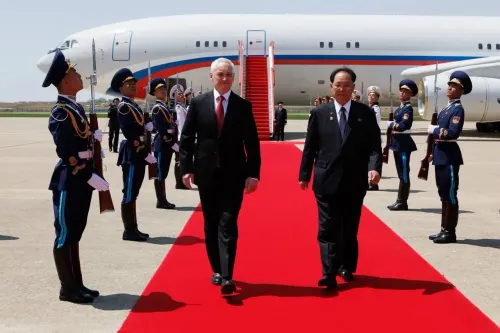
Vyacheslav Volodin , Speaker of Russia's State Duma , arrived in Pyongyang on April 25, 2025 , on the direct instruction of President Vladimir Putin .
North Korea is inaugurating the Memorial Museum of Combat Feats at the Overseas Military Operations on April 26 , honouring North Korean soldiers killed fighting for Russia in Ukraine.
North Korea deployed approximately 15,000 combat troops to support Russia following a strategic partnership treaty signed by Kim Jong-un and Putin in June 2024 .
Volodin was received by Jo Yong-won , chairman of North Korea's Supreme People's Assembly , and is scheduled to hold parliamentary-level meetings during the visit.
On April 23, 2025 , North Korea's Public Security Minister Pang Tu-sop and Russia's Interior Minister Vladimir Kolokoltsev held talks on expanding law enforcement cooperation, deepening the bilateral alliance beyond military operations.
Russia declared it recaptured the Kursk region on April 26, 2024 , with North Korean troops reportedly playing a key role — the event the new museum directly commemorates.
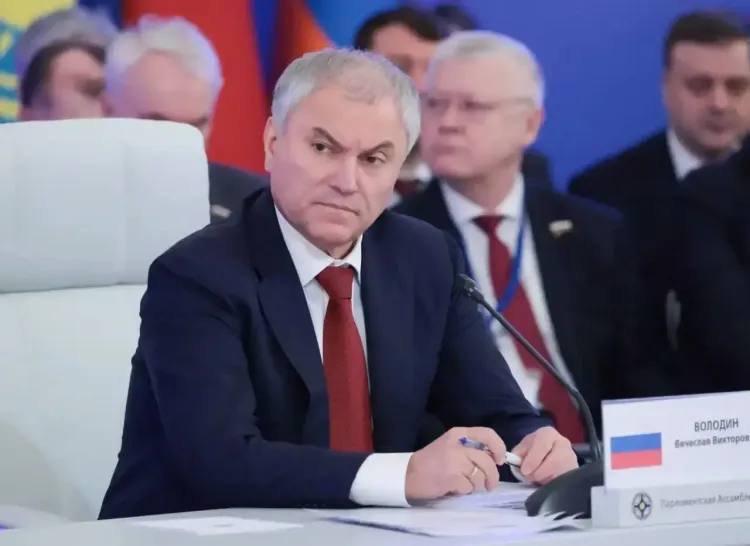
Pyongyang, April 25: Vyacheslav Volodin, Speaker of Russia's State Duma, arrived in North Korea (DPRK) on Saturday, April 25, to attend the inauguration of a memorial museum dedicated to North Korean soldiers who lost their lives fighting alongside Russian forces in the ongoing war against Ukraine. The visit, undertaken on the direct instruction of Russian President Vladimir Putin, marks a significant diplomatic milestone in deepening Russia-North Korea military ties.
Opening of the Memorial Museum in Pyongyang
North Korea is set to formally open the Memorial Museum of Combat Feats at the Overseas Military Operations in Pyongyang on Sunday, April 26. The museum honours North Korean servicemen who were killed while fighting for Russia in the war against Ukraine, according to Russian state news agency TASS, citing the Duma press service.
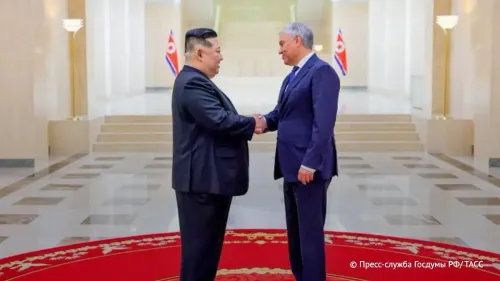
Volodin, as chairman of the State Duma — Russia's lower house of parliament — was received upon arrival by Jo Yong-won, chairman of North Korea's Supreme People's Assembly. He is also scheduled to hold meetings with his parliamentary counterparts from the North Korean legislature during the working visit.
The museum specifically honours "the courage of Korean servicemen who took part in the liberation of the Kursk region," TASS reported. Russia declared on April 26, 2024, that it had recaptured the Kursk region from Ukrainian forces, with North Korean troops reportedly playing a pivotal role in that operation.
North Korea's Military Deployment to Russia
North Korea deployed approximately 15,000 combat troops to support Russia's war effort following a landmark strategic partnership treaty signed between Kim Jong-un and Vladimir Putin in June 2024. This deployment represented one of the most direct military interventions by a third country in the Russia-Ukraine conflict.
The construction of a dedicated memorial museum in Pyongyang — honouring soldiers killed in a foreign war fought thousands of kilometres away — underscores how deeply the Kim Jong-un regime has embedded this military alliance into its national narrative. It also signals that North Korea views its losses not as a liability, but as a badge of honour to be publicly commemorated.
This comes amid growing international concern, particularly from South Korea, the United States, and NATO allies, about the extent of military cooperation between Moscow and Pyongyang. Critics argue that this alliance is fundamentally reshaping the security architecture of both East Asia and Eastern Europe.
Expanding Bilateral Cooperation Beyond the Battlefield
The Volodin visit is not an isolated diplomatic gesture. Just days earlier, on Wednesday, April 23, North Korea's public security minister Pang Tu-sop and Russia's Interior Minister Vladimir Kolokoltsev held formal talks in Pyongyang on strengthening law enforcement exchanges and bilateral cooperation.
During the meeting, Kolokoltsev extended an invitation to Pang to visit Moscow. Following the talks, Kolokoltsev also observed a live shooting training session conducted by agents of the North Korean Ministry of Public Security, according to Irina Volk, spokesperson for the Russian Interior Ministry.
These law enforcement-level interactions suggest that the Russia-DPRK partnership is rapidly expanding beyond battlefield cooperation into institutional, administrative, and security domains — a pattern that analysts warn could lead to deeper intelligence-sharing and joint operations.
Strategic Implications for the Region and the World
The opening of a war memorial museum in Pyongyang for soldiers killed fighting in Ukraine is unprecedented in modern history. It institutionalises North Korea's participation in the Russia-Ukraine war at a state level, making it politically and symbolically irreversible for the Kim regime.
Notably, this visit comes as global diplomatic pressure on Russia continues to intensify, with Western nations pursuing further sanctions. For North Korea, the alliance provides economic lifelines, military technology transfers, and rare international legitimacy — all of which Kim Jong-un urgently needs given decades of isolation and sanctions.
The Volodin visit also carries a message to the West: Russia is actively cultivating alternative alliances, and North Korea is willing to pay in blood for that partnership. As the Russia-Ukraine war enters a new phase in 2025, the role of North Korean troops and the diplomatic architecture being built around their sacrifice will be a critical variable to watch in any future peace negotiations.
With the memorial museum's inauguration on April 26 and continued high-level exchanges between Moscow and Pyongyang expected in the coming weeks, the Russia-North Korea alliance shows no signs of slowing — and its consequences for global security are only beginning to unfold.
Point of View
Russia is telling the world that the North Korean military alliance is permanent, public, and non-negotiable. What mainstream coverage misses is the second-order consequence: North Korea is no longer a rogue state operating in isolation — it is now a battlefield partner with monuments, martyrs, and a military doctrine forged in Eastern Europe. This fundamentally complicates any future peace framework for Ukraine and reshapes the security calculus across Asia, where South Korea, Japan, and Taiwan are watching with alarm.
NationPress
16 Sept 2026
Frequently Asked Questions
Why did Russia's State Duma Speaker visit North Korea in April 2025?
Vyacheslav Volodin visited North Korea on April 25, 2025, to attend the opening ceremony of the Memorial Museum of Combat Feats at the Overseas Military Operations in Pyongyang. The museum honours North Korean soldiers killed while fighting for Russia in the war against Ukraine, and the visit was conducted on the direct instruction of President Vladimir Putin.
How many North Korean troops fought for Russia in Ukraine?
North Korea deployed approximately 15,000 combat troops to support Russia's war effort in Ukraine. This deployment followed a strategic partnership treaty signed between Kim Jong-un and Vladimir Putin in June 2024.
What is the Memorial Museum of Combat Feats in Pyongyang?
It is a newly constructed museum in Pyongyang dedicated to honouring North Korean soldiers who were killed while fighting alongside Russian forces in Ukraine, particularly during operations to recapture Russia's Kursk region from Ukrainian forces. It is set to be inaugurated on April 26, 2025.
What is the current state of Russia-North Korea relations in 2025?
Russia and North Korea have significantly deepened their bilateral ties since June 2024, when Putin and Kim Jong-un signed a strategic partnership treaty. Cooperation now spans military deployment, law enforcement exchanges, and high-level parliamentary visits, signalling a comprehensive alliance that extends well beyond the battlefield.
Did North Korean troops help Russia recapture the Kursk region?
Yes, North Korean troops reportedly played a significant role in Russia's recapture of the Kursk region from Ukrainian forces. Russia declared on April 26, 2024, that it had fully recaptured the region, and the new Pyongyang memorial museum specifically honours Korean servicemen who participated in that operation.