Exercise Dustlik 7: India-Uzbekistan Military Drill Boosts Joint Counter-Terror Ops
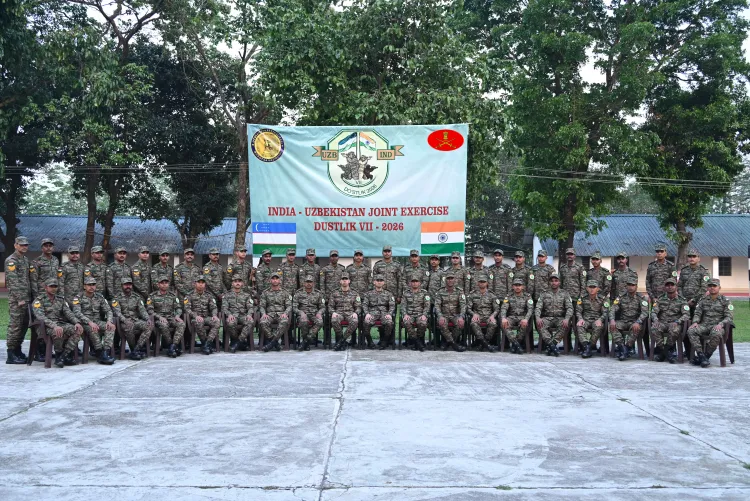
Synopsis
India and Uzbekistan wrapped up the 7th edition of Exercise Dustlik in Namangan, with 120 troops from both nations completing a gruelling 48-hour counter-terrorism validation drill. The exercise, rooted in India's Central Asia strategy, takes on new urgency given Uzbekistan's proximity to Taliban-controlled Afghanistan.
Key Takeaways
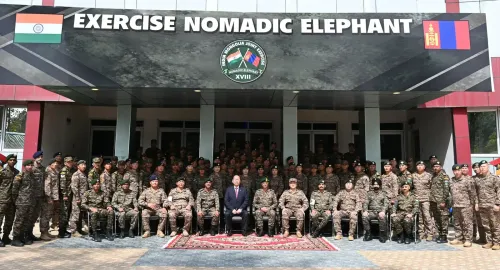
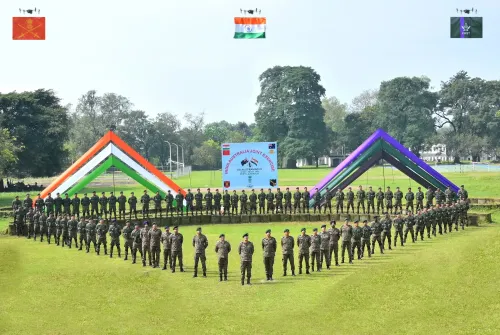
The 7th edition of Exercise Dustlik concluded on April 25, 2025 , at the Gurumsaray Field Training Area, Namangan, Uzbekistan .
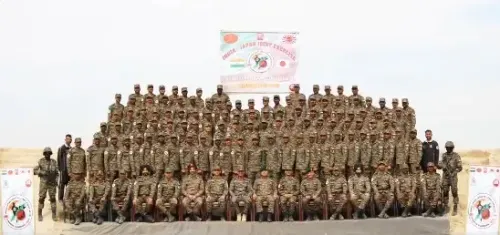
120 personnel participated — 60 from India (including 45 from the Mahar Regiment and 15 from the Indian Air Force ) and 60 from Uzbekistan's Army and Air Force .
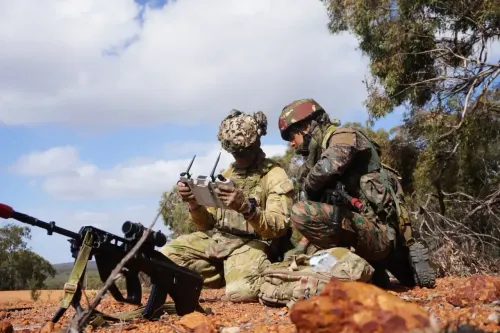
The exercise culminated with a 48-hour validation drill focused on the Neutralisation of Unlawful Armed Groups (UAGs) in semi-mountainous terrain.
Exercise Dustlik is conducted annually on an alternating host basis ; the previous edition was held in Aundh, Pune, India in April 2024 .
The drill advances India's Connect Central Asia Policy and builds strategic military ties near the Afghanistan border .
The 8th edition is expected to be hosted by India in 2026 , with potential expansion into drone countermeasures and cyber-integrated battlefield domains.
The seventh edition of Exercise Dustlik, the annual India-Uzbekistan joint military exercise, concluded on Friday, April 25, 2025, at the Gurumsaray Field Training Area in Namangan, Uzbekistan, with a climactic 48-hour validation exercise and a formal closing ceremony. The Indian Ministry of Defence confirmed that the exercise significantly reinforced bilateral military cooperation and enhanced operational interoperability between the Indian Army and the Armed Forces of Uzbekistan. The drill specifically sharpened both nations' combined readiness to neutralise unlawful armed groups in semi-mountainous terrain.
What Exercise Dustlik 7 Involved
The Indian Armed Forces contingent comprised 60 personnel in total — 45 soldiers drawn primarily from a battalion of the Mahar Regiment of the Indian Army, and 15 personnel from the Indian Air Force. The Uzbekistan contingent also fielded approximately 60 personnel from its Army and Air Force, creating a balanced bilateral training environment.
The exercise focused on a high degree of physical fitness, joint tactical drills, joint planning, and the fundamentals of special arms skills. A central objective was establishing a unified operational algorithm between the command-and-control structures of both contingents for the seamless planning and execution of joint operations.
Counter-Terrorism Focus and Tactical Objectives
According to the Indian Army's Additional Directorate General of Public Information (ADGPI), the exercise enhanced preparedness for joint counter-terrorism operations and provided a structured platform for both sides to exchange best practices in tactics, techniques, and procedures. The culminating 48-hour validation drill specifically emphasised the Preparation and Execution of Joint Special Operations aimed at the Neutralisation of Unlawful Armed Groups (UAGs).
This focus on UAG neutralisation reflects a shared strategic concern — both India and Uzbekistan operate in geopolitical neighbourhoods where non-state armed actors pose persistent threats. For India, this aligns with its broader counter-insurgency doctrine; for Uzbekistan, it addresses regional instability emanating from the Afghanistan border, a shared pressure point for Central Asian security.
Strategic Significance of India-Uzbekistan Defence Ties
Exercise Dustlik is conducted annually on an alternating basis between the two countries. The sixth edition was held at the Foreign Training Node, Aundh, Pune, in April 2024, making Uzbekistan the host for the seventh iteration. This rotational format underscores the parity and mutual investment both nations place in the partnership.
India's deepening defence engagement with Uzbekistan fits within its broader Connect Central Asia Policy, which seeks to build strategic, economic, and security linkages with the five Central Asian republics. Notably, India and Uzbekistan have been expanding cooperation across multiple domains — from the International North-South Transport Corridor (INSTC) to trade and cultural exchanges — making military interoperability a critical pillar of a multi-layered relationship.
This comes amid heightened global attention to Central Asia following the Taliban's consolidation in Afghanistan, which has altered the regional security calculus for all neighbouring states. Uzbekistan shares a 144-kilometre border with Afghanistan, making counter-terrorism cooperation with partners like India not merely symbolic but operationally relevant.
Human Dimension: Building Camaraderie Between Troops
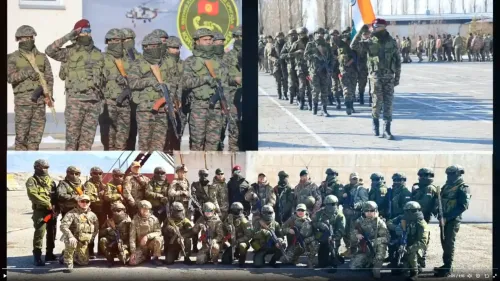
Beyond tactical objectives, Exercise Dustlik 7 was designed to cultivate personal bonds between soldiers of both nations. The joint training fostered bonhomie and camaraderie at the ground level — a dimension of military diplomacy that creates durable people-to-people ties between armed forces and, by extension, between the two nations.
Defence cooperation at this level also carries soft-power implications. When soldiers train together, share meals, and execute drills side by side, it builds institutional trust that outlasts any single government's tenure — a foundation that formal diplomatic channels alone cannot replicate.
What Comes Next
With the seventh edition now concluded, the eighth edition of Exercise Dustlik is expected to be hosted by India, likely at a designated foreign training node, in 2026. Both defence establishments are anticipated to build on the lessons from Namangan, potentially expanding the scope of joint special operations training and incorporating emerging domains such as drone warfare countermeasures and cyber-integrated battlefield management — areas increasingly central to modern counter-terrorism doctrine. The exercise reinforces India's strategic outreach in Central Asia at a time when the region is becoming an increasingly contested space for influence among major powers.
Point of View
A region increasingly contested by China, Russia, and Turkey. While most coverage reduces this to a military handshake, the real story is India quietly building an operational military network on the doorstep of Taliban-controlled Afghanistan, a theatre that directly threatens its security interests. The inclusion of Indian Air Force personnel alongside the Mahar Regiment signals a push toward multi-domain interoperability, not just infantry coordination. New Delhi's consistency in sustaining this exercise through seven editions — regardless of global turbulence — reflects a long-game doctrine that deserves far more strategic attention than it typically receives.
NationPress
25 Sept 2026
Frequently Asked Questions
What is Exercise Dustlik and which countries participate in it?
Exercise Dustlik is an annual bilateral military exercise conducted between India and Uzbekistan, alternating between the two countries each year. It focuses on joint counter-terrorism operations, tactical drills, and enhancing military interoperability in semi-mountainous terrain.
Where was the 7th edition of Exercise Dustlik held?
The 7th edition of Exercise Dustlik was held at the Gurumsaray Field Training Area in Namangan, Uzbekistan, concluding on April 25, 2025. The previous edition took place at the Foreign Training Node in Aundh, Pune, India.
How many soldiers participated in Exercise Dustlik 7?
Approximately 120 personnel participated in total — 60 from India (45 from the Mahar Regiment of the Indian Army and 15 from the Indian Air Force) and 60 from the Uzbekistan Army and Air Force.
What was the main objective of Exercise Dustlik 7?
The primary objective was to enhance joint counter-terrorism capabilities, specifically the neutralisation of unlawful armed groups in semi-mountainous terrain. The exercise also aimed to establish a unified command-and-control algorithm and improve operational interoperability between both nations.
Why is India's military cooperation with Uzbekistan strategically important?
Uzbekistan shares a 144-kilometre border with Taliban-controlled Afghanistan, making counter-terrorism cooperation with India operationally significant beyond symbolism. The exercise also supports India's Connect Central Asia Policy, which seeks to build strategic and security linkages across the region.