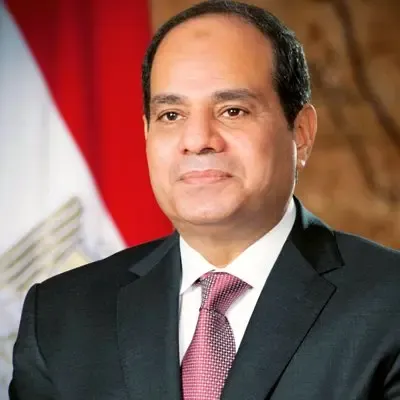
Gaza stabilisation force: Egypt's Sisi urges deployment
Synopsis
Egyptian President Abdel Fattah El-Sisi has called for a stabilisation force to monitor the Gaza ceasefire and for Israel to complete its withdrawal. Speaking alongside Iraq's prime minister in Cairo, he also urged support for Gaza's interim administration and humanitarian access.
Key Takeaways
Egyptian President Abdel Fattah El-Sisi called for an International Stabilisation Force to monitor the Gaza ceasefire.
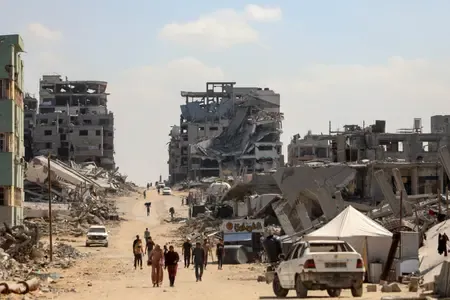
El-Sisi urged the completion of Israel's withdrawal from the Gaza Strip .
The president said the National Committee for the Administration of Gaza should be able to carry out its interim mandate inside the territory.
El-Sisi linked the agreement's second phase to Palestinian statehood along the 4 June 1967 borders, with East Jerusalem as its capital.
El-Sisi and Iraqi Prime Minister Ali al-Zaidi also discussed maritime navigation and water security in Cairo .
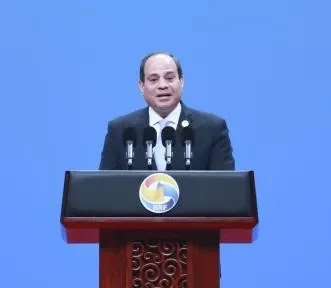
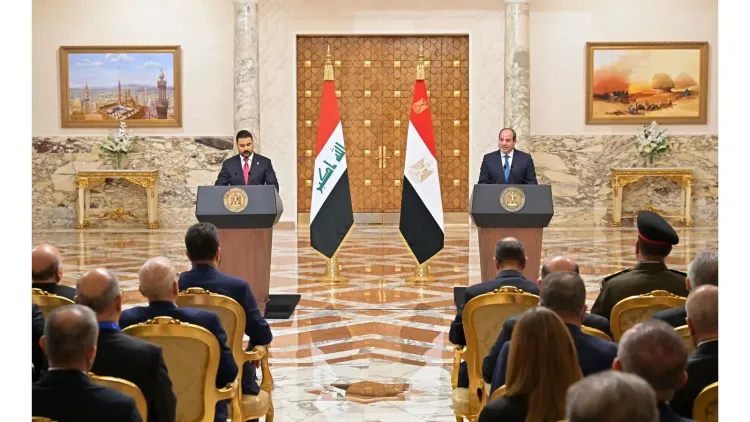
Egyptian President Abdel Fattah El-Sisi on Monday, 23 November, called for the deployment of an International Stabilisation Force to monitor the Gaza ceasefire and for the completion of Israel's withdrawal from the Gaza Strip. He made the appeal in Cairo at a joint press conference with visiting Iraqi Prime Minister Ali al-Zaidi, according to a statement from the Egyptian presidency.
El-Sisi also called for the National Committee for the Administration of Gaza to be enabled to carry out its interim mandate from within the territory. His remarks addressed ceasefire implementation, humanitarian access and the longer-term political future of Palestinians.
Ceasefire and Gaza administration
According to the Egyptian presidency, El-Sisi stressed the need to uphold the truce and ensure that Israel fulfils its commitments under the agreement's first phase. Those commitments include facilitating the entry of humanitarian aid and early recovery supplies into Gaza.
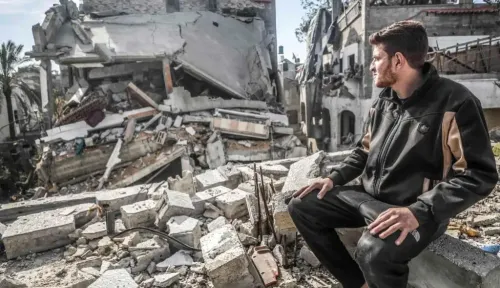
He also cited the rehabilitation of damaged infrastructure and hospitals across the enclave. The presidency's statement presented these measures alongside the proposed monitoring force and the committee's interim administrative role.
The distinction between the force and the committee is central to the Egyptian proposal: El-Sisi called for the force to monitor the ceasefire, while the committee would carry out an interim governance mandate inside the territory. The statement did not provide a deployment date or specify when the committee would begin operating from within Gaza.
Palestinian statehood and the second phase
El-Sisi said implementation of the agreement's second phase should culminate in Palestinians exercising their right to self-determination and establishing an independent state. He set out Egypt's position as a state along the 4 June 1967 borders, with East Jerusalem as its capital, in line with international resolutions.
The statement connected that political objective to the implementation of the ceasefire agreement. It did not set out a timetable for the second phase or detail how the proposed outcome would be reached.
Arab security and maritime navigation
Beyond Gaza, El-Sisi and al-Zaidi reviewed regional developments and agreed on the need to strengthen mechanisms for joint Arab action, according to the Egyptian presidency. They linked that cooperation to safeguarding Arab national security and protecting the unity, sovereignty and resources of Arab nations.
The two sides also stressed the security and freedom of maritime navigation under international law. They rejected attempts to disrupt shipping lanes in the Gulf, the Bab al-Mandeb Strait and the Red Sea.
El-Sisi reaffirmed that security and governance of the Red Sea are the sole prerogative of its littoral Arab and African states. The statement placed that position alongside the leaders' shared emphasis on maritime safety.
Water security and next steps
The leaders also called for closer coordination on water scarcity and desertification. They supported international law governing transboundary watercourses, rejected unilateral measures and emphasised prior notification, consultation and consensus.
The statement did not announce a schedule for deploying the stabilisation force or implementing the other measures discussed. Attention will now turn to whether the parties to the Gaza agreement take further steps on withdrawal, monitoring, aid access and the territory's interim administration.
Point of View
Access and relationship with Gaza's interim administration are made clear. The gap between calls for aid, reconstruction and Palestinian self-determination and a publicly specified implementation timetable deserves sustained scrutiny. Regional governments should press for measurable commitments rather than letting the ceasefire's phases remain abstract.
NationPress
23 Nov 2026
Frequently Asked Questions
What did Egypt's president say about a Gaza stabilisation force?
President Abdel Fattah El-Sisi called for an International Stabilisation Force to be deployed to monitor the Gaza ceasefire. He also called for Israel to complete its withdrawal from the Gaza Strip.
What did Sisi say about Gaza's interim administration?
El-Sisi said the National Committee for the Administration of Gaza should be enabled to carry out its interim mandate from within the territory. The Egyptian presidency's statement did not specify when it would begin operating there.
What did Egypt say should happen in the ceasefire agreement's second phase?
El-Sisi said the second phase should culminate in Palestinian self-determination and an independent state along the 4 June 1967 borders, with East Jerusalem as its capital. He said this should be in line with international resolutions.
When will the Gaza stabilisation force be deployed?
The Egyptian presidency's statement did not give a deployment date. El-Sisi called for the force to monitor the ceasefire.
What else did the Egyptian and Iraqi leaders discuss?
The leaders discussed Arab security, maritime navigation and water security. They rejected attempts to disrupt shipping lanes in the Gulf, Bab al-Mandeb Strait and Red Sea, according to the Egyptian presidency.