Europe Prepares NATO Contingency Amid US Uncertainties
Synopsis
As concerns mount over Trump's NATO stance and Iran tensions, Europe is devising a fallback plan to bolster its defense using NATO's existing military framework, signaling a pivotal shift in transatlantic security dynamics.
Key Takeaways
Europe is developing a contingency plan to enhance its defense strategy amid concerns over US commitment to NATO.
The initiative is informally referred to as a 'European NATO', aimed at increasing European leadership roles.
Germany's support marks a significant shift in attitudes towards European defense autonomy.
Key defense capability gaps remain, particularly in intelligence and nuclear deterrence.
European nations are accelerating defense production and collaboration to address these shortcomings.
Washington, April 15 (NationPress) In light of increasing apprehensions regarding Donald Trump’s position on NATO and escalating tensions related to the Iran conflict, Europe is crafting a contingency strategy to safeguard the continent by utilizing NATO’s current military framework should the United States diminish its participation, according to a media source.
Officials are developing proposals, informally dubbed a "European NATO," which aim to elevate the presence of Europeans in the alliance’s leadership roles while enhancing US military resources with their own, as reported by The Wall Street Journal.
These discussions are progressing informally within NATO circles. Participants emphasize that this initiative is not intended to supplant the alliance but to ensure deterrence against Russia, maintain operational continuity, and uphold nuclear credibility in the event of a US withdrawal.
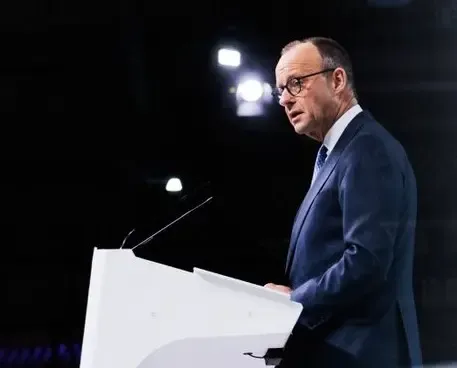
This plan has gained momentum following support from Germany, which has historically been skeptical of a Europe-centric defense strategy. A notable shift in Berlin under Chancellor Friedrich Merz signifies growing unease about US reliability.
The movement arises amid increasing discomfort over Trump’s remarks on NATO, where he has labeled European allies as “cowards” and referred to the alliance as a “paper tiger.” He has also threatened to withdraw support if allies fail to conform to US interests, particularly regarding Iran.
European leaders assert that any transition must be gradual. Finland’s President Alexander Stubb remarked that a “burden shifting from the US to Europe is ongoing and will continue,” emphasizing that it should occur in a “managed and controllable” manner rather than via a sudden US exit.
“The core message to our American partners is that after decades, it’s time for Europe to shoulder more responsibility for its own security and defense,” Stubb stated.
Germany’s Defence Minister Boris Pistorius affirmed that NATO is “irreplaceable for both Europe and the US” but acknowledged that “we Europeans must take on more responsibility for our defense.”
The magnitude of this task is substantial. NATO’s organization relies heavily on US leadership, covering logistics, intelligence, and top military command. While more European officers are assuming senior roles and leading exercises, significant gaps still exist.
Officials point out deficiencies in intelligence, missile detection systems, and nuclear deterrence. No European nation can replicate the US nuclear umbrella, which is fundamental to NATO’s defense strategy.
In response, European countries are hastening their defense production and collaboration. Recent initiatives entail joint development of advanced weaponry and discussions on extending France’s nuclear deterrent to encompass additional European nations.
This shift has also reignited conversations regarding military conscription. Some leaders propose that national service could enhance readiness, with Finland, which maintains a draft, frequently cited as an example.
Nevertheless, officials recognize that Europe cannot swiftly replace the US as NATO’s primary military force. Years of underinvestment have resulted in capability gaps that will require time to bridge.
The urgency of this issue has increased amid broader geopolitical tensions, including disputes over Iran and uncertainties concerning the future of transatlantic relations.
NATO, established in 1949, has historically depended on US military power as the backbone of its collective defense mechanism. Calls for greater strategic autonomy from Europe have risen in recent years but have yet to fully materialize.
For India, any transformation in NATO’s framework could have significant repercussions for global security dynamics, especially as shifts in Europe intersect with developments in West Asia and the Indo-Pacific.
Point of View
The evolving dynamics within NATO highlight Europe's urgent need to enhance its defense capabilities amidst fluctuating US commitment. This strategy reflects a significant shift in geopolitical responsibilities, urging Europe to take charge of its own security while navigating complex international relations.
NationPress
19 Sept 2026
Frequently Asked Questions
What is the main concern driving Europe's contingency plan?
The primary concern is Donald Trump's unpredictable stance on NATO and the potential reduction of US involvement in European defense.
What does the term 'European NATO' refer to?
It refers to proposals aimed at increasing European leadership within NATO and enhancing military capabilities independently from the US.
How has Germany's position changed regarding European defense?
Germany, historically skeptical of a Europe-led defense model, is now supporting greater European responsibility under Chancellor Friedrich Merz.
What gaps exist in European defense capabilities?
Shortfalls in intelligence, missile warning systems, and nuclear deterrence are significant gaps that Europe currently faces.
What impact could changes in NATO have on global security?
Changes in NATO's structure could reshape global security dynamics, particularly in relation to developments in West Asia and the Indo-Pacific.