India pharma rise: Ex-US NIH Director Zerhouni on innovation shift
Synopsis
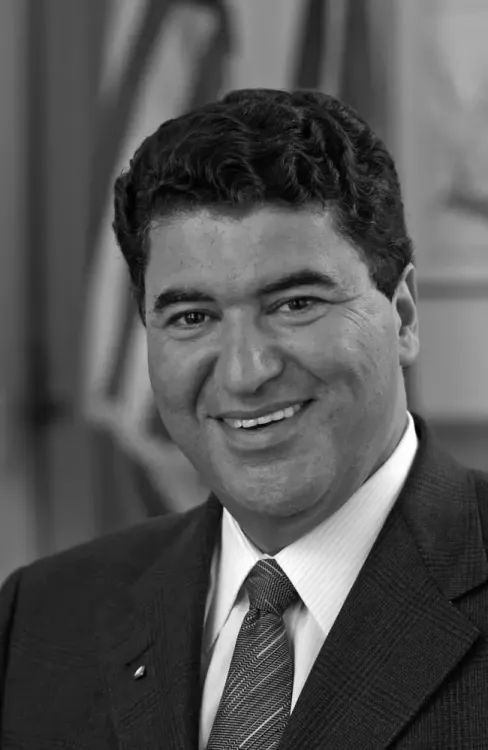
Former US NIH Director Dr Elias Zerhouni says India is no longer just the world's pharmacy — it's becoming a genuine pharmaceutical innovator. From Serum Institute's global vaccine dominance to frugal innovation and a geopolitical pivot away from China, India's pharma moment may be bigger than most realise.
Key Takeaways
Dr Elias Zerhouni , former US NIH Director , says India has moved from a manufacturing-only role to an innovation-led pharmaceutical partner for the US.
India's dominance in generics and APIs remains intact, with firms like Lupin and Sun Pharma expanding their global footprint.
The Serum Institute of India was cited as indispensable to global vaccine immunisation efforts.
A geopolitical pivot away from China is accelerating India's role in global pharma and biomedical research supply chains.
Zerhouni described AI's impact on pharma as incremental — improving speed and quality, but not yet delivering breakthrough discoveries.
Clinical trials and bureaucratic delays remain structural challenges, though regulatory culture is reportedly improving.
India's emergence as a global pharmaceutical powerhouse is entering a transformative new phase, driven by innovation, vaccine leadership, and expanding clinical capabilities, according to Dr Elias Zerhouni, former Director of the US National Institutes of Health (NIH). Speaking to NationPress in Boston on 1 May, Zerhouni said the India-US relationship in healthcare and biotechnology has moved decisively beyond manufacturing into innovation-led collaboration.
From Generics Backbone to Innovation Leader
Zerhouni acknowledged that India continues to dominate in generics and active pharmaceutical ingredients (APIs), describing them as a critical backbone of global drug supply. "India is very strong in chemistry and all the APIs… they come either from India or from China," he said, adding that the country remains "a major source of generic principle drugs."
But he was emphatic that India's pharmaceutical identity has evolved. "We're not just using or working with India as a manufacturing country, but also as an innovative country," he told NationPress, citing the growing global presence of Indian firms. "There's a tremendous amount of exchanges and a presence of now larger and larger Indian companies, Lupin and Sun Pharma, and many others," he said.
Vaccine Manufacturing: A Defining Global Contribution
Zerhouni singled out India's vaccine manufacturing capacity as one of its most consequential global contributions. "Without Indian contributions to the manufacturing of vaccines like the India Serum Institute, it would be very hard to immunise the population around the world," he said. The Serum Institute of India, based in Pune, is the world's largest vaccine manufacturer by volume and played a pivotal role in global COVID-19 immunisation efforts.
He also highlighted India's approach to "frugal innovation" as a structural differentiator — developing solutions that are effective without being prohibitively expensive. "Innovation that doesn't cost such an amount of money that people don't have access to it… I think that's in the culture in India," he said.
Geopolitical Pivot and the China Factor
Zerhouni pointed to a broader geopolitical realignment that is accelerating India's rise. "There's a pivot right now… a lot of people are pivoting outside of China… to India in many ways," he said, citing rising collaboration in medical technology and biomedical research. This comes amid sustained global efforts to diversify pharmaceutical and API supply chains away from China — a trend that intensified after COVID-19 exposed critical dependencies.
He described biotechnology as entering a "multipolar" phase, with India, China, and other nations all contributing meaningfully to innovation. "I don't care where the cure comes from. I want patients to be cured," he said.
Pandemic Lessons and Structural Challenges
Reflecting on COVID-19, Zerhouni said the crisis exposed deep vulnerabilities in global health infrastructure. "We discovered that we were not set up very well for a pandemic situation or a global health emergency," he said. He noted that both India and the US, as large democracies, rely more on private-sector incentives than central planning to address such challenges. "I don't know that there is a grand plan… I think it's the goodwill and the economic incentives that will drive that," he said.
On clinical trials, he acknowledged India is still at an early stage but improving. "Clinical trials are very sensitive… the sites have to be capable," he said, noting that regulatory systems and research culture are evolving. He also recalled bureaucratic delays as a persistent hurdle in NIH collaborations with India, having engaged directly with then Prime Minister Manmohan Singh to address grant approval bottlenecks. "We are democratic, right, but also bureaucratic, both the US and India," he said.
AI's Role and Contrasting Healthcare Priorities
Zerhouni offered a measured assessment of artificial intelligence in pharmaceuticals, saying its impact remains incremental. "It has improved the speed, improved the quality… but it has not really discovered anything that we didn't know," he said. He also drew a sharp contrast between healthcare priorities in the two countries: the US grapples primarily with cost — "people cannot afford the very expensive medications" — while India's focus remains on expanding access to affordable care.
Zerhouni served as the 15th Director of the US NIH from 2 May 2002 to 31 October 2008 under the George W. Bush administration, and was previously executive vice-dean at Johns Hopkins University School of Medicine. He was among the first US presidential science envoys in 2009 and served as a senior fellow at the Bill and Melinda Gates Foundation from 2009 to 2010. As India's pharmaceutical ambitions scale up, the question of whether regulatory and research infrastructure can keep pace with the geopolitical opportunity will be decisive.
Point of View
Not an Indian government spokesperson. His pivot-away-from-China observation is the real headline buried in the interview — it signals that India's pharmaceutical ascent is as much a geopolitical inevitability as it is a capability story. Yet the structural gaps he flags — bureaucratic delays, nascent clinical trial infrastructure — are not new complaints. India has been 'on the cusp' of pharma innovation for two decades. The question is whether this geopolitical window will finally force the regulatory and institutional reforms that goodwill and economic incentives alone have not delivered.
NationPress
18 Sept 2026
Frequently Asked Questions
What did ex-US NIH Director Dr Elias Zerhouni say about India's pharma sector?
Dr Zerhouni said India has evolved from a pharmaceutical manufacturing hub into an innovation-led partner for the US, citing its strength in generics, APIs, vaccine manufacturing, and frugal innovation. He made these remarks in an interview in Boston on 1 May.
Why is India's vaccine manufacturing capacity significant globally?
Dr Zerhouni said that without India's contributions — specifically citing the Serum Institute of India — it would be very difficult to immunise populations worldwide. The Serum Institute is the world's largest vaccine manufacturer by volume.
How is the geopolitical shift away from China benefiting India's pharma sector?
Zerhouni noted a global pivot away from China in pharmaceutical and biomedical supply chains, with companies and governments increasingly turning to India for manufacturing and research collaboration. This trend accelerated after COVID-19 exposed over-reliance on Chinese API supply.
What challenges does India's pharma sector still face according to Zerhouni?
Zerhouni flagged bureaucratic delays in research grant approvals and an early-stage clinical trials ecosystem as key hurdles. He noted that regulatory systems and research culture are improving but are not yet at the level required for large-scale global clinical trial hosting.
What is 'frugal innovation' and why does Zerhouni see it as India's strength?
Frugal innovation refers to developing effective healthcare solutions at costs accessible to a broad population. Zerhouni described it as culturally embedded in India's approach to healthcare, making it a differentiator in global pharmaceutical development.