Fed holds rates at 3.75% as Middle East oil shock fans inflation fears
Synopsis
The US Federal Reserve held rates steady but offered no comfort — Fed Chair Jerome Powell warned that oil prices haven't even peaked yet, PCE inflation is already at 3.5%, and Asia faces a far heavier hit than the US from the Middle East-driven energy shock. A wait-and-watch Fed in an unresolved conflict is a volatile combination for global markets.
Key Takeaways
The US Federal Reserve held its benchmark rate at 3.5–3.75 per cent on 30 April , citing uncertainty from the Middle East conflict .
PCE inflation rose 3.5 per cent in the 12 months to March; core inflation stood at 3.2 per cent .
Fed Chair Jerome Powell warned oil prices have "not even peaked yet," signalling no imminent rate cuts.
Asia and Western Europe face a disproportionately larger impact from the oil shock than the US, according to Powell.
The US unemployment rate stands at 4.3 per cent ; consumer spending remains resilient but faces risk from rising fuel costs.
The Fed's next move depends on how long the conflict disrupts energy markets and trade routes.
The US Federal Reserve held its benchmark interest rate steady at 3.5–3.75 per cent on 30 April, as surging oil prices linked to the Middle East conflict complicate the central bank's policy path and raise fresh inflation concerns — with Asia and Western Europe bearing a disproportionate share of the economic fallout.
Powell's Warning on Inflation
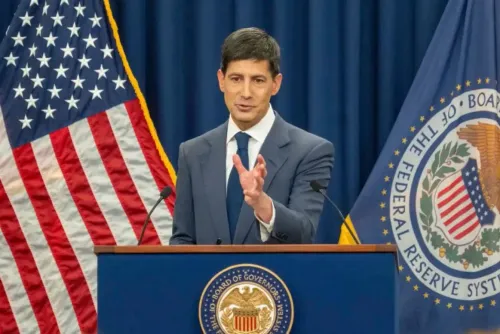
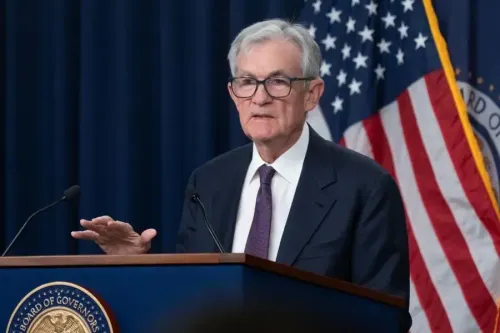
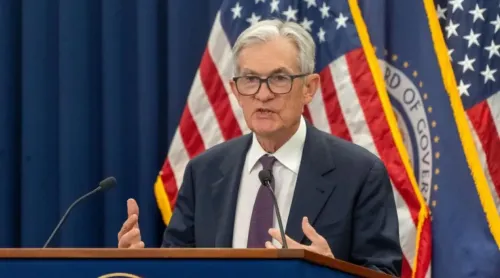
Federal Reserve Chair Jerome Powell said higher energy costs are already feeding into price pressures across the economy. "Inflation has moved up and is elevated, in part reflecting the recent increase in global energy prices," he said at a post-meeting press conference. Total PCE prices rose 3.5 per cent in the 12 months ending March, boosted, according to Powell, by the significant rise in global oil prices stemming from the Middle East conflict. Core inflation, which strips out food and energy, stood at 3.2 per cent.
Rate Decision and Policy Uncertainty
The Fed left its benchmark rate unchanged, signalling caution rather than conviction. Powell made clear that the central bank is not operating on a fixed timeline. "Monetary policy is not on a pre-set course," he said, adding that officials would respond based on incoming data and evolving risks. He also noted that oil prices have "not even peaked yet," suggesting policymakers are reluctant to commit to any rate cuts until the energy situation stabilises.
Uneven Global Impact — Asia Most Exposed
Powell explicitly flagged the asymmetric nature of the oil shock. "The effects on the United States are really substantially less than those of Western Europe or Asia, who are feeling much greater effects from these things," he said. For major oil-importing economies across Asia — including India, Japan, South Korea, and several Southeast Asian nations — the current crude price spike risks widening trade deficits and stoking domestic inflation, even as growth remains uneven across the region. This comes amid an already fragile global backdrop shaped by the Russia-Ukraine war, post-pandemic supply disruptions, and ongoing trade tensions.
US Labour Market and Consumer Spending
Despite the inflationary pressures, the US labour market remains broadly stable, with the unemployment rate at 4.3 per cent, though job gains have slowed in recent months. Consumer spending — a primary engine of US growth — continues to hold up. "The US economy has just powered through shock after shock, and consumers are still spending," Powell said. However, he cautioned that sustained increases in gasoline prices could begin to erode household budgets. "When gas prices go up, that's disposable income coming out of people's pockets, so they're going to spend less on other things," he warned.
What to Watch Next
The Fed's wait-and-watch stance hinges on how long the Middle East conflict continues to disrupt energy markets and key trade routes. Powell said the outlook depends heavily on how quickly conditions normalise. Global central banks, already strained by multiple overlapping shocks in recent years, now face a renewed inflation challenge with limited room to manoeuvre. For emerging economies dependent on energy imports, the stakes are particularly high as the situation continues to evolve.
Point of View
With its domestic energy production, can absorb the shock; Asia cannot. For oil-importing emerging economies already managing currency pressure and post-pandemic debt, this is not a passing headwind — it is a structural squeeze. The Fed's wait-and-watch posture is defensible domestically, but it exports uncertainty to the very economies least equipped to handle it.
NationPress
20 Sept 2026
Frequently Asked Questions
What did the US Federal Reserve decide on interest rates on 30 April?
The Federal Reserve held its benchmark interest rate steady at 3.5–3.75 per cent on 30 April, citing elevated inflation driven by rising global oil prices linked to the Middle East conflict. Fed Chair Jerome Powell indicated there is no pre-set course for future rate changes.
How is the Middle East conflict affecting US inflation?
According to Powell, the conflict has driven up global oil prices, pushing total PCE inflation to 3.5 per cent in the 12 months ending March. Core inflation, which excludes food and energy, stood at 3.2 per cent, suggesting broader price pressures beyond just energy.
Why is Asia more at risk than the US from the oil shock?
Powell explicitly stated that the effects on the US are "substantially less" than on Western Europe or Asia. Major Asian economies are heavily dependent on oil imports, meaning the crude price spike risks widening their trade deficits and fuelling domestic inflation more severely.
When will the Federal Reserve consider cutting interest rates?
Powell gave no specific timeline, saying monetary policy is "not on a pre-set course." He noted that oil prices have not yet peaked and that the Fed would need to see how the Middle East situation develops before considering any rate adjustments.
How is the US consumer holding up amid rising oil prices?
Consumer spending remains resilient for now, with Powell noting the US economy has "powered through shock after shock." However, he cautioned that sustained gasoline price increases could reduce disposable income and weigh on spending in other categories.